
Shipping Oversized Skids: What Changes When Freight Outgrows the Pallet
How oversized skids change the shipping equation — measuring the true envelope, vehicle and door limits, tailgate constraints and flagging size at quote time.
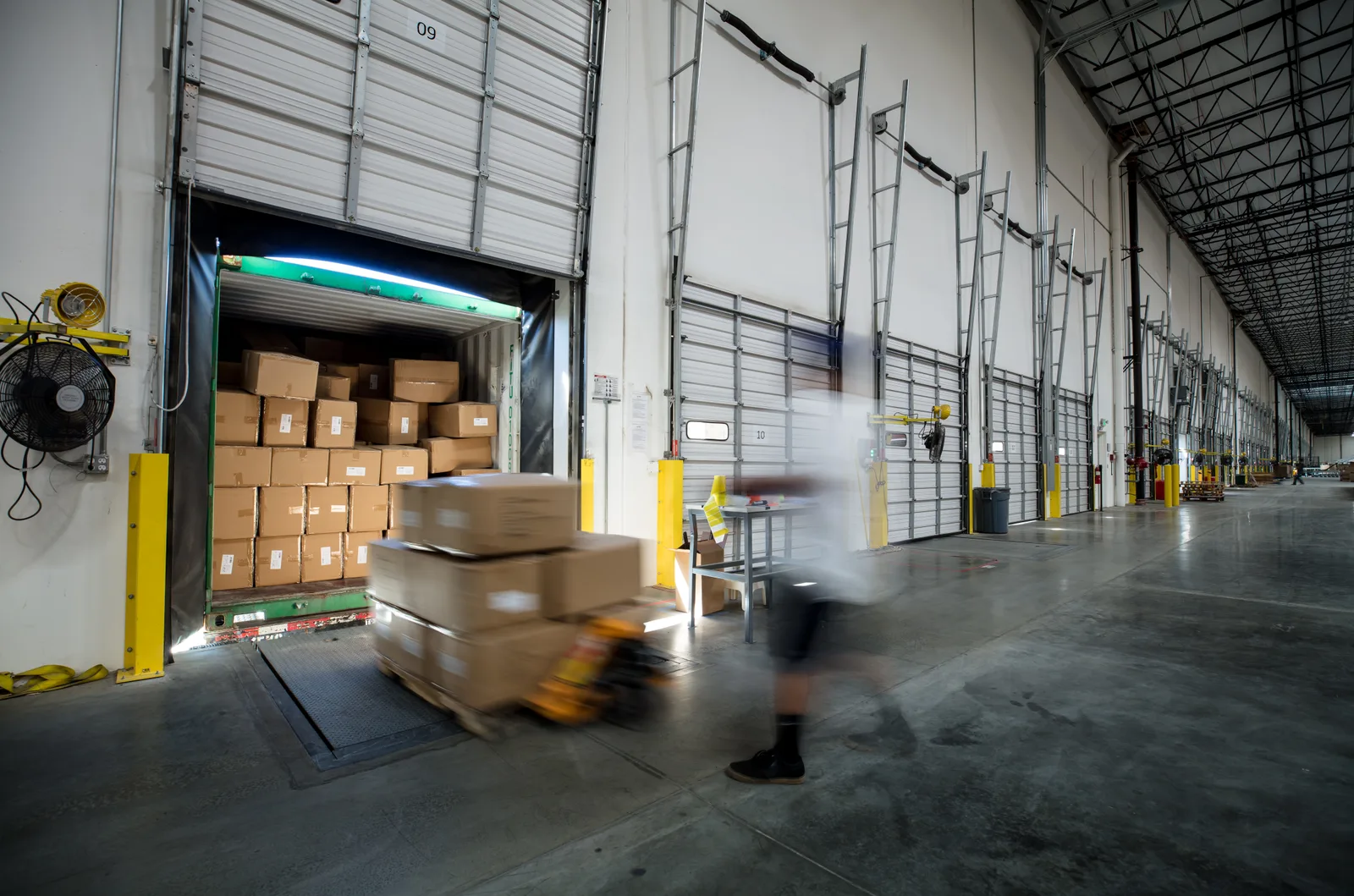
Freight doesn’t read the pallet catalogue. Machinery ships on custom decks, doors and countertops run long, crated equipment stands taller than a person — and the moment a load steps outside the familiar 48″ × 40″ footprint, a series of quiet assumptions stop holding. Assumptions about which truck fits, which doors clear, whether a tailgate can ground it, and how much space it actually bills for. None of this makes an oversized skid hard to ship. It makes it a shipment that has to be described accurately, because with oversize freight the dimensions — not the weight — usually make every important decision.
First, know what “oversized” actually means
There’s no regulation that stamps a skid “oversized.” In practice, a skid earns the label when any of these is true:
- The footprint exceeds standard — longer or wider than the common 48″ × 40″ deck, including custom decks and double-length skids.
- The height is unusual — tall crates, upright equipment, anything approaching the interior height of a truck.
- The load overhangs the deck — even a standard pallet becomes an oversized shipment if freight projects past the edges, because the envelope is what has to fit, not the wood.
That last point is the one that catches people. Carriers plan around the loaded envelope: the full length, width and height of pallet-plus-freight at the widest points. A guide to capturing those numbers correctly is on our answer page about measuring skid dimensions — for oversize freight, measure twice, because every downstream decision hangs on those three numbers.
The usual suspects, for reference: machinery on custom decks, doors and window units, countertops and stone, racking and shelving uprights, crated equipment, signage, and furniture that ships assembled. If your freight is on that list, assume you’re in oversize territory until the tape measure says otherwise.
Dimensions pick the vehicle before weight gets a vote
For standard skids, weight is usually the variable that sizes the truck. Oversize flips that: a 300 lb crate that’s nine feet long has already ruled out every van in the fleet before anyone asks what it weighs.
The checkpoints a carrier runs your dimensions against:
- Door opening. Freight enters through the rear door, so the load must clear the door’s height and width — which are smaller than the box’s interior dimensions.
- Interior height and length. A tall crate that clears the door still has to stand inside; a long skid has to fit the deck with room to secure it.
- Floor space and neighbours. An oversize skid consumes the floor positions of two or more standard skids, and odd footprints leave unusable slivers of space around them. This is why oversize freight bills by the space it occupies, not just its weight.
- Weight distribution. A long, heavy load concentrates weight differently than cartons do, which affects how and where it can sit in the box.
The practical range: cargo vans and Sprinters handle light, modestly oversized pieces; most oversize skid work lands on 26-foot box trucks; and past a certain envelope, freight leaves the enclosed-truck world entirely for flatbed and specialized equipment. Where those outer limits sit is covered in our answer on size limits for courier freight.
The tailgate question gets harder
Ground-level delivery is where oversize bites hardest. A tailgate is a rated platform with a fixed footprint — and an oversized skid has to fit entirely on the platform, within weight limits, to be lowered safely. Long skids run out of platform. Wide loads hang over its edges. Tall loads can be awkward to control during the descent even when they technically fit.
What this means in practice:
- An oversize skid going to a dock or forklift-equipped receiver is usually no problem at all — it loads and unloads like any freight.
- An oversize skid going to a no-dock receiver needs a real conversation at booking: exact dimensions, exact weight, and an honest answer about whether the platform can take it. If it can’t, the options are a dock-equipped alternate address, equipment arranged at the site, or splitting the load onto smaller skids where the freight allows.
Finding this out at the quote stage is a routing decision. Finding it out at the destination is a failed delivery — the freight rides back, the run gets replanned, and the install crew waits another day for something a tape measure would have caught.
Build the skid so its size doesn’t become fragility
Oversize loads amplify the normal rules of pallet building, so a few points deserve special attention beyond the fundamentals in our guide to building a pallet that survives the truck:
- Use a deck that matches the freight. Custom or double-length skids should support the load’s full footprint — freight bridging between two loose pallets is asking for a collapse.
- Fasten, don’t just wrap. Tall and long loads have leverage; banding, bolting or blocking to the deck does the work wrap can’t.
- Guard the extremities. The parts of the load that stick out furthest are the parts that meet door frames and walls first. Pad and reinforce them.
- Mark the handling points. If the skid must be forked from a particular side, label it — oversize loads often only balance one way.
Flag it at the quote — every time, in millimetres of honesty
The single behaviour that makes oversize freight go smoothly: declare the true envelope when you book. Exact length, width and height at the widest points, actual weight, and what’s at each end of the run — dock, forklift, or neither.
Everything a carrier does flows from those facts: the vehicle assigned, the floor plan of the load, whether tailgate delivery is realistic, how much space the shipment bills for, and whether the freight is a standard run or needs specialized equipment. Undersized declarations don’t save money; they produce trucks that can’t take the freight and quotes that get rebuilt on delivery day. The rest of the booking process is the same as any palletized shipment — walk through it in how to ship a skid across the GTA.
Oversize is routine when it’s declared
Odd-sized freight moves through the GTA every day without drama — on the right truck, with the right plan, because somebody described it accurately up front. At Sonic Transport, oversize decks and awkward envelopes are part of daily skid and pallet work, and anything beyond what our equipment should honestly handle gets arranged through transportation partners with one point of contact. Got a load that outgrew the pallet? Send us the real dimensions and we’ll match the equipment to the freight — not the other way around.
Frequently asked questions
What counts as an oversized skid?
Anything meaningfully beyond the standard 48-inch by 40-inch footprint, taller than typical carton loads, or with freight overhanging the deck. There's no official cutoff — the practical definition is any skid whose dimensions start dictating which vehicles, doors and equipment can handle it.
Can an oversized skid still get tailgate delivery?
Sometimes. The skid has to fit on the platform with the full load inside its edges, and the combined weight has to stay within the platform's rating. Long or very wide skids often fail the footprint test even at modest weights, in which case delivery needs a dock, a forklift on site, or other arranged equipment.
Does oversized freight need a road permit?
A big skid inside an enclosed truck almost never does — permits deal with vehicle-plus-load dimensions on the road, and freight riding inside a standard truck body stays within normal limits. Genuinely over-dimensional loads that exceed legal vehicle envelopes are specialized-carrier territory; requirements come from the Ministry of Transportation of Ontario, so verify current rules there for anything at that scale.