
Heavy Freight Under 10,000 lbs: Why a Straight Truck Often Beats a Semi
For GTA freight under 10,000 lbs, a 26-foot straight truck usually beats a semi — better access, tailgate delivery, direct routing — and here is why.
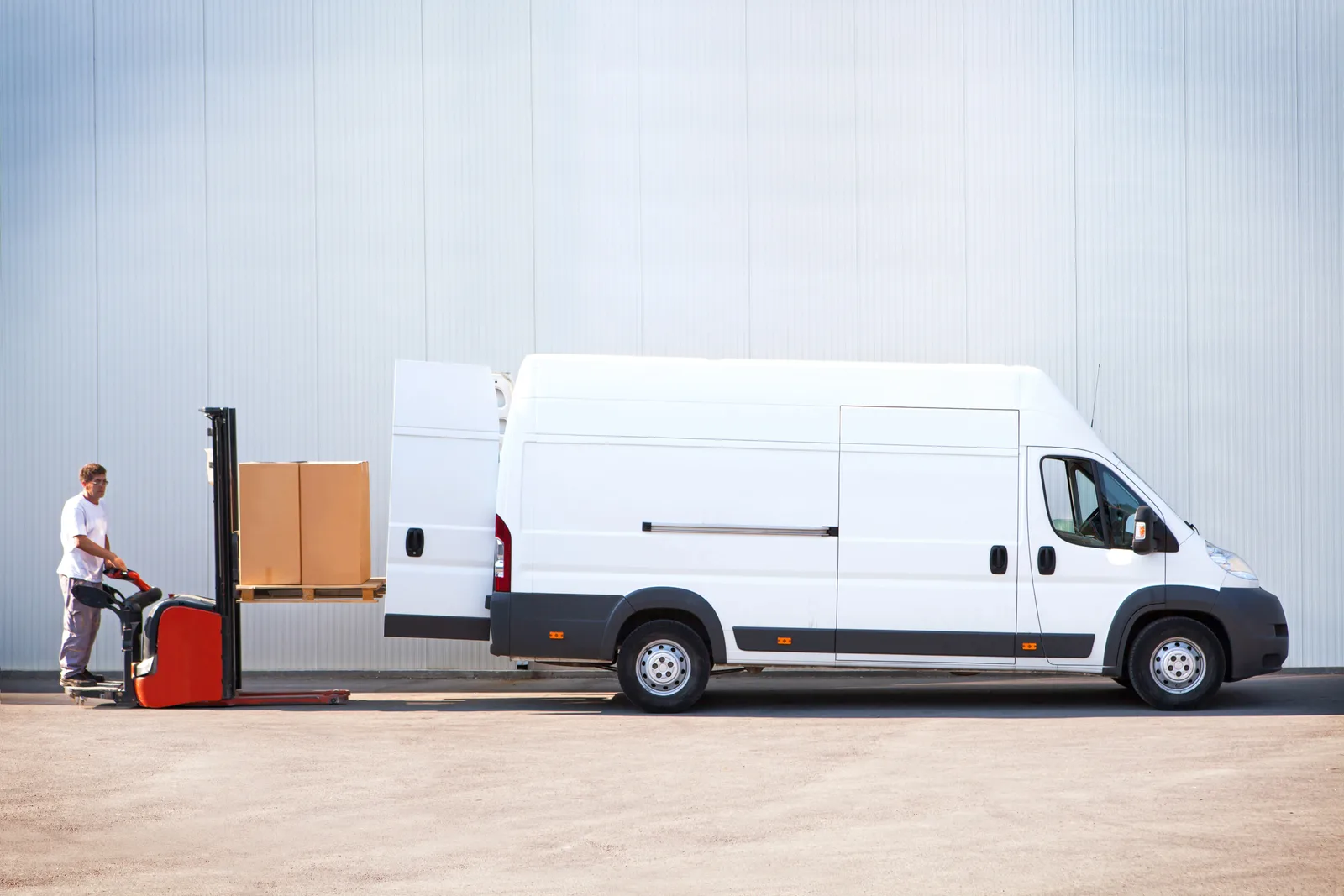
There’s a reflex that kicks in when freight gets heavy: heavy load, big truck, call for a semi. For genuinely large freight it’s the right reflex — but in the GTA, most “heavy” shipments aren’t actually semi freight. A few dense skids, a machine on a deck, a couple of thousand pounds of boxed hardware: that’s straight-truck work, and the straight truck usually does it faster, with better access and more sensible economics. Here’s the case, and — just as important — where it honestly stops.
What a straight truck is, and why the difference matters
A straight truck is one rigid vehicle: cab and cargo box on a single frame, no articulated trailer. The workhorse of regional freight is the 26-foot box truck — long enough to carry a meaningful number of skids, short enough to operate where a tractor-trailer can’t. Payloads in this class commonly run up to about 10,000 lbs, which covers an enormous share of real-world B2B freight: pallets of parts, machinery, fabricated metal, shelving, equipment, bulk cartons.
A semi — tractor plus 53-foot trailer — is a different tool. It exists to move very large volumes and very heavy loads over a dock-to-dock network. Nothing wrong with it; it’s just a lot of vehicle, and freight that doesn’t need all of it ends up paying for it anyway, in more ways than the rate.
Advantage one: access — the GTA was not built for 53-foot trailers
Drive through Mississauga’s older industrial pockets, a downtown Toronto laneway, a strip-plaza loading area in Brampton or a construction site in Vaughan and the pattern repeats: tight yards, short approaches, shared lots, low canopies. A tractor-trailer needs swing room, dock alignment space and somewhere for 70-odd feet of vehicle to sit. Plenty of GTA addresses simply can’t take one.
A 26-foot straight truck manoeuvres in a fraction of that space. It can work a small yard, back to a single-door dock, or park curbside at a storefront. That access difference isn’t a rounding error — it decides whether the freight can be delivered to the actual address or has to be worked around with transfers and secondary vehicles. When a receiver has no dock at all, the straight truck’s other advantage takes over.
Advantage two: the tailgate, which a highway trailer usually doesn’t have
Heavy freight to a location with no dock and no forklift is a solved problem on a straight truck fitted with a hydraulic tailgate: the platform lowers the skid to ground level, and a pallet jack takes it from there. On Sonic Transport’s fleet, the tailgate is standard on every 26-foot box truck, at either end of the run — pickup or delivery.
Standard highway trailers generally have no lift equipment; they assume a dock at both ends. So a heavy skid heading to a clinic, shop or job site doesn’t just fit better on a straight truck — often it’s the only vehicle class that can complete the delivery at all. Weight still matters at the platform, though: tailgates are rated equipment, and a very dense single skid can exceed the platform’s safe limit even when the truck could carry it. That’s a real constraint, not fine print — our answer on whether couriers can move a 1,000 lb skid walks through how weight and equipment interact at ground-level deliveries.
Advantage three: direct routing at a regional scale
Semi freight typically moves through networks — terminals, consolidation, scheduled linehauls — because that’s how you keep 53-foot trailers full. A straight truck doing regional work runs direct: load at your dock, drive to the destination, unload. Within the GTA and Southern Ontario, that means heavy freight can move the same day it’s booked, ride with no intermediate handling, and arrive on your schedule rather than a network’s.
For dense, valuable or deadline-driven freight — a machine a crew is waiting on, metalwork due at an install — direct straight-truck service is usually both the fastest option and the gentlest one. Fewer handling events matter more as freight gets heavier, because heavy freight is exactly the freight that’s hardest to handle well twice. It’s the backbone of our skid and pallet service, and it’s why heavy regional freight — machinery moves, metal, industrial equipment — is everyday work rather than a special project.
The honest economics
For partial loads, the straight truck usually wins on cost logic, and the reasoning is worth spelling out rather than hand-waving:
- You’re moving the vehicle the freight needs, not the biggest one available. Three heavy skids don’t fill a 53-foot trailer; you’d be paying to move empty space.
- No network detour. Direct runs skip terminal handling — less time, fewer touches, less exposure to damage.
- No specialized access workarounds. If a semi can’t reach the destination, the freight gets transferred to a smaller vehicle anyway — meaning you paid for two vehicles and an extra handling step. Starting on the straight truck skips the transfer entirely.
None of this makes semis expensive for semi freight. Full trailers moving long distances are exactly what they’re efficient at. The point is matching the tool to the load — the same sizing logic we cover across the whole fleet in choosing the right vehicle for your shipment.
Where the straight truck honestly stops
Every vehicle has a ceiling, and pretending otherwise is how freight gets stranded. The straight truck’s limits:
- Weight. Around 10,000 lbs of payload, the class tops out. Beyond it, the freight needs a semi — full stop.
- Volume. A big multi-skid order can out-cube a 26-foot box even under the weight limit. Sometimes the answer is two trucks; sometimes it’s a trailer. Our guide to moving multiple skids at once breaks down how that call gets made.
- Full truckloads. If you’re genuinely filling a 53-foot trailer, book a 53-foot trailer.
When freight crosses those lines, Sonic Transport doesn’t turn it away — semi capacity is arranged through transportation partners, with the same point of contact coordinating the shipment. You describe the freight once; the right equipment shows up, whether it’s ours or a partner’s. The details of how that works are in what happens when freight is over 10,000 lbs.
The takeaway for GTA shippers
If your freight is heavy but under roughly 10,000 lbs, don’t default to thinking in trailers. A 26-foot straight truck with a tailgate will very likely reach both ends of the run more easily, deliver without a dock, move the freight directly, and match the vehicle to the load instead of the other way around. Sonic Transport runs exactly this equipment across the GTA, Golden Horseshoe and Southern Ontario — describe your freight and its weight, and we’ll put the right truck on it, or arrange the semi honestly if that’s what the shipment truly needs.
Frequently asked questions
What is a straight truck?
A straight truck is a single rigid vehicle where the cab and cargo box share one frame — no separate trailer. A common freight configuration is a 26-foot box on a straight chassis, often fitted with a hydraulic tailgate, sized to carry several skids of commercial freight.
How much can a 26-foot box truck carry?
Payload varies by truck, but straight trucks in this class commonly handle freight up to roughly 10,000 lbs. Sonic Transport's 26-foot box trucks carry up to 10,000 lbs with a tailgate standard on every truck. Above that, freight moves by semi.
Is a semi cheaper than a straight truck for heavy freight?
Not for partial loads. A semi's economics work when you're using most of a 53-foot trailer. For a few heavy skids, you'd be paying to move a much larger vehicle than the freight needs — and one that may not be able to access either end of the run easily.