
Shipping Machinery in Southern Ontario: A Practical Guide
Moving machinery across Southern Ontario — real weights, skidding and securement, access planning at both ends, tailgate limits and when a semi takes over.
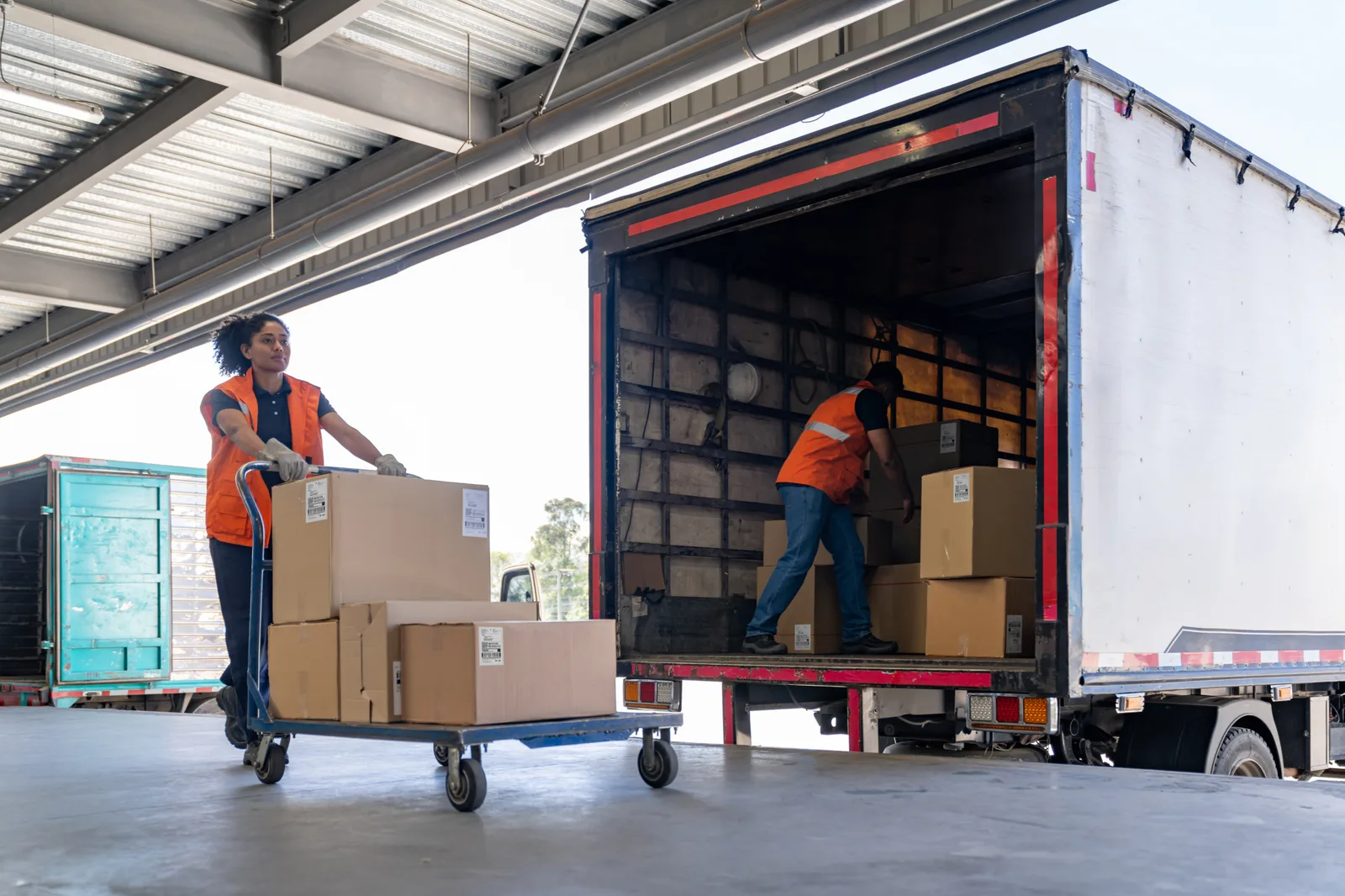
Machinery is where freight stops being abstract. A CNC lathe, a press brake, a packaging line module, a compressor — these are dense, expensive, often one-of-a-kind items that a business is usually either waiting to install or waiting to get paid for. Moving one across Southern Ontario is entirely routine work when four things are true: the weight is known, the machine is skidded and secured properly, both ends of the run have a loading plan, and the shipment is on equipment rated for it. This guide walks through each.
Establish the real weight — nameplate, not guesswork
Machine weights fool people constantly, because density hides mass: a unit the size of a desk can outweigh a dozen loaded pallets. Before anything else, find the actual number — the manufacturer’s nameplate, the spec sheet, the manual, or the original shipping documents. “Around a thousand pounds, maybe” is not a weight; it’s a delivery failure waiting for a place to happen.
Everything downstream depends on the true figure: which truck is assigned, how the load is positioned, whether a tailgate can handle it, and what equipment must exist at each end. The good news is the capacity question is usually more comfortable than shippers expect — a straight truck in the 26-foot class carries up to roughly 10,000 lbs, which covers a great deal of industrial machinery. Our answer page on shipping machinery by courier covers the capability question directly.
Skid it like the machine deserves
Machinery preparation is its own discipline, distinct from stacking cartons:
The skid must match the machine. A concentrated heavy load needs a base that supports its actual footprint and frame points — a purpose-built hardwood or steel skid for heavier units, or a genuinely load-rated pallet for lighter ones. The general craft of building freight that travels well is covered in our pallet-building guide, but machines add a rule of their own: fasten, don’t wrap. Bolt the machine through its mounting points to the skid where possible; where it isn’t, use banding over structural points with edge protection. Stretch wrap keeps dust off — it does not restrain a machine.
Protect what’s precise. Cover machined surfaces, ways and spindles against moisture and contact. Remove or immobilize anything that moves — heads, arms, doors, counterweights — because transport vibration will find them.
Deal with fluids. Drain or secure oils, coolants and fuel per the manufacturer’s transport guidance. A leak in transit damages the machine, the truck and everything else on board.
Mind the centre of gravity. Machines are frequently top-heavy or offset. Mark fork points and the heavy side on the skid so every handler lifts it the way it balances.
Plan access at both ends — this is where machinery moves fail
Freight problems with machinery are rarely about the drive; they’re about the fifty feet at each end. Before booking, answer for both locations:
- Is there a dock or a forklift rated for the weight? A 5,000 lb forklift does not lift a 7,000 lb machine. Confirm the rating, not just the existence, of the equipment.
- If neither exists, is tailgate delivery realistic? A hydraulic tailgate grounds heavy skids at no-dock sites — but it’s rated equipment, and dense machinery is exactly the freight that can exceed a platform’s safe working load even when the truck could carry it twice over. Footprint matters too: the skid must fit fully on the platform. For weights near the limit, this is a specific conversation at booking. The dynamics are laid out in can couriers move a 1,000 lb skid.
- What happens after the truck? Carriers deliver freight — to the dock, or grounded by tailgate. Moving a machine off its skid, through the plant and into position is rigging and millwright work, a separate trade with its own equipment. Book it separately and sequence it so the machine isn’t stranded in a receiving bay.
A machinery move that’s planned at this level of detail is boring in the best way. One that isn’t produces the classic scene: a machine on a truck, a forklift that can’t lift it, and a crew standing around it.
One more detail worth settling in advance: who signs, and what they check. The receiver should verify the machine’s condition as far as it’s visible — covers intact, no shifted load, no impact marks on the crate or skid — and note anything questionable on the proof of delivery before signing. On an expensive machine, that sixty seconds of attention is the difference between a documented issue and an argument.
The Southern Ontario lane is the easy part
The geography works in your favour. Machinery moves constantly between the region’s manufacturing centres — the GTA, Hamilton, Guelph, Cambridge, Kitchener–Waterloo, London, Barrie, Niagara — and at these distances, direct truck service is the natural mode: the machine loads once, rides secured in one vehicle, and unloads at the destination the same day, with no terminals or transfers along the way. Fewer touches is precisely what you want for freight where a single drop or fork-strike is an expensive event.
Sonic Transport runs this work as part of its skid and pallet service — direct machinery moves up to roughly 350 km one way from the GTA, on 26-foot box trucks with tailgates standard.
When the machine outgrows the straight truck
Some machinery is simply beyond the class: over 10,000 lbs, over-dimensional, or requiring flatbed loading by crane. That’s semi and specialized-equipment territory, and the honest move is to route it there deliberately rather than force it onto equipment at its margins. Freight above the straight-truck ceiling is arranged through transportation partners — same coordination, one point of contact, appropriate equipment. What that hand-off looks like is described in what happens when freight is over 10,000 lbs, and the broader case for right-sizing the vehicle is made in why a straight truck often beats a semi.
The pre-booking checklist
Six answers to have ready before you request pricing:
- Verified weight (nameplate or documentation)
- Dimensions of the skidded machine — full envelope, including anything that protrudes
- How it’s secured — bolted, banded, crated
- Loading capability at origin — dock, rated forklift, or neither
- Unloading capability at destination — same question
- The deadline, and whether rigging is booked for arrival
With those six facts, a carrier can quote accurately, assign the right truck and flag any limit before the machine is on the road. Moving equipment within Southern Ontario? Send us the details — Sonic Transport moves machinery for manufacturers, dealers and shops across the region, and a real person will plan the run with you, end to end.
Frequently asked questions
Do fluids need to be drained before machinery ships?
Often, yes. Oils, coolants and fuels can leak under transport vibration, damaging the machine, the truck and other freight, and carriers commonly require fluids drained or securely contained before loading. Check the manufacturer's transport guidance and confirm requirements with your carrier when booking.
Who loads the machine onto the truck?
Loading at origin is typically done by the shipper's forklift or arranged equipment, with the driver securing the freight in the truck. Placement and installation at destination — rigging a machine off its skid and into position — is millwright or rigging work, separate from the freight move. Plan both ends before booking.
Can a machine ship on a regular wooden pallet?
Light machines sometimes can, if the pallet is rated for the weight and the machine is bolted or banded down. Heavier machinery generally needs a purpose-built skid — hardwood or steel — that supports the machine's base and takes fasteners. A standard pallet under a concentrated heavy load is a common cause of transport damage.