
How to Build a Pallet That Survives the Truck
Pallet building done right — choosing a sound deck, stacking for stability, stretch-wrap that actually holds, banding, dunnage and labelling that sticks.
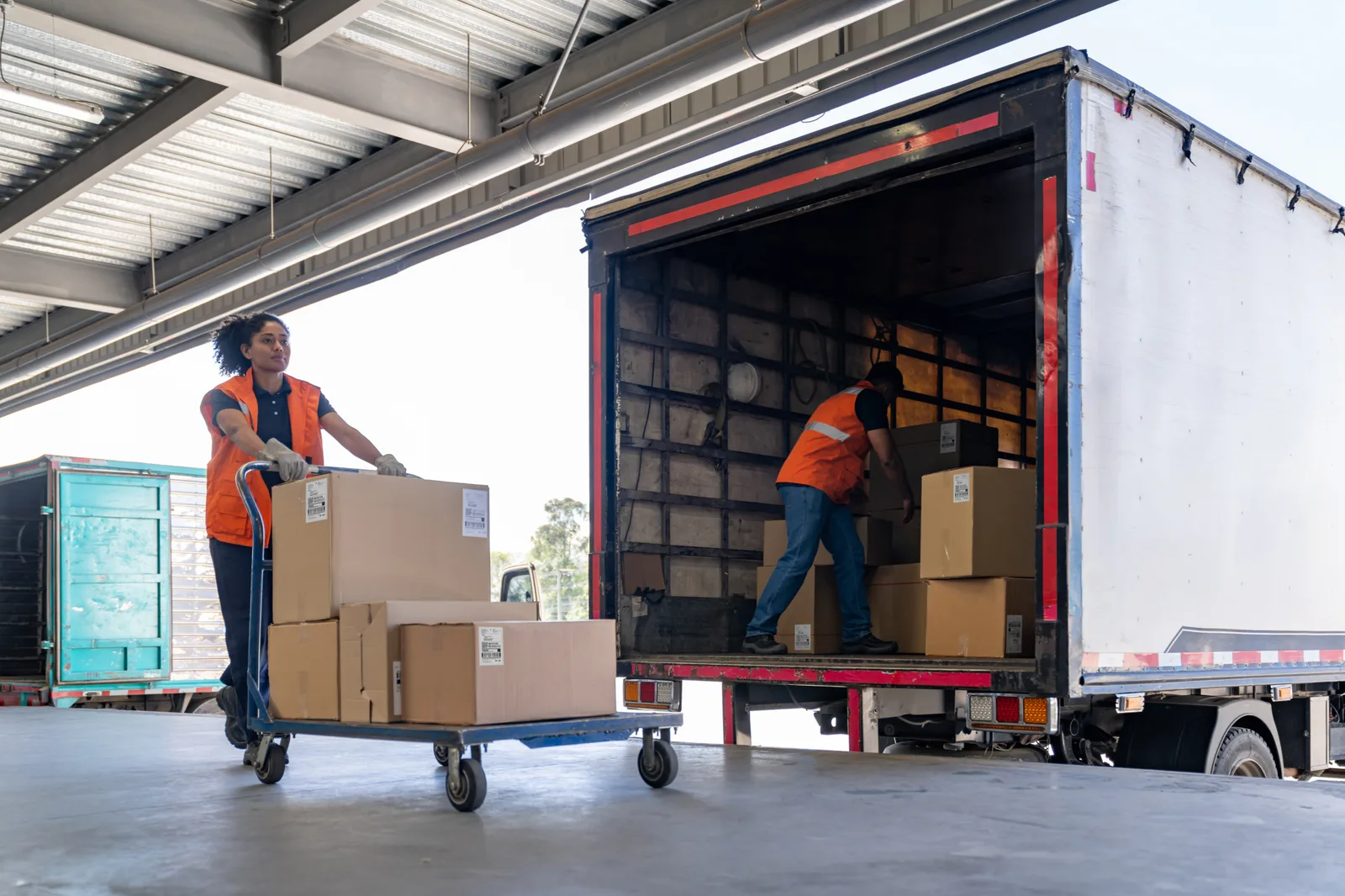
Most freight damage is decided before the truck ever arrives. A skid that shifts, crushes or collapses in transit almost always tells the same story: a tired pallet, a top-heavy stack, wrap that held the boxes together but never gripped the deck. The good news is that the fix costs almost nothing — building a pallet properly takes a few extra minutes and some deliberate habits. Here’s how to build one that arrives the way it left.
Start with the pallet itself
The load is only as good as what’s under it. Before the first carton goes on, inspect the deck:
- Stringers and blocks intact. A cracked stringer is a structural failure waiting for a forklift. Reject it.
- Deck boards complete and solid. Missing or broken boards create soft spots where cartons sag and wrap tension pulls the load off-square.
- No protruding nails or splinters. They tear wrap, cartons and hands.
- Dry and clean. A wet pallet is heavier, weaker, and can stain or wick moisture into whatever sits on it.
- Rated for the weight. Lightweight pallets built for one trip under bagged goods are not the platform for dense freight. If the load is heavy, use a pallet built for heavy.
One more decision at this stage: match the pallet’s footprint to the load. Freight hanging past the deck edge — overhang — gets crushed against truck walls and neighbouring skids, and it makes forklift handling less predictable. If the product is bigger than a standard 48″ × 40″ deck, use a bigger platform; that’s a legitimate choice with its own considerations, covered in our oversized skid shipping guide. (And if you’re wondering whether the words matter — see the difference between a skid and a pallet; for building purposes, the practices here apply to both.)
Plan the stack before the first box
Stacking is where most avoidable damage originates, and the principles are the same ones you’d use packing anything:
Heavy on the bottom, light on top. Weight riding high raises the centre of gravity and crushes whatever’s beneath it. Layer by weight, descending as you go up.
Keep every layer inside the footprint. Columns of cartons aligned edge-to-edge carry weight far better than staggered stacks with corners floating over air. Carton corners are the strong points — line them up.
Keep the top flat and level. A level top keeps wrap tension even and gives the load nowhere to lean. If the final layer is incomplete, centre it rather than leaving one high corner.
Close the gaps. Voids inside a stack are collapse points; freight settles into them under vibration. Fill meaningful gaps with dunnage — the packing material trade term for the filler, padding and bracing that keeps freight from moving. Our answer page on what dunnage is covers the common types and when each makes sense.
Wrap the load to the pallet, not just to itself
Stretch wrap has one job most people miss: it must anchor the freight to the deck, so the pallet and load move as a single unit. Wrap that only circles the cartons produces a tidy-looking bundle sitting loose on a pallet — which slides.
The technique that works:
- Start low and lock into the pallet. Thread the film through or around a corner of the pallet base, or twist it into a rope and catch it under the deck, so the first wraps bind to the structure.
- Wrap upward in overlapping spirals, overlapping each pass by about half the film width.
- Keep real tension. The film should stretch as you pull it around the load — stretch is where the holding force comes from. Loose film is decoration.
- Reinforce the base and the top. Extra passes at the bottom resist the forces of cornering and braking; passes over the top corners cap the load.
- Finish by pressing the tail onto a wrapped surface so it doesn’t unravel on the road.
For irregular loads, add corner boards (edge protectors) under the wrap — they spread film tension along the full height instead of letting it bite into carton edges.
Banding, for freight that laughs at wrap
Some loads are beyond what film can restrain: machinery, dense boxed hardware, fabricated metal, anything rigid and heavy enough to shear through stretched plastic when it shifts. That’s banding territory — steel or heavy polyester strapping run over or through the load and around the pallet, tensioned and sealed.
Use banding when the item is heavy and singular rather than many light cartons, when the freight has hard edges that would cut film, or when a shift in transit would be dangerous rather than merely expensive. Protect the freight from the band itself with edge protection at every contact corner. Wrap can then go over the banded load for weather and tamper evidence. Dense and mechanical freight has further requirements beyond the pallet — securement, weight declaration, handling limits — which we cover in the broader guide to shipping a skid across the GTA.
Label it like the paperwork will get lost
Assume the skid gets separated from its documents at least once. It should carry its own identity:
- Destination company name, full address, and a contact name and phone number
- Origin company, so the freight can find its way back if anything goes wrong
- Piece count if the shipment is more than one skid (“1 of 3”)
- Handling cues that are true and useful: this side up, do not double-stack, fragile
Put labels on two adjacent sides, on the freight itself under a clear layer of wrap or applied over it with full adhesion — not on the pallet wood, which may not travel the whole way with the load.
The sixty-second final check
Before you call it done, walk around the skid once:
- Push the top of the load firmly. Does the whole unit move as one piece, or does the load move on the pallet?
- Sight down each side. Anything overhanging the deck?
- Is the wrap anchored to the pallet at the base — can you slide film up off the deck by hand?
- Labels visible on two sides? Piece count right?
- Is the weight what you told the carrier? If you’re not sure of dimensions, measure the finished unit — height changes once the load is built. Our guide on measuring skid dimensions shows what carriers actually need.
If the skid passes, it’s ready for anything a normal freight lane will throw at it.
Well-built freight gets better outcomes
Carriers notice pallet quality, because it decides how their day goes: a solid, square, anchored skid loads fast, rides clean and delivers without conversation. At Sonic Transport, palletized freight is the core of our work — roughly 60% of everything we move is skids and pallets — and the shipments that go smoothest are always the ones built the way this guide describes. When your next skid is wrapped, labelled and ready, request a quote and we’ll put the right truck under it.
Frequently asked questions
How high can I stack a pallet?
There's no universal number — the real limits are stability and the truck. A load gets less stable as it gets taller, especially if heavy items ride high, and every vehicle has a door and interior height the loaded pallet must clear. As a working rule, keep the load as low as the freight allows and confirm height with your carrier if you're above roughly standard skid heights.
Is stretch wrap alone enough, or do I need banding too?
For cartons of consistent size and moderate weight, good stretch wrap anchored to the pallet is usually enough. Banding earns its place when items are heavy, rigid or prone to sliding — machinery, metal, anything that could shear through wrap. The two do different jobs: wrap unitizes, banding restrains.
Can I reuse a pallet I received freight on?
Yes, if it passes inspection: no cracked stringers, no broken or missing deck boards, no protruding nails, no soft or rotten wood. A pallet that arrived under someone else's freight took that trip's abuse — check it like you'd check a ladder before climbing it.