
Preventing Freight Damage: How Skids Get Hurt and How to Stop It
Where skid damage actually starts — overhang, weak pallets, poor wrap — and the delivery inspection habit that protects your freight claim.
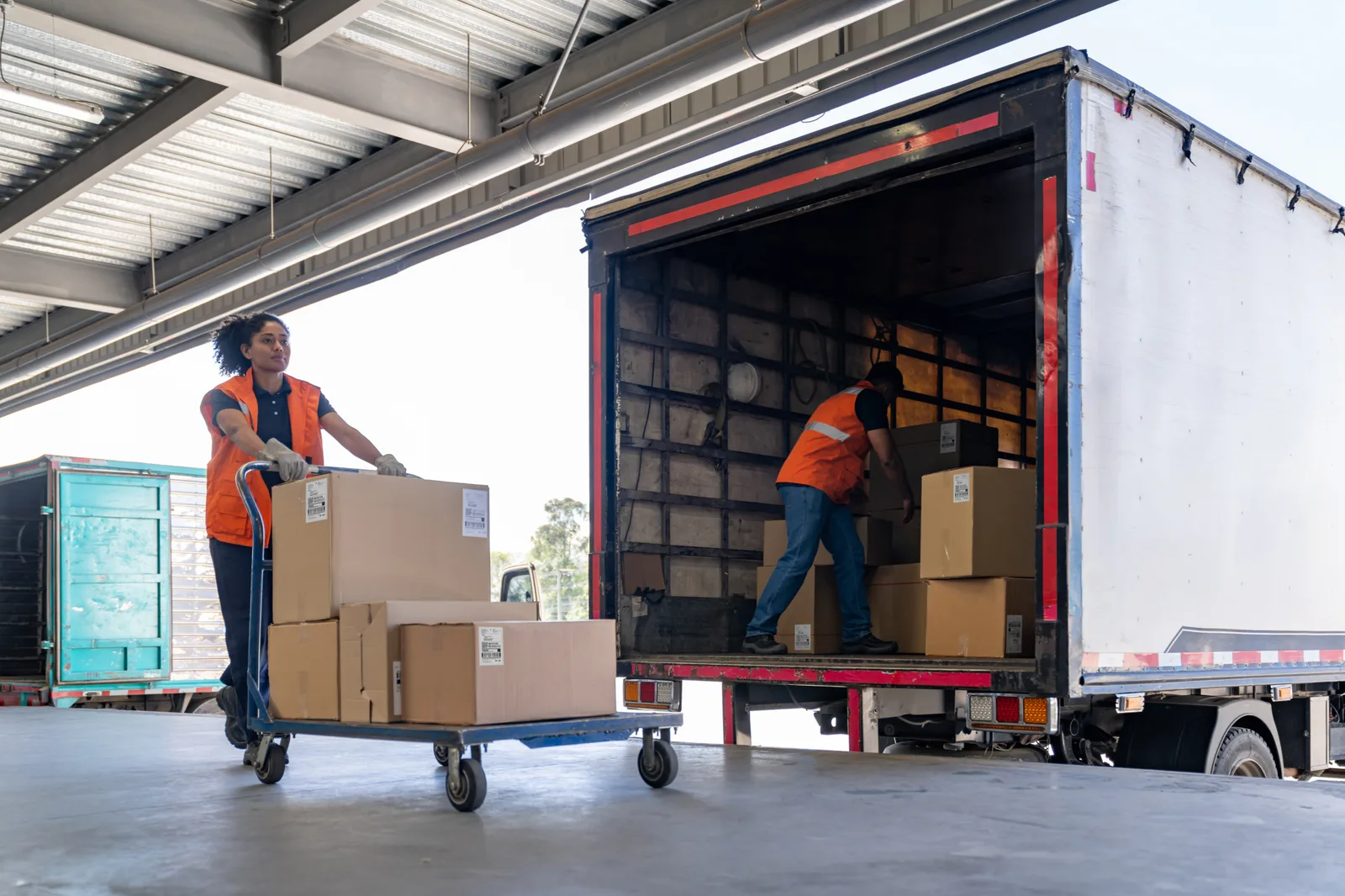
Most freight damage on skids is not bad luck in transit — it is built into the shipment before the truck arrives. Three failure modes account for the bulk of it: freight overhanging the pallet edges, pallets too weak for the load, and stretch wrap that holds boxes together but not to the deck. Fix those three at the packing stage, then close the loop with a proper inspection at delivery, and skid damage drops from a recurring cost to a rare event.
This guide works through each failure mode the way a claims conversation would: what physically goes wrong, why it goes wrong, and what to change so it stops.
Damage is usually decided at the packing bench
By the time a forklift picks a skid up, its fate is largely set. Transit forces — braking, cornering, the vibration of the road — are predictable and modest. A properly built skid rides them out without complaint. A poorly built one turns those same ordinary forces into crushed cartons and bent product.
That is actually good news, because it means damage prevention is under the shipper’s control. You cannot control every pothole between Mississauga and London, but you can control the pallet, the stacking pattern, the wrap and the paperwork. The failure modes below are listed in roughly the order we see them cause problems.
Overhang: freight outside the footprint gets hit first
Anything that sticks out past the pallet edge is the first thing to touch a trailer wall, a door frame, or the neighbouring skid — and it takes the impact directly, with no pallet to absorb it. Overhang also concentrates stacking pressure on the overhung cartons’ unsupported edges, which is why corner crush on an overhanging load is so common.
The fix is simple and unforgiving: keep the load inside the pallet footprint, full stop. If the product is genuinely larger than a standard 48″ × 40″ deck, use a bigger pallet rather than letting freight cantilever off the edge. Overhang has a second cost too — it makes the shipment measure larger, because carriers price from the extreme dimensions of the load, not the pallet under it.
Weak pallets: the platform fails before the freight does
A pallet is structural equipment, and a cracked stringer or missing deck board is a failure waiting for a fork to find it. When a weak pallet lets go, the load drops, racks sideways or spears itself on the broken wood — and it usually happens during lifting, the moment of highest stress.
Before loading, give the pallet a thirty-second check:
- Stringers intact — no cracks or splits at the fork openings, where jacks and forklift tines do their work.
- Deck boards all present and free of protruding nails that can puncture cartons or bags above them.
- Rated for the weight. A light-duty pallet under dense freight — dies, fasteners, sheet stock — flexes and fails even if it looks sound.
- Dry and clean. Waterlogged wood is weaker and transfers moisture into cartons overnight.
Our guide to pallet building best practices covers the full build sequence; the point here is that no stacking pattern saves a load sitting on a broken platform.
Loose wrap: when the load and the pallet travel separately
Stretch wrap has one structural job: anchoring the freight to the pallet so the whole unit moves as one piece. Wrap that circles the boxes but never bonds to the pallet fails at exactly that job — under braking, the load slides as a block while the pallet stays put, and the skid arrives leaning like a tower.
Three habits make wrap effective:
- Start at the deck. Twist the film, catch it under a corner of the pallet, and make the first wraps bind load to wood.
- Wrap with tension, overlapping each pass about half the film width, working upward. Film applied loose is decoration.
- Finish with extra passes at the top if the load is tall, and rope the film (twist it into a cable) around anything that needs real restraint.
For heavy single pieces — machinery, fabricated metal, motors — wrap is not enough on its own. Band or strap the piece to the deck, and use dunnage to fill voids so nothing has room to build momentum.
The smaller culprits: stacking, gaps and top-heavy loads
A handful of secondary failure modes round out the list, and each has a one-line fix. Uneven column stacking crushes the cartons carrying the most weight — keep layers level and heavy-to-light from the deck up. Interior voids let freight accelerate into itself over every bump — fill gaps with dunnage. A high centre of gravity makes a skid eager to tip in cornering — build low and wide when the product allows it, and tell the carrier when it doesn’t, so the skid is loaded and braced accordingly.
Mixed-product skids deserve special mention: a dense item stacked on cartons will crush them slowly over the whole ride. Put dense pieces on the deck, or on their own skid.
Fewer touches, fewer chances: match the service to the freight
Every handling event — every lift, ground, cross-dock and restack — is a roll of the dice, so damage risk scales with the number of touches. A direct run is loaded once at your dock and unloaded once at the destination. Freight moving through a terminal network is handled at each transfer point, by crews who have never seen your product before.
That is not a reason to avoid shared trucks — economical freight rides them every day and arrives fine. It is a reason to route your fragile, high-value or awkward freight onto direct service rather than a terminal network, and to build networked skids to survive handling by strangers. If the freight cannot tolerate being restacked, the service choice is part of the packaging.
Inspect at delivery: the five minutes that decide the claim
Prevention reduces damage; inspection is what protects you when it happens anyway. The moment of delivery is the only time when responsibility can be assigned cleanly, and the proof of delivery is the document that does it. A receiver who signs clean and finds crushed cartons an hour later has turned evidence into an argument.
Train receivers to spend five minutes before signing:
- Count the pieces against the paperwork — skids and, where practical, cartons per skid.
- Walk all four faces of each skid. Look for torn wrap, crushed corners, leaning loads, punctures and moisture.
- Note anything abnormal on the POD, specifically: which skid, what damage, where. “Subject to inspection” alone is weak; “top two cartons crushed, east face” is a record.
- Photograph before unwrapping if anything looks wrong.
The driver waiting is not a reason to skip this — a professional carrier expects receivers to check freight, and a notated POD protects everyone by fixing the facts at the moment of handover.
Build well, route deliberately, inspect always
Skid damage prevention is three disciplines: build the skid so ordinary transit forces cannot hurt it, choose service with a touch count the freight can tolerate, and inspect at delivery so the record is made while it still means something. None of the three requires special equipment — just habits, applied every time.
Skids and pallets are roughly 60% of what Sonic Transport moves across the GTA, Golden Horseshoe and Southern Ontario, and our skid and pallet service closes every run with a POD so your record-keeping takes care of itself. If you have palletized freight to move — sturdy or delicate — tell us what’s shipping and we’ll put it on the right truck with the right handling.
Frequently asked questions
Is stretch wrap alone enough to protect a skid?
Wrap keeps a load unitized, but it isn't structural. Heavy pieces, machinery and anything with a high centre of gravity should also be banded or strapped to the pallet deck. Wrap holds cartons together; strapping is what stops real mass from shifting.
What should the receiver do if a skid arrives damaged?
Note the damage on the proof of delivery before signing — specific and factual, such as 'two cartons crushed, wrap torn on north face'. Photograph the skid as received. A notated POD turns a claim into a documented event instead of a dispute about when the damage happened.
Does direct delivery really reduce damage risk?
Yes, because damage risk scales with handling. A direct run is loaded once and unloaded once, while networked freight is handled at every terminal it passes through. Fragile, high-value or awkward freight benefits most from the reduced touch count.