
LTL vs. Direct Courier in Ontario: Which Way Should Your Skid Travel?
How to choose between LTL and direct courier for a skid in Ontario — the real cost logic, transit and handling differences, and when each option wins.
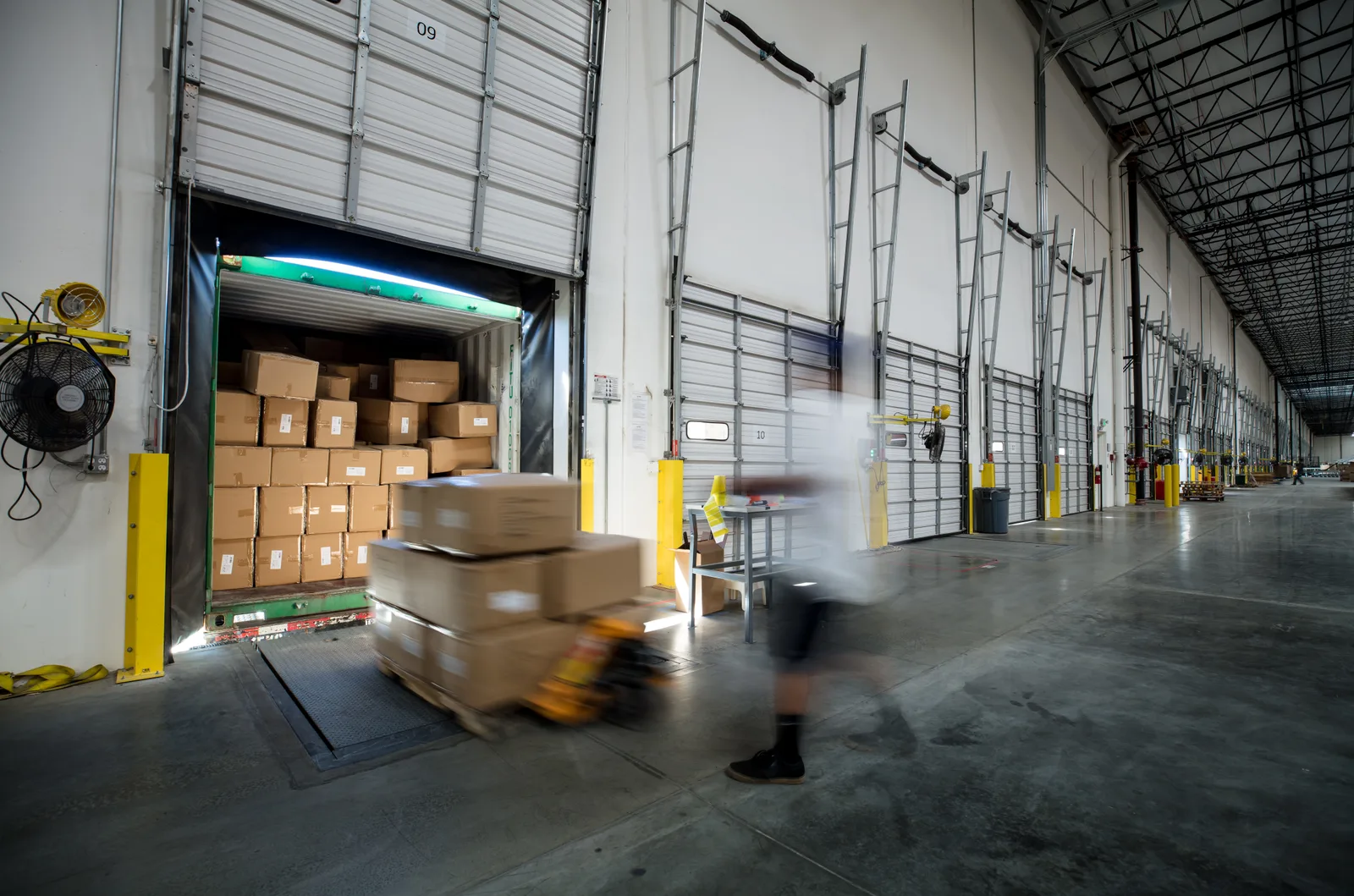
A skid moving across Ontario can travel two fundamentally different ways. On an LTL (less-than-truckload) lane, it shares the truck with other freight heading the same direction and typically arrives the next business day. On a direct courier run, a vehicle picks it up and drives it straight to the destination — nothing else on board matters more than your delivery. LTL usually wins on price; direct wins on speed, handling and certainty. Which one your skid deserves comes down to the deadline, the fragility of the freight, and what a late or damaged delivery would actually cost you.
What each option actually is
LTL is shared-truck freight. Your skid is one of several shipments on the vehicle, and the route is built around all of them. Depending on the carrier and the lane, freight may move through a terminal or cross-dock where it’s transferred between trucks. Because several shippers split the cost of the same vehicle and driver, each pays less than any of them would pay to run the truck alone.
Direct courier service is the opposite model: one shipment, one vehicle, one route. The truck that loads at your dock drives to the destination and unloads. There are no terminals, no transfers, and no other deliveries deciding when yours happens. You’re paying for the whole vehicle’s time, which is why it costs more — and why it’s faster and gentler on the freight.
The two options side by side
| Next-day LTL | Direct courier | |
|---|---|---|
| Truck | Shared with other freight | Dedicated to your shipment |
| Typical timing | Next business day | Same day, on your schedule |
| Handling | Loaded and unloaded at transfer points along the way | Loaded once, unloaded once |
| Routing | Built around multiple deliveries | Straight from origin to destination |
| Cost logic | Several shippers split one truck | One shipper pays for the run |
| Best for | Routine, cost-sensitive freight with a flexible window | Urgent, fragile, valuable or deadline-critical freight |
Where LTL earns its keep
LTL is the right call when the freight is routine and tomorrow is genuinely fine. Restocking shipments, scheduled replenishment, non-urgent equipment transfers, standing orders between businesses — this is freight that doesn’t need a truck to itself, and paying for one anyway is money spent on speed nobody asked for.
The economics are simple: a truck driving from the GTA to Kitchener–Waterloo costs roughly the same to operate whether it carries one skid or eight. Next-day LTL service fills that truck with freight heading the same way and divides the cost. If your skid is sturdy, well-wrapped and not on a clock, that shared ride is the most efficient way to move it — and it’s the core of most of the levers covered in our guide to the cheapest ways to ship one skid in Ontario.
What you accept in exchange: a delivery window rather than a delivery time, and more handling. Neither is a defect — it’s the design of the service. One practical note: extras like tailgate (lift-gate) delivery exist on both modes, but they need to be declared at booking either way, and on a shared lane an undeclared requirement can hold up more freight than just yours.
Where direct earns its rate
Direct service is worth the premium in three situations, and it’s worth being honest that outside them it’s often overkill.
The deadline is real. A production line waiting on parts, an install crew on site, a customer promised delivery today — when lateness has a cost, the direct run is usually cheaper than the consequence. If today is the requirement, see whether a skid can ship same-day in the GTA for how those runs work.
The freight can’t take extra handling. Every transfer is a forklift pick, a set-down, and a ride beside somebody else’s freight. Machinery, glass, finished goods, anything with a finish that scratches — freight like this benefits from being loaded once at your dock and touched again only at delivery.
You need certainty and a single accountability chain. On a direct run, one driver has your freight the entire time. If anything changes en route, there’s one vehicle to check, not a network to trace.
The handling difference is the part people underweight
Most shippers compare LTL and direct on price and speed, then get surprised by the third variable: touches. It’s not that LTL is careless — it’s arithmetic. A skid that gets lifted four times has four times the exposure of a skid lifted once. Well-built pallets survive LTL every day, but marginal ones — light wrap, overhang, loose banding — get found out by the extra handling. If your freight is going LTL, build the pallet like it will be moved by someone who has never seen it before, because it will be.
This is also why the damage question belongs in the decision, not after it. A saved dollar on the line-haul disappears fast if the freight arrives unsellable.
A quick decision test
Run the shipment through four questions:
- When must it arrive? Today → direct. Tomorrow or later → LTL is on the table.
- What happens if it’s late? Real cost (downtime, penalties, a lost customer) → direct. Mild inconvenience → LTL.
- How does the freight handle touches? Fragile, finished or high-value → direct. Robust and well-palletized → LTL.
- Is this a one-off or a lane you’ll ship weekly? Recurring freight is worth a conversation about which mix of modes fits — most regular shippers use both, and shipping multiple skids at once changes the math again.
If the answers conflict — urgent and cost-sensitive — the deadline should win. Freight that arrives cheap but late usually didn’t do its job. And if you find yourself answering “urgent” every single time, that’s worth examining too: some of those shipments are urgent because they were booked at the last minute, not because the business needed them to be. Ordering a day earlier converts direct-rate freight into LTL-rate freight at no cost to anyone.
Price both before assuming either
The gap between LTL and direct isn’t fixed; it moves with distance, skid size, weight, tailgate requirements and how much room is on the lane that day. The full set of variables is broken down in what it costs to ship a skid in the GTA, but the practical takeaway is simple: describe the shipment once and let the carrier price it both ways.
Sonic Transport runs both — direct trucks across the GTA and Southern Ontario, and next-day LTL lanes for freight that can share a ride — so the recommendation you get is based on the shipment, not on the only service available. Tell us what’s moving and when it needs to land, and a real person will price the options and tell you plainly which one fits.
Frequently asked questions
Is LTL always cheaper than a direct run?
Usually, but not always. LTL wins on price because your skid shares the truck with other freight, but on short hauls with flexible timing the gap can narrow. The honest answer is to quote the shipment both ways and compare — the deadline usually decides before the price does.
Is freight handled more in LTL than on a direct run?
Yes. LTL freight is typically loaded at origin, unloaded and reloaded at one or more points along the way, then delivered. A direct run is loaded once and unloaded once. More touches means more opportunities for damage, which is why fragile or high-value skids tend to travel direct.
Can I mix the two — some shipments LTL, some direct?
Absolutely, and most regular shippers do. Routine replenishment rides LTL lanes for economy, while urgent or fragile freight goes direct. A carrier that offers both can match each shipment to the right mode instead of forcing everything through one.