
Pallet Types 101: Stringer, Block, GMA and What to Use When
Stringer, block and GMA pallets explained — sizes, two-way vs four-way entry, wood vs plastic, and how to pick the right pallet for your freight.
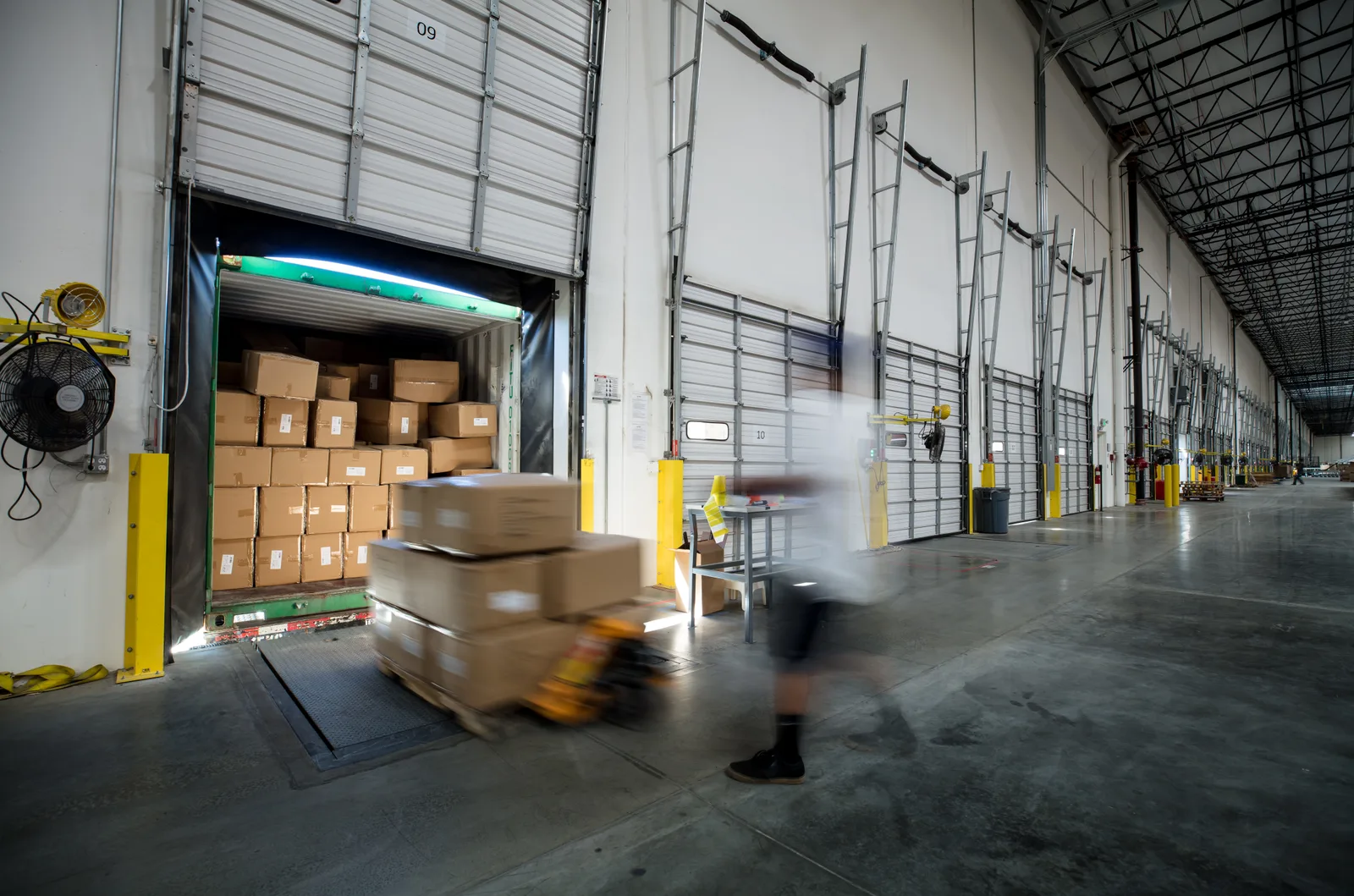
A pallet is the one piece of packaging that has to satisfy three parties at once: your freight, which needs support; the forklift or pallet jack, which needs somewhere to put its forks; and the truck, which needs the whole unit to be stable and sized to fit. Choose well and the pallet disappears into the background of the shipment. Choose badly and it becomes the reason a load shifts, a jack won’t lift, or a deck board fails halfway up a tailgate.
This guide covers the pallet types you’ll actually meet in Ontario freight — stringer, block, and the GMA standard — plus the material and entry-style choices that decide which one belongs under your load.
Stringer pallets: the North American workhorse
A stringer pallet is built on three (sometimes more) parallel boards set on edge — the stringers — with deck boards nailed across the top and bottom. It’s the most common construction in North America, and if you picture a generic wooden pallet, you’re probably picturing one.
The stringers give the pallet its load-bearing backbone and define how it can be entered:
- Two-way entry — forks enter only from the two ends, between the stringers.
- Partial four-way (notched) — notches cut into the stringers let forklift forks enter from the sides as well. Note the limit: pallet jack wheels can’t pass through the notches, so a notched stringer pallet is still two-way for a pallet jack.
Stringer pallets are economical and easy to repair, which is why they dominate general freight. Their weak point is the stringer itself — a cracked stringer compromises the whole unit, and it’s the first thing worth checking before reusing one.
Block pallets: true four-way entry
A block pallet replaces stringers with solid blocks — typically nine, at the corners, edges and centre — with stringer boards and deck boards built around them. The payoff is true four-way entry: both forklifts and pallet jacks can enter from all four sides.
That flexibility matters most in tight quarters. Inside a trailer, in a crowded warehouse aisle, or at a tailgate delivery, the ability to approach a pallet from any side saves real handling time and awkward repositioning. Block pallets are generally stronger and heavier than stringer pallets, and costlier — which is why they’re standard in pooled/rental pallet systems and common under freight that gets handled repeatedly.
If your freight regularly delivers to locations where a driver works alone with a pallet jack, four-way entry is a genuine operational advantage, not a nicety. It pairs naturally with knowing when a pallet jack can do the job and when only a forklift can.
The GMA pallet: the 48 × 40 standard
GMA refers to the Grocery Manufacturers Association specification that standardized the 48″ × 40″ footprint — now the dominant pallet size in North American freight far beyond groceries. When a carrier, a warehouse or a racking system assumes “a standard skid,” this is the footprint they’re assuming.
The size earns its status through fit: two 40″-wide pallets sit side by side across a typical trailer, and the footprint works with standard racking, dock equipment and trailer dimensions. A traditional GMA-style pallet is a partial four-way stringer design, though 48 × 40 block versions are common in pallet pools.
Practical implication for shippers: keep your load inside the 48 × 40 footprint whenever you can. Overhang gets crushed against trailer walls and neighbouring freight, and an oversized footprint changes what vehicle and equipment your shipment needs — which is exactly the kind of detail to nail down when you’re measuring your freight’s dimensions and weight for a quote.
Wood, plastic and presswood
| Material | Strengths | Limitations |
|---|---|---|
| Wood | Inexpensive, repairable, widely available, handles heavy loads | Splinters, nails, moisture absorption, variable quality |
| Plastic | Consistent, durable, washable, no fasteners | Higher cost, hard to repair, can be slippery when wet |
| Presswood (moulded) | Light, nestable for storage, no nails | Lower capacity, vulnerable to moisture |
Wood remains the default for general B2B freight, and for most shipments it’s the right call — cheap, strong and everywhere. Plastic earns its premium in closed loops, where the same pallets cycle between your locations and come back, or where hygiene and consistency matter. Presswood suits light, one-way shipments where the nestable shape saves storage space.
One material note for exporters: wood packaging crossing international borders must generally be treated and stamped under ISPM 15 (the “HT” heat-treatment mark) to control wood pests. Plastic and presswood pallets are exempt, which is one reason they appear often in export packaging. Domestic Ontario freight carries no such requirement.
Matching the pallet to the load
The selection logic comes down to four questions:
- How heavy is the load? A light-duty pallet under a dense load is the classic failure. If the load is heavy — machinery, stone, stacked metal — use a heavy-duty pallet with sound stringers or blocks, and no visible repairs at the load-bearing points.
- How will it be handled? Dock-and-forklift both ends, any sound pallet works. Pallet jacks or tailgate deliveries anywhere in the journey favour true four-way block pallets, or at minimum unnotched access on the entry sides.
- What size is the freight? Fit the pallet to the load: a 48 × 40 for anything that fits it, larger custom decks only when the freight genuinely needs them.
- One-way or returning? One-way shipments justify inexpensive wood. Freight cycling between your own facilities may justify plastic or pooled block pallets.
Whoever builds the pallet also owns its condition — and since loading responsibilities vary by pickup, the safest assumption is that your pallet should be sound enough to be handled by anyone, with any equipment, at any point in the run.
The pallet is half the unit — the securing is the other half
Even the right pallet only works if the load is anchored to it. Freight that’s stacked on a good pallet but not properly wrapped or strapped moves as separate pieces, not as a unit, and separate pieces are how damage happens. Once you’ve chosen the deck, make sure the stretch wrap actually anchors the load to the pallet rather than just bundling the boxes.
Palletized freight is the core of what Sonic Transport moves — skids and pallets are roughly 60% of our deliveries across the GTA, Golden Horseshoe and Southern Ontario, handled through our skid and pallet service with tailgate trucks available for locations without docks. If you have palletized freight to move, request a quote with your dimensions and weight, and we’ll match the vehicle to the unit you’ve built.
Frequently asked questions
What is the difference between a skid and a pallet?
Strictly speaking, a skid has a top deck but no bottom deck boards, while a pallet has both. In practice, Ontario freight uses the terms interchangeably — when a carrier says skid, they almost always mean any palletized unit. The distinction only matters for handling: a true skid drags more easily but is less stable in racking.
Can I reuse a pallet that came in on a delivery?
Usually, if it's sound. Check for cracked stringers, broken or missing deck boards, and protruding nails before loading it. A pallet that arrived carrying half the weight you plan to put on it deserves a closer look — reuse the sturdy ones and recycle the rest.
Do I need a heat-treated pallet for shipping within Ontario?
No. Heat treatment under ISPM 15 is a requirement for wood packaging crossing international borders, where it controls the movement of wood pests. Domestic shipments within Canada don't require it, though many pallets in circulation carry the HT stamp anyway.