
Forklift or Pallet Jack? Matching Equipment to the Job
What a pallet jack can do, where a forklift is the only real option, and how to match handling equipment to weight, height and ground conditions.
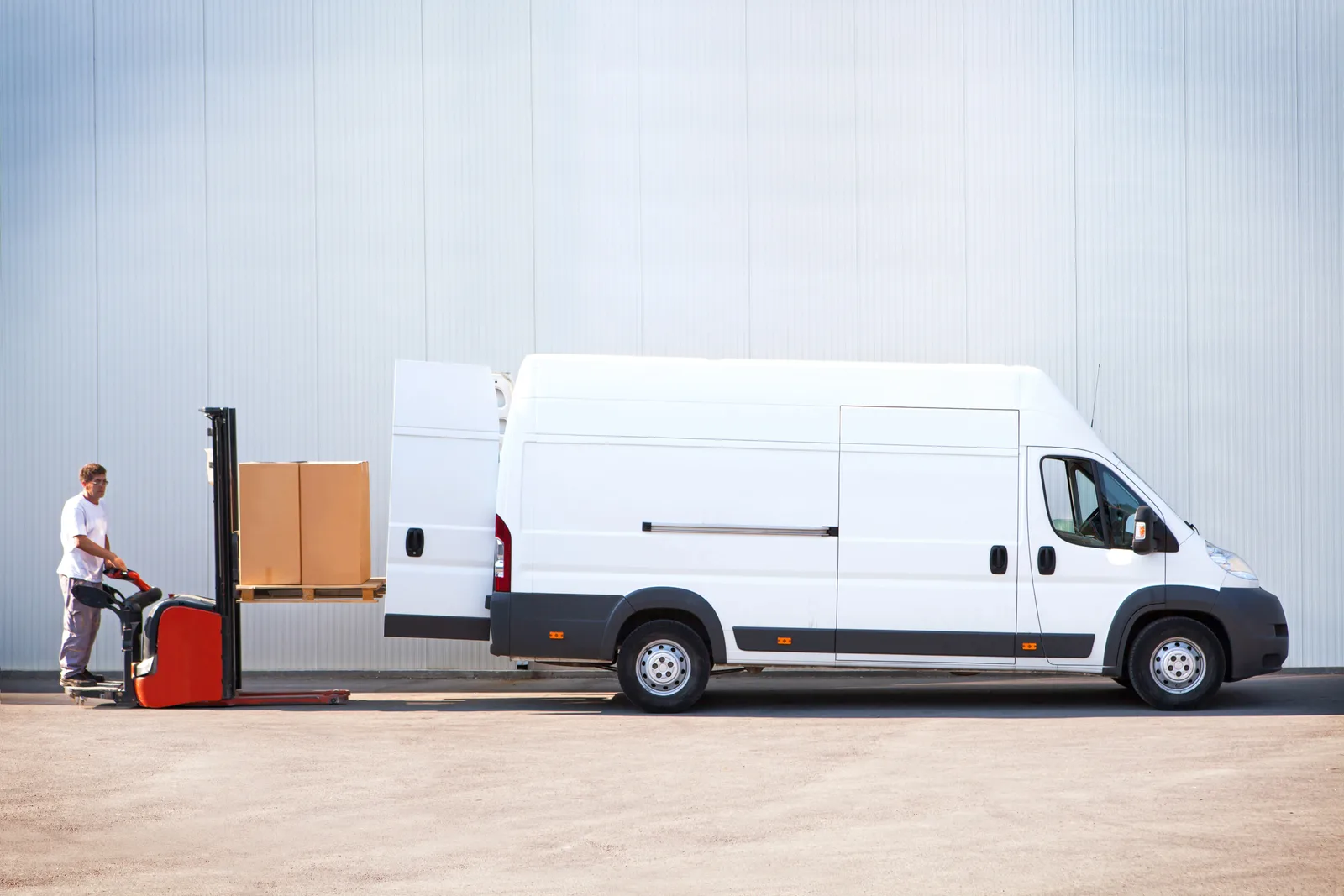
Every palletized shipment gets moved by one of two machines: a forklift or a pallet jack. One costs as much as a car, lifts thousands of pounds to racking height and needs a trained operator; the other lives against a wall, costs less than a laptop and takes thirty seconds to learn. Knowing which jobs genuinely need the forklift — and which end of your shipment has neither — is a basic piece of shipping literacy that shapes what truck a carrier sends and how a delivery actually gets done.
Here’s what each machine can and can’t do, and how to think about equipment when you book freight.
What a pallet jack does well
A pallet jack (pump truck, pallet truck) is a wheeled hydraulic tool that slides its two forks into a pallet, pumps the load a few inches off the floor, and lets one person roll it. Its virtues are simplicity and access:
- Horizontal movement of loaded pallets across smooth, level floors — warehouse aisles, shop floors, trailer beds.
- One-person operation with minimal training; there’s no operator seat and no counterweight.
- Tight spaces — a pallet jack works in back rooms, corridors and trailer interiors where a forklift physically can’t go.
- Working inside trailers — at a dock, freight is commonly wheeled through the trailer with a jack even when a forklift stages it outside.
Its limits are equally clear. A pallet jack lifts inches, not feet — it cannot load a truck from the ground, stack pallets, or place freight in racking. It needs hard, smooth, level ground; gravel, grass, broken asphalt and steep slopes defeat it. And the operator supplies the muscle: very heavy skids can exceed what one person can safely start, stop and steer, even when the jack’s rating technically covers the weight. Electric (powered) pallet jacks extend the weight range and reduce strain, but they’re still floor-level machines.
What only a forklift can do
A counterbalance forklift lifts palletized loads to height and carries them over distance — the job-defining capabilities:
- Vertical lift — from ground to truck deck, into racking, onto stacks. Any transition between ground level and dock height without a tailgate is forklift territory.
- Heavy loads — machinery skids, dense freight and anything beyond safe manual jack work.
- Loading and unloading trucks from ground level — the classic yard scenario with no dock in sight.
- Rough(er) ground — pneumatic-tyred and rough-terrain forklifts operate in yards and on sites where a pallet jack’s small wheels are useless.
The costs of that capability are real: a forklift requires a trained, certified operator — an Ontario workplace obligation, not a suggestion — plus charging or fuel, maintenance, and space to manoeuvre. Forklifts are also where docks concentrate their risk, which is why operator discipline and pedestrian separation feature so heavily in loading dock safety basics.
Side by side
| Question | Pallet jack | Forklift |
|---|---|---|
| Lifts to truck-deck height? | No — floor clearance only | Yes |
| Typical use | Rolling pallets on smooth floors | Loading, stacking, heavy lifts |
| Training | Basic instruction | Certified operator training |
| Ground | Smooth, hard, level | Varies by type; handles more |
| Space needed | Minimal | Aisle and turning room |
| Cost to own | Low | Significant |
The two aren’t competitors so much as stages of the same journey: forklifts handle the vertical and heavy work at docks and yards, pallet jacks handle the horizontal last metres. A single skid delivery can involve both — forklift onto the truck at origin, pallet jack off the tailgate at destination.
What this means when you ship
Carriers ask about loading equipment for one reason: the answer determines the truck. When you book, be exact about both ends:
- Dock or forklift at both ends — any suitable truck works; freight moves dock-to-dock or gets forked on and off. This is the assumption behind dock-to-dock service.
- Neither, at either end — the truck needs a tailgate: a hydraulic platform that lowers the skid to ground level, where the driver takes over with a pallet jack. This must be requested at booking; a standard truck at a no-dock address is a failed delivery.
- Beyond the door — a pallet jack can often bring freight inside to a ground-floor location over smooth flooring, which is the realm of inside delivery — a service to arrange in advance, not improvise, since access, flooring and distance all matter.
Weight belongs in this conversation too. A skid that’s heavy enough to need a forklift at your end may also be near the limits of tailgate equipment at the other — details that change which vehicle suits the shipment. The pallet itself plays a part as well: true four-way entry makes pallet jack work far easier in tight spots, one of the practical differences in our pallet types guide.
The rule that prevents nearly all equipment surprises: describe both ends honestly at booking. Who loads, who unloads, and with what, are questions worth settling before the truck is assigned — our answer on who loads the truck sorts out those responsibilities.
The equipment question, answered by the carrier
For shippers, the good news is that you don’t need to own the vertical half of this equation. A carrier running tailgate-equipped trucks brings the lift with the truck: the tailgate does the forklift’s ground-to-deck job, and the driver’s pallet jack does the rest. That’s how palletized freight reaches storefronts, clinics, job sites and small shops that will never own a forklift.
At Sonic Transport, tailgate lifts are standard on every 26-foot box truck, and skids and pallets are roughly 60% of what we move across the GTA, Golden Horseshoe and Southern Ontario through our skid and pallet service. Tell us what’s at each end of your shipment — dock, forklift, or neither — when you request a quote, and the right equipment shows up with the truck.
Frequently asked questions
Can a pallet jack lift a skid into a truck?
No. A pallet jack raises a pallet only far enough to clear the floor — a few inches — so it can be rolled. It cannot lift freight from ground level up to a truck deck. Loading without a dock takes either a forklift or a truck fitted with a tailgate lift that carries the pallet jack's work up and down.
Do you need a licence to operate a forklift in Ontario?
Operators must be properly trained and competent, and Ontario workplaces are responsible for ensuring that. There isn't a government-issued forklift licence like a driver's licence; certification comes through recognized training providers. Verify current requirements through official Ontario workplace safety guidance.
What happens if my delivery location has no forklift and no dock?
Tell the carrier when you book, and the shipment goes on a truck with a tailgate — a hydraulic platform that lowers the skid to ground level, where the driver moves it with a pallet jack. The critical part is flagging it at booking, because only some trucks carry the equipment.