
Loading Dock Safety Basics for Shippers and Receivers
Core loading dock safety practices for shippers and receivers — trailer restraint, dock plates, communication, pedestrian zones and housekeeping.
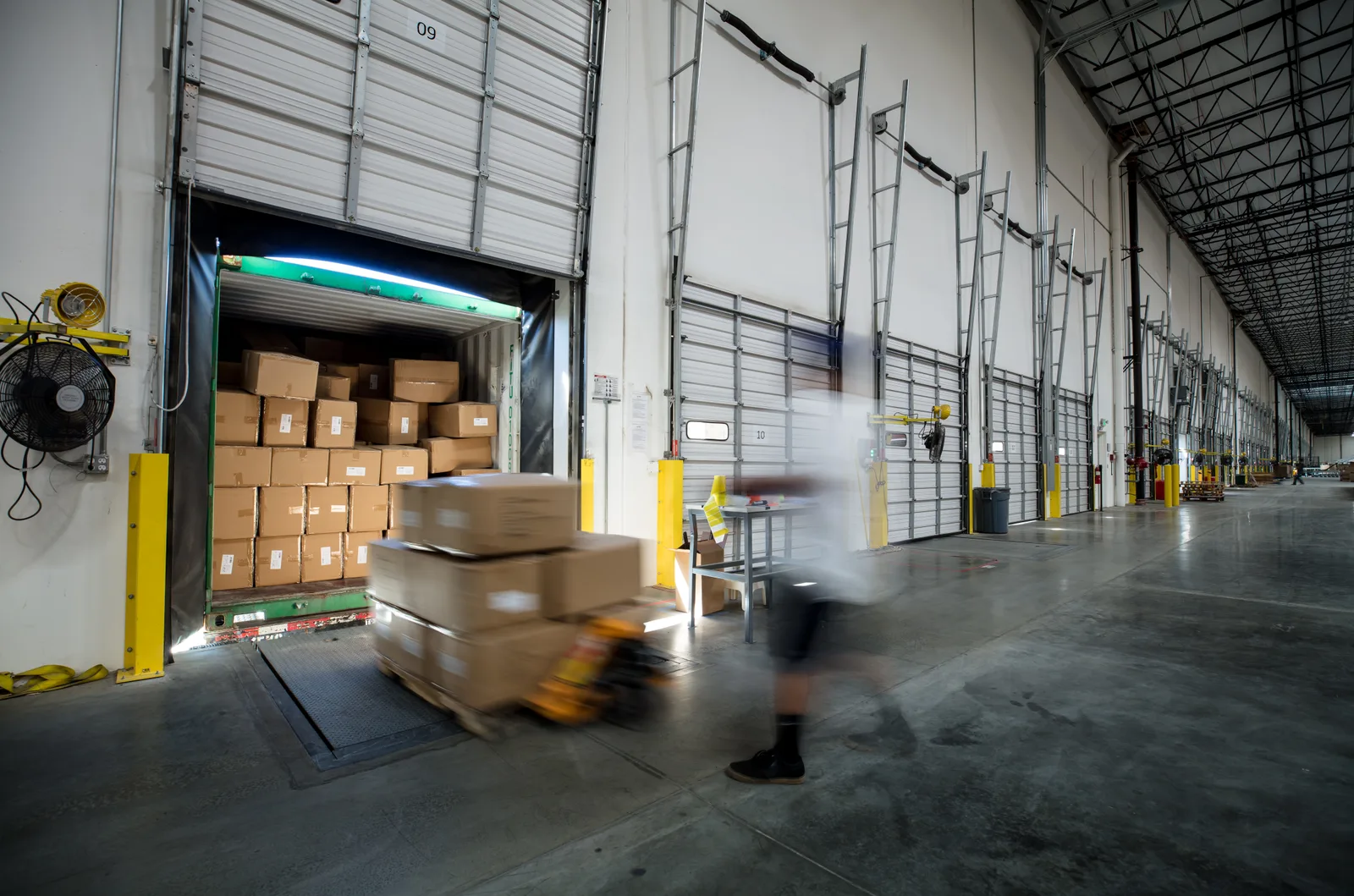
The loading dock is the busiest interface in freight — trucks, forklifts, pallet jacks and people all working the same few square metres, often under time pressure. It’s also where a disproportionate share of warehouse incidents happen, and nearly all of them trace to a handful of preventable causes: unrestrained trailers, unsecured dock plates, blind corners and mixed foot-and-forklift traffic. The fixes are neither expensive nor complicated — they’re habits.
This is a practical tour of dock safety fundamentals for shippers and receivers. It’s general safety knowledge, not legal guidance — workplace safety in Ontario falls under the Occupational Health and Safety Act, and your obligations are worth verifying through official Ontario government guidance for your specific operation.
Restrain the trailer before anything enters it
The foundational dock rule: no person or equipment enters a trailer until the vehicle is secured. Two failure modes make this non-negotiable:
- Early departure — the truck pulls away while loading is still underway, dropping the dock plate, the forklift, or a person into the gap.
- Trailer creep — each forklift entry nudges an unrestrained trailer forward a little; over a loading session the gap grows until the dock plate loses engagement.
Wheel chocks are the universal minimum — placed snugly against the trailer wheels before loading starts, removed only when loading is done and everyone confirms clear. Many facilities add mechanical dock restraints that capture the trailer’s rear impact guard, with indicator lights showing locked or released. Whatever the equipment, the discipline is the same: secure first, load second, release last — with an explicit signal between driver and dock staff at each step. Communication protocols only work when both sides know who is doing the loading in the first place.
Dock plates and levelers: bridge it properly
The dock plate or leveler bridges the gap and the height difference between dock floor and trailer bed — and it’s only safe when it’s properly seated. The habits that matter:
- Confirm engagement — the plate’s lip must rest fully on the trailer bed, not perch on its edge.
- Respect the rating — plates and levelers carry load capacities; a heavy forklift plus a heavy pallet can exceed a light-duty plate.
- Mind the slope — a big height mismatch between trailer and dock creates a ramp that affects braking and load stability, especially for manual pallet jacks.
- Store portable plates properly — a plate left lying loose becomes a trip hazard and a bent, unreliable bridge.
This equipment is exactly what “dock-to-dock” freight assumes at both ends — the context our answer on what dock-to-dock means fills in — and it deserves the same respect at a receiving dock as at a shipping one.
Separate people from machines
The most consistent theme in dock incidents is a person where a machine is working. The countermeasures are physical and procedural:
- Marked pedestrian lanes that keep foot traffic out of forklift running lines, with barriers where the layout allows.
- Designated driver zones — a marked safe area where visiting drivers wait during loading, out of the equipment path but visible to the operator.
- Blind-corner discipline — mirrors, horns at intersections, and reduced speed anywhere sightlines are short.
- Eye contact before approach — nobody walks toward an operating forklift until the operator has visibly acknowledged them and set the equipment down or stopped.
High-visibility vests for anyone on the dock floor make all of this easier — including for delivery drivers, who should expect to wear one on sites that require it. The right equipment choice reduces exposure too: not every job on the dock needs a forklift, and the trade-offs in forklift versus pallet jack work are partly safety trade-offs.
Housekeeping and the physical environment
An astonishing amount of dock safety is just tidiness maintained under pressure:
- Clear floors — broken pallet fragments, strapping offcuts, stray stretch wrap and spilled granules are all slip, trip and puncture hazards for people and wheels alike.
- Dry surfaces — rain, snowmelt and trailer condensation migrate onto dock plates and floors; in a Southern Ontario winter, de-icing and matting at dock doors is a season-long duty.
- Lighting — trailer interiors are dark; dock lights that illuminate the trailer’s depths prevent misjudged loads and misplaced steps.
- Staged, stable freight — loads staged for pickup should be squared, wrapped and stable long before the truck arrives, not being finished as the driver watches. Stable staging is a safety practice as much as an efficiency one, and it’s a core item in our freight-ready pickup checklist.
Housekeeping fails gradually — one broken board at a time — which is why the effective version is a scheduled sweep, not a reaction to mess.
Make the process predictable
Almost every dock incident has a scheduling ancestor: the rushed load, the two trucks arriving at once, the receiver improvising space. Predictability is a safety control. Docks that book arrival windows, stage freight in advance and communicate clearly with drivers run calmer — and calm docks are safe docks. That operational layer, from booking windows to turnaround habits, is covered in our guide to dock scheduling and receiving practices, and the pickup-day rhythm is walked through in how freight pickup works.
For shippers, the summary is short: restrain the vehicle, bridge the gap properly, keep people and machines apart, keep the floor clean, and schedule so nobody has to hurry. None of it requires capital projects — it requires consistency.
Sonic Transport’s drivers work docks across the GTA, Golden Horseshoe and Southern Ontario every day, moving the skids and pallets that make up roughly 60% of our deliveries — and our tailgate-equipped trucks handle the locations that have no dock at all through our skid and pallet service. If you’ve got palletized freight moving in or out, request a quote and we’ll send equipment that fits your dock — or the absence of one.
Frequently asked questions
What is trailer creep and why does it matter?
Trailer creep is the gradual forward movement of a trailer away from the dock, caused by the repeated impact of a forklift entering and exiting. Enough creep opens a gap between the dock plate and the trailer bed — a serious fall and tip hazard. Wheel chocks and vehicle restraints exist specifically to prevent it.
Who is responsible for safety during loading — the shipper or the driver?
Both, in their own zones. The facility controls the dock environment: restraints, dock plates, lighting, housekeeping and its own equipment operators. The driver controls the vehicle: securing it, confirming it's safe to load, and securing the freight for transport. Good docks make the handoff explicit rather than assumed.
Do delivery drivers need to follow a facility's safety rules?
Yes — visiting drivers are expected to follow the site's rules: signing in, wearing required PPE such as high-visibility vests or safety footwear, staying in designated areas, and waiting for clearance before approaching the dock. Facilities should communicate these rules at arrival, and clear instructions save time for both sides.