
Load Securement: The Rules of Keeping Freight Where You Put It
How load securement works in Canada: the NSC 10 standard, tie-downs and working load limits, and where shipper duties end and carrier duties begin.
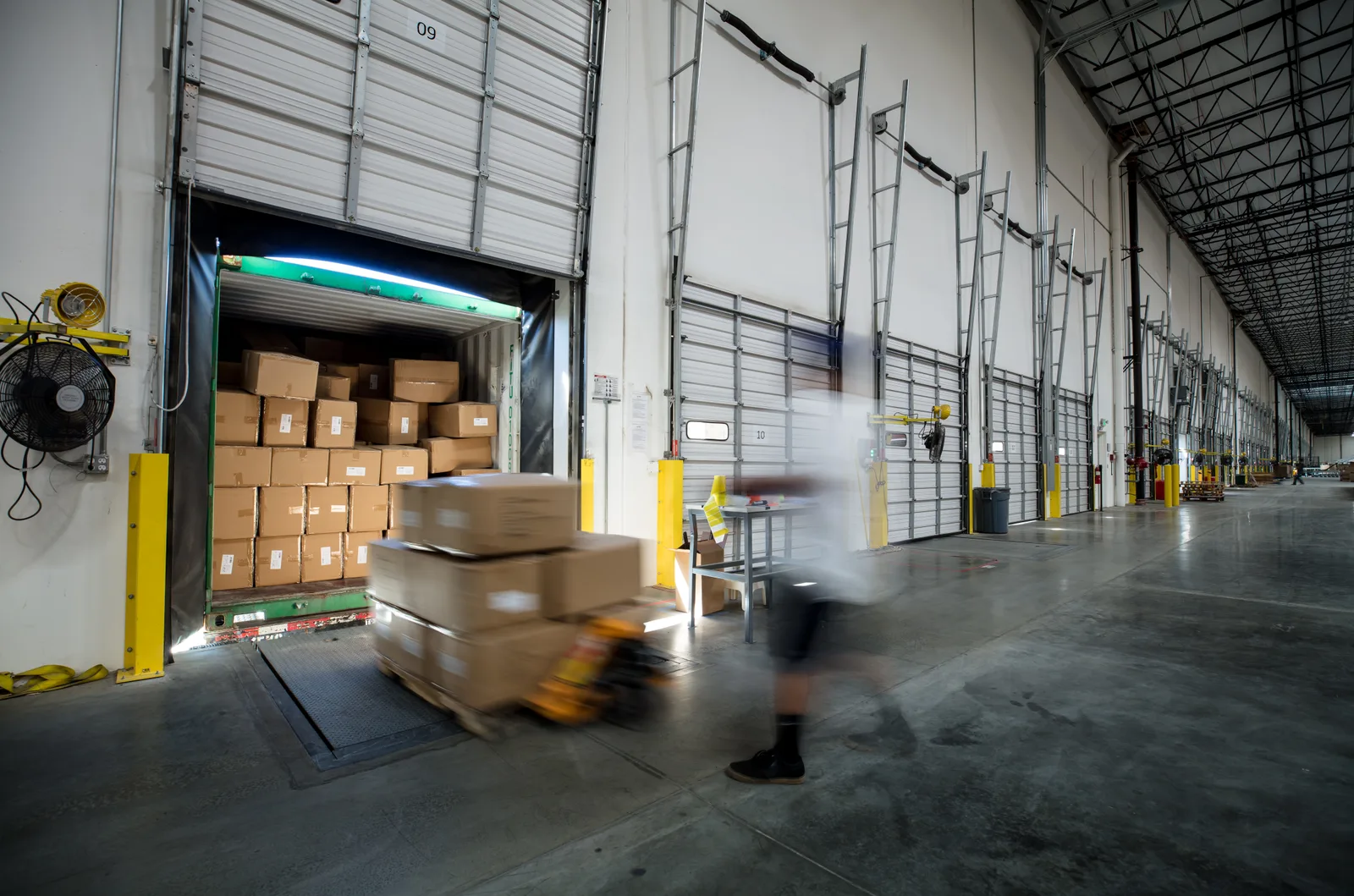
Freight in a moving truck is subject to simple, unforgiving physics: every stop, turn and lane change tries to keep the load moving in the direction the truck was just going. Load securement is the discipline — and in Canada, the regulated standard — that counters it. The rules exist because an unsecured load is a hazard to everyone on the road and a write-off waiting to happen for the freight itself.
Securement is the carrier’s job. But shippers who understand the basics build better pallets, declare better information and understand why a driver sometimes asks for changes at the dock. Here’s what’s behind the straps.
There’s a real standard: NSC 10
Cargo securement in Canada isn’t left to judgment — it’s governed by National Safety Code Standard 10, a cargo securement standard adopted into provincial regulation, including Ontario’s. NSC 10 aligns closely with the equivalent US rules, so the same principles apply on both sides of the border.
The standard’s core requirement is performance-based and easy to state: cargo must be contained, immobilized or secured so it cannot shift, fall from the vehicle, leak or spill under the forces of normal driving — including hard braking and evasive steering, which count as “normal” because they happen. Around that principle, the standard sets specific rules for tie-downs, their strength ratings and their use, plus dedicated requirements for particular commodities like logs, metal coils, pipe and vehicles.
The details are the regulator’s territory and get updated over time; the Ministry of Transportation and the published standard are the sources to verify against. What follows is the plain-language version of the principles.
The core principles behind the rules
A few ideas do most of the work in securement:
- Every restraint has a rating. Straps, chains and anchor points carry a working load limit (WLL) — the maximum force each is rated to hold in service. Securement math is built on these ratings, not on how strong a strap looks.
- Combined strength scales with cargo weight. Under the standard, the tie-downs securing an article must, in combination, meet a set fraction of the article’s weight. Heavier freight needs more restraint capacity — there’s no strapping a machine down “close enough.”
- Longer articles need more tie-downs. The required number of tie-downs increases with an article’s length and weight, so a long crate gets more straps than a short one of the same weight.
- Restraint must not destroy what it restrains. Edge protectors keep straps from cutting into loads and keep loads from cutting into straps — both directions matter, because a severed strap is a failed strap.
- Blocking and bracing beat tension alone. Freight held against a wall, a load bar or other freight can’t build momentum. Immobilizing cargo is often better securement than simply tensioning it.
- Securement is inspected, not assumed. Drivers are required to check their securement before a trip and re-inspect at intervals along the way, because straps loosen as loads settle.
None of this requires a shipper to memorize tables. It explains driver behaviour that can otherwise look fussy: the extra strap on a tall skid, the load bar behind your freight, the refusal to lean a long item against a wheel well.
Where the carrier’s responsibility starts — and the shipper’s ends
Responsibility splits cleanly at the truck. Securement on the vehicle — selecting restraints, applying them, inspecting them en route — belongs to the carrier and driver. If a roadside inspection finds an insecure load, the citation lands on the operator, and repeated findings damage the safety record we describe in why carrier compliance matters to shippers.
The shipper’s responsibility sits upstream, and it’s just as real:
- Build a stable unit. A skid with a level top, weight stacked low, and stretch-wrap anchored to the pallet deck gives the driver something securable. A leaning, overhanging or loosely wrapped pallet doesn’t get safer once straps are on it. Our guide on how to ship a skid across the GTA covers pallet-building in detail.
- Package for transport forces. Products should survive contact with restraint — banding, corner boards and rigid packaging where the load will bear strap pressure.
- Declare honest weights and dimensions. Securement planning starts from the weight. An underdeclared load can exceed the restraint plan the driver arrives with, along with the vehicle and tailgate ratings discussed in our post on Ontario truck weight basics.
- Flag the odd stuff. Top-heavy machines, freight that can’t be strapped across the top, anything on wheels — say so when booking, so the right equipment and plan show up.
What securement looks like on a typical skid run
On palletized freight — the skid and pallet work that makes up roughly 60% of what we move at Sonic Transport — securement is usually straightforward: sound pallets, loads wrapped to the deck, positioned against the front wall or headboard, with straps or load bars preventing rearward and sideways movement. Open-deck work is different: on a pickup truck carrying long stock, the tie-downs are the securement, which is why our pickups run with proper tie-down equipment rather than improvisation.
Multi-stop work adds one more habit worth noticing: securement isn’t set once and forgotten. Every partial delivery changes the load — freight that was braced against a neighbouring skid loses its neighbour — so a driver re-checks and re-straps as the truck empties. On route and LTL runs, that mid-day re-securement is the difference between a load plan that survives the whole day and one that only worked at the first stop.
The pattern to notice is that securement quality is visible at pickup. A driver who walks the load, checks the pallet before lifting it, and straps inside a box truck without being asked is showing you the carrier’s standards in real time. The details of the rules live with the regulator — the principles live in habits like these. Our answer page on what the load securement rules require is the quick-reference version of this post.
When securement changes the plan
Occasionally securement genuinely changes what a shipment needs: a top-heavy unit that wants a wider pallet, a delicate finish that needs blocking instead of straps, or a piece so heavy that the ground-delivery method needs rethinking — tailgate platforms have their own ratings, as our explainer on tailgate delivery covers. These are booking-time conversations. Raised early, they cost nothing; discovered at the dock, they cost the day.
The takeaway
Load securement rules exist so that what leaves your dock arrives as one piece and endangers no one on the way. The carrier owns the straps; you own the pallet and the facts. Both halves have to be right.
If you have freight to move anywhere in the GTA, Golden Horseshoe or Southern Ontario — palletized, long, awkward or all three — tell us what’s shipping and Sonic Transport will put the right vehicle and the right securement plan on it.
Frequently asked questions
Who is legally responsible if freight shifts in transit?
Securement on the vehicle is the carrier's and driver's responsibility — they choose and apply the tie-downs, blocking and bracing, and they're the ones cited if an inspection finds the load insecure. The shipper's responsibility is upstream: building a stable pallet, packaging the freight properly and declaring honest weights and dimensions.
Do securement rules apply to freight inside a closed box truck?
Yes. An enclosed body keeps cargo from leaving the vehicle, but freight inside still has to be restrained from shifting — a skid sliding into the door or tipping against the wall is both a damage risk and a safety problem. Drivers use straps, load bars and careful load placement inside vans and box trucks for exactly this reason.
Can a driver refuse freight over securement concerns?
Yes, and a good one will. If a load can't be safely restrained — an unstable pallet, freight that can't be strapped without crushing it, or weight that exceeds the equipment's ratings — the professional response is to fix the problem before the truck leaves, not after the freight shifts on the first ramp.