
The Wholesale Distributor's Guide to Courier and Freight
How wholesale distributors structure delivery: standing routes for replenishment cycles, next-day LTL for overflow, direct runs for exceptions, and POD.
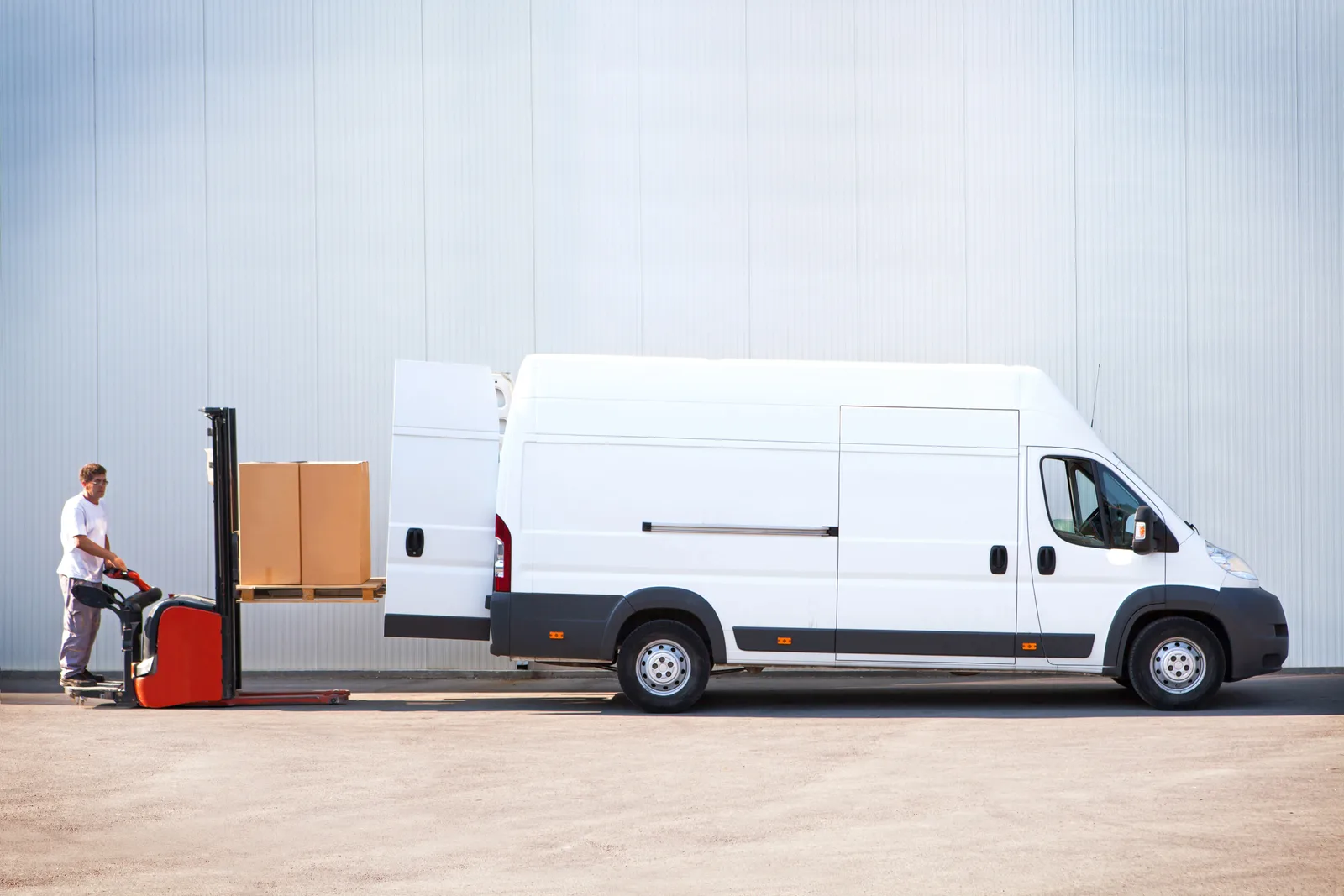
A wholesale distributor’s entire business model is a promise about delivery. The product isn’t unique — the manufacturer made it, and competitors carry it. What customers actually buy from a distributor is availability: the right goods, at their door, on a rhythm they can build their own operation around. That makes transportation not a cost line to minimize but the core service to engineer.
This guide lays out how distributors across the GTA and Southern Ontario structure that engineering: sorting shipments into tiers, running the repeating volume on standing routes, and keeping exceptions from contaminating the economics of the routine.
Delivery is part of what you sell
Start with the customer’s view. A retailer, contractor or facility that buys from a distributor is really outsourcing inventory: they hold less stock because they trust replenishment to arrive predictably. Every delivery either reinforces that trust or erodes it — and erosion sends them to a competitor carrying the same catalogue.
Two implications follow. First, delivery performance deserves the same management attention as fill rate and pricing. Second, the delivery experience — the driver at the customer’s door — is part of your brand, whether the truck is yours or a carrier’s. Choose accordingly.
Sort your freight into three tiers
Nearly everything a distributor ships falls into one of three patterns, and each pattern has a service tier that fits it economically:
| Tier | What it is | Right service |
|---|---|---|
| Replenishment | Repeating orders to regular customers on a cycle | Standing scheduled routes |
| Irregular volume | Off-route customers, oversized orders, busy-week overflow | Next-day LTL |
| Exceptions | Stockouts, first orders, promised-for-today situations | Same-day or rush direct runs |
The discipline that makes the model work is keeping freight in its tier. Every exception that could have waited for the route is money burned; every replenishment order forced onto a route it doesn’t fit delays a truckful of other customers. Sort first, ship second.
Replenishment cycles: the backbone volume
Replenishment is the heartbeat of distribution — the weekly or twice-weekly orders from customers who buy on a cycle because they consume on a cycle. This volume is predictable, dense and geographically clustered, which is precisely what makes standing routes cheap to run.
A well-built route program has a few characteristics:
- Territory days. Customers grouped by geography, each area served on fixed days — order by the cutoff, receive on your day. Customers adapt to the rhythm quickly and start planning their receiving around it.
- Route density as the north star. The cost of a route day spreads across its stops, so every customer added to an existing day makes all deliveries on it cheaper. Growth inside existing territories is nearly free to serve; growth outside them is a new route decision.
- The same driver, deliberately. A driver who knows each stop’s dock, stacking preferences and signer clears stops faster and surfaces problems early. On routes, the driver is the service.
- Vehicles that flex with the season. A Sprinter-sized week and a box-truck week can live on the same route — the schedule stays fixed while the metal changes.
How this looks from the customer’s side — cutoffs, receiving windows, what retailers actually expect — is covered in our answer on how distributors restock retailers. And for a worked example of route economics in a single sector, see distribution for packaging suppliers.
The middle tier: LTL for the freight that fits no pattern
Between the route and the emergency sits a broad middle: the customer 120 km off your route map who orders monthly, the order too large for the route vehicle, the heavy week when the route cubes out. Dedicated runs for this freight are overkill; squeezing it onto routes degrades them.
This is what next-business-day LTL is for. The skid shares a truck with other freight heading the same direction, the rate reflects the shared capacity, and the delivery lands the next business day — fast enough for freight that was never promised for today. A distributor using LTL well treats it as a pressure valve: routes stay lean and dense because the irregular volume has somewhere economical to go.
Exceptions: spend speed only where it buys loyalty
Some shipments genuinely can’t wait: a customer’s stockout on a product they sell daily, a new account’s first order, a short-shipped line that has to be made right. These are direct-run situations — one vehicle, straight to the customer — and they’re expensive by design.
That expense is fine, because exception freight isn’t a logistics event; it’s a customer-retention event. The stockout run that saves a customer’s weekend sales is cheap at the price. What’s not fine is exception creep: orders riding direct because nobody checked whether the route day would have done. A monthly review of what shipped outside the tiers usually pays for itself immediately.
Distributors whose volume swings hard — e-commerce brands moving into wholesale, 3PLs in peak season — lean on this tier structure even more heavily; see our guides on B2B replenishment for e-commerce brands and overflow partnerships for 3PLs.
POD discipline protects the margin
Distribution margins are thin enough that delivery disputes — “we never got it,” “it was short,” “it arrived damaged” — turn profitable orders into losses. The defence is boring and total: proof of delivery on every shipment, every tier, no exceptions. Who signed, when, piece count, exceptions noted at the door.
POD does double duty. It resolves disputes in minutes instead of email chains, and it feeds the data a distributor needs to manage the carrier: delivered-when, delivered-complete, by route, by week. A carrier that returns POD and shipment updates automatically — rather than on request — is doing part of your customer-service job for you.
What the carrier relationship should look like
Pull the threads together and the specification for a distribution carrier writes itself: standing routes with consistent drivers and flexible vehicles; an LTL lane for the middle tier; direct capacity on call for exceptions; POD flowing back automatically; and a person who knows your account when something needs judgment. Rate matters — the factors are broken down in what determines courier rates in the GTA — but structure matters more, because the wrong structure overpays at any rate.
Sonic Transport runs this full structure for distributors across the GTA, Golden Horseshoe and Southern Ontario: scheduled routes, next-day LTL, same-day and rush direct runs, tailgate trucks for no-dock customers, and POD closing out every delivery. Roughly 60% of what we move rides on skids and pallets — distribution freight is home ground. If your delivery promise is the business, tell us about your shipping pattern and a real person will help you put the right structure under it.
Frequently asked questions
What is a standing route in distribution?
A standing route is a recurring delivery run — the same territory, the same day or days each week, usually the same driver — that a distributor's customers order against. It consolidates many stops onto one vehicle, which lowers the cost per delivery and gives customers a predictable day to plan their receiving around.
When should a distributor use LTL instead of a route or a direct run?
Next-day LTL suits palletized orders that fall outside the route pattern but don't justify a dedicated vehicle — an oversized order, a customer off the route map, or overflow in a heavy week. The skid shares a truck with freight heading the same way, trading a day of speed for a lower rate.
How do distributors keep delivery costs down as they grow?
Mainly by keeping freight in the cheapest tier that still meets the customer's expectation: dense standing routes for the repeating volume, LTL for irregular pallets, and direct runs reserved for genuine exceptions. Route density is the biggest lever — every added stop on an existing route day lowers the average cost of all of them.