
Wholesale Textile and Apparel Freight: Cartons, Racks and Reorders
How wholesale textile and apparel freight moves in the GTA — carton counts, fabric rolls, rolling racks, seasonal reorders and scheduled replenishment runs.
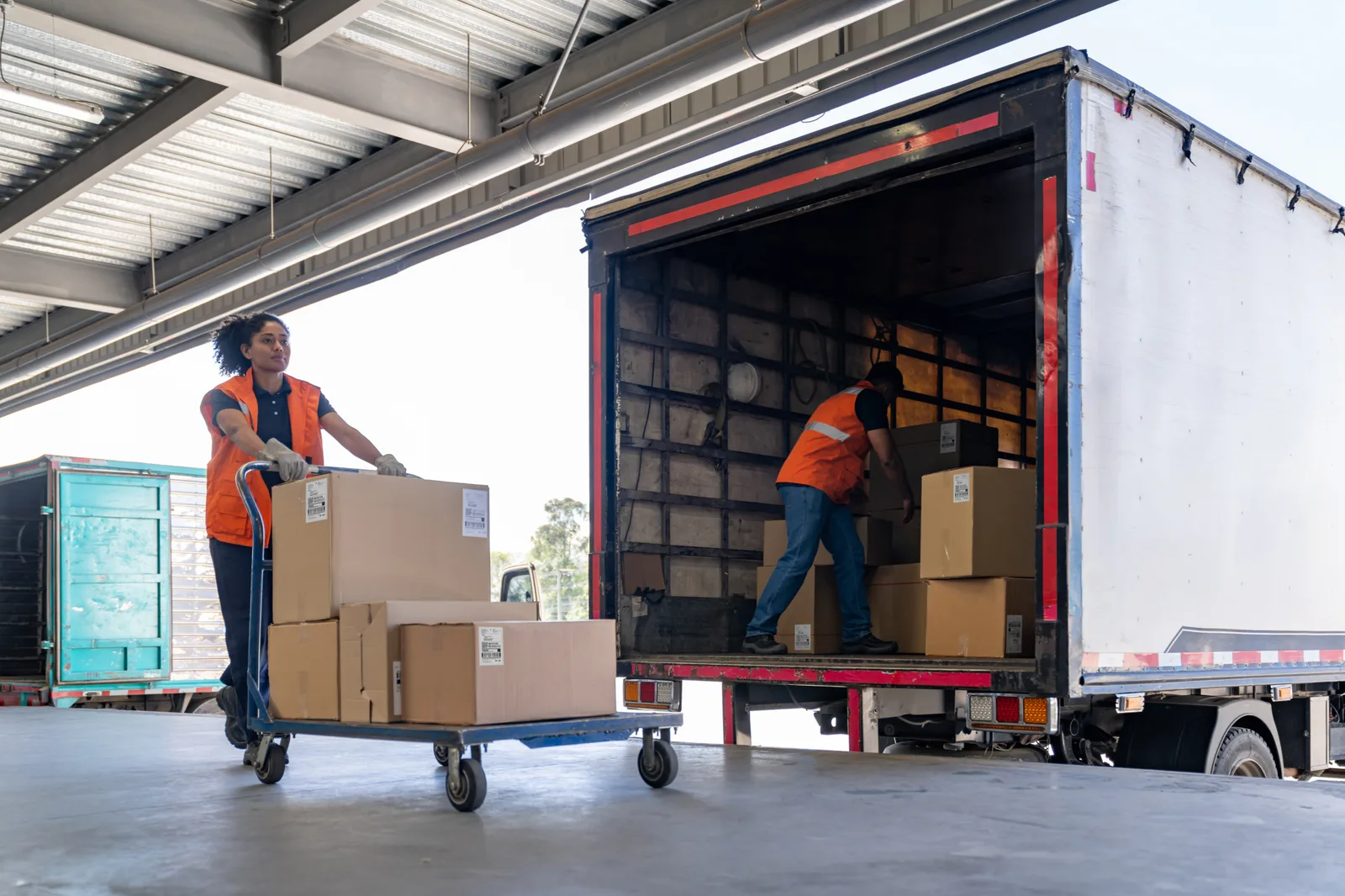
Textile and apparel wholesale runs on reorders. The first big shipment of a season is only the opening move — the money is made in the weeks after, when retailers reorder the styles and sizes that are actually selling and the wholesaler’s job becomes getting cartons out the door fast enough to catch the demand. That makes apparel freight a rhythm business: carton-heavy, light for its size, and moving on a repeating schedule rather than as one-off shipments. Here is how the category works from the loading dock’s point of view.
The three formats apparel freight travels in
Almost everything in this industry ships in one of three ways, and each behaves differently on a truck:
| Format | What it is | What it needs |
|---|---|---|
| Cartons | Folded garments, packaged goods, accessories in corrugated boxes | Accurate counts and dimensions; cube-based pricing; clean stacking |
| Fabric rolls | Bolts and rolls of yardage, often 1.5–3 m long | Support along the full length; no crushing; sometimes racked or on end-boards |
| Rolling racks (GOH) | Garments on hangers on wheeled racks | Enclosed vehicle, securement so racks can’t roll, no stacking on top |
Cartons dominate. A typical wholesale reorder is a stack of same-size boxes, each labelled by store or purchase order, and the operational challenge is volume and count accuracy rather than weight. Fabric rolls are the opposite problem — long, prone to crush damage at the ends, and awkward on a standard pallet. Garment-on-hanger racks are the premium format, used when creasing is unacceptable, and they demand an enclosed vehicle with proper securement because a rack that rolls in transit takes the whole load with it.
Cube, not kilograms
Apparel is famously light freight, and that changes how it prices. A cargo van or box truck fills up with garment cartons long before it approaches its weight limit, so carriers price this freight on the space it occupies — dimensional or cubed pricing — rather than the scale reading. Two habits follow from that:
Count and measure cartons accurately. The quote is built from carton dimensions and quantity. A booking that says “about 40 boxes” and turns out to be 65 doesn’t fit the vehicle that was sent, and the reorder misses its day.
Stack tight and uniform. Same-size cartons cube efficiently; mixed sizes waste space. Wholesalers who standardize on two or three carton footprints get more freight per vehicle, which matters when you’re paying for cube. The same logic drives efficiency for every wholesale distributor moving repeat freight, but apparel feels it most because the freight is so light.
Reorders run on a schedule, not on panic
In-season replenishment is where a delivery schedule earns its money. Retailers reorder weekly — sometimes twice weekly for strong sellers — and every day a reorder sits on the wholesaler’s dock is a day the retailer’s rack has a gap where the best-selling size should be.
The efficient answer is a scheduled route: recurring runs on fixed days, covering the retailers in each area, with the wholesaler picking to a known cutoff. Tuesdays might cover downtown Toronto accounts, Thursdays the western GTA, and so on. Both ends benefit. The wholesaler’s shipping team picks against a predictable deadline instead of booking ad-hoc runs, and retail receivers know when to expect stock and can plan floor staff around it. Our answer page on how distributors restock retailers walks through the mechanics; apparel simply runs the same play at higher frequency during the season.
Off-schedule urgency still happens — a store event, a stockout on a hot style — and those runs go direct rather than waiting for the next route day. The point of the schedule is to make those exceptions rare and affordable, not to forbid them.
Counts, condition and the paperwork that prevents disputes
Apparel freight disputes are almost always about counts. Sixty-two cartons left the warehouse; sixty-one arrived — or sixty-two arrived, but the receiver signed without counting and discovered a shortage a week later, when it’s no longer provable either way. The discipline that prevents this is unglamorous:
- Carton counts on the paperwork, matched at pickup and again at delivery
- Cartons labelled with the destination account and PO number, so a mixed load sorts cleanly at each stop
- Receivers count before signing — the signature on the proof of delivery is confirmation of the count, and a shortage noted at the time of delivery is a straightforward claim instead of an argument
Condition issues are rarer but real: crushed cartons from over-stacking, and water exposure, which is unforgiving with textiles. Enclosed vehicles handle the weather; sensible stacking — heavy cartons low, no freight on top of rack-format garments — handles the crushing.
Where this fits in the GTA’s apparel trade
The Toronto area concentrates the whole chain in a small radius: importers and wholesalers around the airport corridor and the city’s traditional garment districts, distribution space in Mississauga and Brampton, and retail spread across every plaza and mall in the region. Most wholesale-to-retail moves are under an hour of driving — which is exactly the profile where a regional carrier running dependable scheduled routes beats shipping cartons through a parcel network box by box.
Sonic Transport runs this kind of replenishment freight across the GTA, Golden Horseshoe and Southern Ontario — recurring routes for the weekly rhythm, direct runs when a reorder can’t wait, and proof of delivery closing out every stop. If your cartons, rolls or racks need a dependable way to reach your retailers, tell us about your shipping week and we’ll put a schedule around it.
Frequently asked questions
Why does apparel freight get billed on size rather than weight?
Because cartons of garments are light for the space they occupy. Carriers price on whichever is greater — actual weight or the space the freight takes up on the truck — so a load of apparel cartons is usually priced on cube. Accurate carton dimensions and counts matter more than weight for this category.
Can garments ship on hangers instead of in cartons?
Yes. Garment-on-hanger freight moves on rolling racks or in wardrobe-style cartons with hanger bars, which protects pressed and finished garments from folding creases. Racks need an enclosed vehicle and careful securement, so tell the carrier the freight is on racks when booking.
How do wholesalers handle retail reorders during a season?
Most run a replenishment rhythm: retailers submit reorders on best-selling styles and sizes, the wholesaler picks and cartons them, and the freight moves on a recurring schedule — often weekly to each area. A scheduled route makes the timing predictable for both ends without booking each run from scratch.