
Shipping Fragile Equipment: Protection, Handling and Honest Limits
How to ship fragile equipment between businesses — packaging that actually protects, why fewer handling events matter, and the honest limits of any carrier.
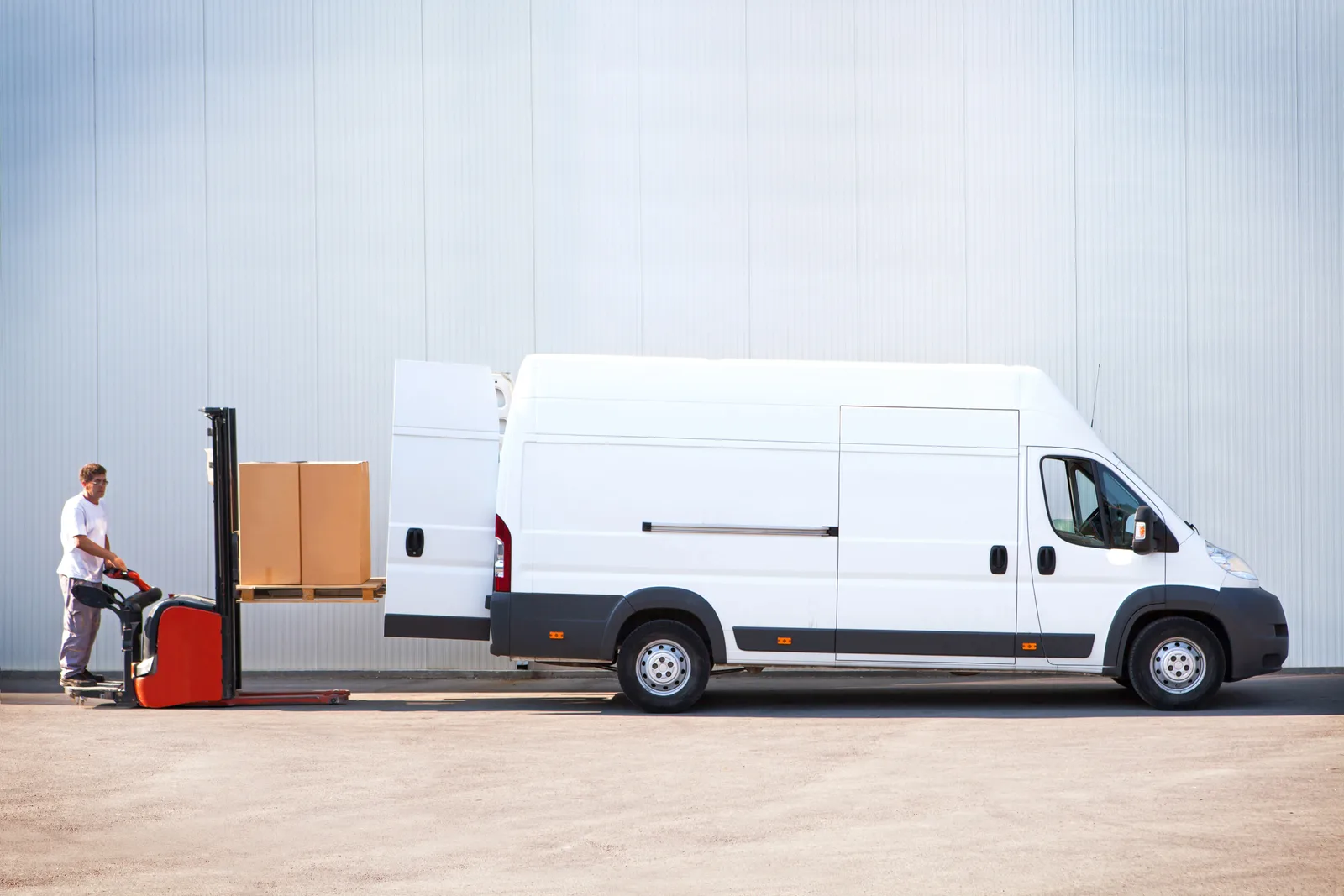
Here’s the honest starting point: no carrier can promise that fragile equipment will never be damaged in transit, and you should be suspicious of any that does. What a shipper controls is probability — and the two levers that actually move it are packaging that does real physical work, and a transport arrangement with as few handling events as possible. Get both right and fragile freight arrives intact as a matter of routine. Get either wrong and the outcome rides on luck.
This guide covers both levers, plus the communication that ties them together.
Damage happens at the touchpoints, not the highway miles
Freight damage is overwhelmingly a story about handling events — the moments freight is lifted, moved, set down, or stacked against something else — plus the steady background of road vibration. A skid that’s loaded once and unloaded once has two significant handling events. The same skid moving through a terminal network — loaded, cross-docked, restacked, reloaded — accumulates many more, each one a roll of the dice.
That’s why the transport model matters as much as the bubble wrap. On a direct run, the vehicle that loads at your dock drives to the destination: no terminals, no transfer, no strangers restacking your freight at 2 a.m. For fragile and high-value equipment, same-day direct service isn’t a speed upgrade — it’s a handling-reduction strategy that happens to also be fast.
Packaging is the freight’s only real armour
Whatever happens between docks, packaging is what’s physically present when it happens. The principles, in order of importance:
Immobilize the internals first. Equipment usually fails at its most delicate point — a head, a carriage, a lens, a loose accessory drawer. Lock or brace moving components, remove and separately wrap protruding parts, and secure doors and panels shut. Damage that starts inside the machine leaves the outer packaging looking innocent.
Cushion against shock and vibration. Foam, engineered inserts or dense padding between the equipment and the outer shell — with enough thickness to actually compress. A machine touching the inside wall of its carton has no cushioning at all, whatever the carton is stuffed with.
Give it a rigid shell when the risk justifies it. Double-walled cartons for lighter gear; a wooden crate for anything heavy, precision-calibrated or irregular. The choice between a crate and a well-built pallet load is its own decision — our comparison of crating versus palletizing machinery walks through when each is right.
Block and brace on the pallet. The equipment shouldn’t be able to slide, tip or rock on the deck. Bolt it down where the base allows, or block it with lumber; then band and stretch-wrap so the unit and pallet move as one.
Put it on a pallet, even when it could be carried
There’s a strong instinct to hand-carry fragile items, and it’s usually backwards. Palletized freight is moved by machine — forklift, pallet jack, tailgate — with the operator’s full attention. Loose fragile items are moved by hands, stacked among other freight, and picked up however they present. A skid also defines the equipment’s footprint, keeps anything from being placed on top when marked and wrapped accordingly, and grounds cleanly by tailgate at destinations without a dock.
If the delivery point needs the equipment brought past the door — into a suite, a lab, an office floor — that’s a different service with its own requirements; see what inside delivery means before assuming the driver can do it.
Enclosed, secured, and not stacked
Fragile equipment rides enclosed — a van or box truck, never an open bed, regardless of the weather forecast. Inside the vehicle, the load should be strapped or braced so it can’t shift under braking, and positioned so nothing rides on top of it. Orientation arrows and “do not stack” markings on the packaging support this, but the real protection is a load plan that respects them — one more argument for a direct run, where the load plan set at your dock is the load plan that arrives.
Tell the carrier what it actually is
Every protective measure upstream can be undone by a carrier that didn’t know what it was handling. When you book, say plainly: what the equipment is, its value class in general terms, its weight and dimensions, any orientation requirement, and what loading exists at each end. This is also the moment to ask how the carrier’s liability works for high-value freight — a question worth settling before shipping, not after. An accurate booking gets you the right vehicle, the right equipment and a driver who knows the freight deserves care; the details that make pickup day smooth are in our freight-ready checklist.
Brief the receiving end too
Half the protection happens at a dock you don’t control. Before the shipment moves, tell the receiver three things: when the freight is coming, what equipment it needs — pallet jack, forklift, clear floor space — and what to check before signing. A receiver who knows to look at the wrap, check orientation arrows and note anything visible on the delivery receipt is the last line of defence, and the one most shippers forget to brief.
For equipment deliveries specifically, add one more instruction: don’t unpack it in the doorway. Move the unit to its destination area first, then unpack, so the protective packaging does its job for the entire journey rather than ending at the threshold.
A pre-shipment checklist
Before booking fragile equipment, run the list:
- Internals locked, braced or removed; panels and doors secured
- Cushioning with real compression space between machine and shell
- Crated or palletized, blocked and braced to the base
- Orientation arrows and “do not stack” marked on every face
- Enclosed vehicle confirmed; direct run considered for high-value units
- Carrier told exactly what the freight is, with honest dimensions and weight
- Liability conversation had, before the shipment, not after
- Receiver briefed on arrival, equipment and inspection
The honest limits
Two things no shipper should believe: that packaging can make freight indestructible, and that any carrier’s handling is perfect. Roads vibrate, docks are busy, and physics is undefeated. What a well-run shipment does is stack every controllable factor in your favour — engineered packaging, minimal touchpoints, enclosed transport, clear communication — so that the uncontrollable remainder is small. And if the remainder bites anyway, a noted delivery receipt and a documented freight claim are how the loss gets recovered; know that process before you need it.
At Sonic Transport, fragile equipment is exactly the freight our direct service exists for: one vehicle, dock to dock, handled by a person who knows what’s on the truck, closed out with a signed POD. If you’ve got equipment that can’t afford a rough trip, tell us about it and we’ll plan the run around protecting it.
Frequently asked questions
Is a 'fragile' sticker enough to protect a shipment?
No. A sticker communicates intent but stops nothing physically — freight in transit experiences vibration, braking forces and handling regardless of what's printed on it. Treat labels as the last layer: useful for orientation arrows and handling notes, but the protection has to come from packaging and how the shipment moves.
Should fragile equipment always ship upright?
If the equipment has an orientation requirement, yes — and the packaging should enforce it, not just request it. Mark orientation arrows on every face, palletize so the correct side is down, and mention the requirement when booking. Equipment with fluids, optics or mounted internals is the most common case.
Is blanket wrap better than boxing for equipment?
They solve different problems. Blanket wrap suits large, sturdy items moving on a dedicated, enclosed run with careful handling — it protects finishes from rubs and knocks. Boxing or crating adds structural protection against impacts and allows safe stacking and mechanical handling. Fragile internals generally want a crate or engineered carton, not a blanket.