
Receiving Palletized Freight Without a Dock or Forklift
The receiver's guide to taking skids with no dock or forklift — tailgate delivery, pallet jack basics, ground prep, inspection and signing the POD.
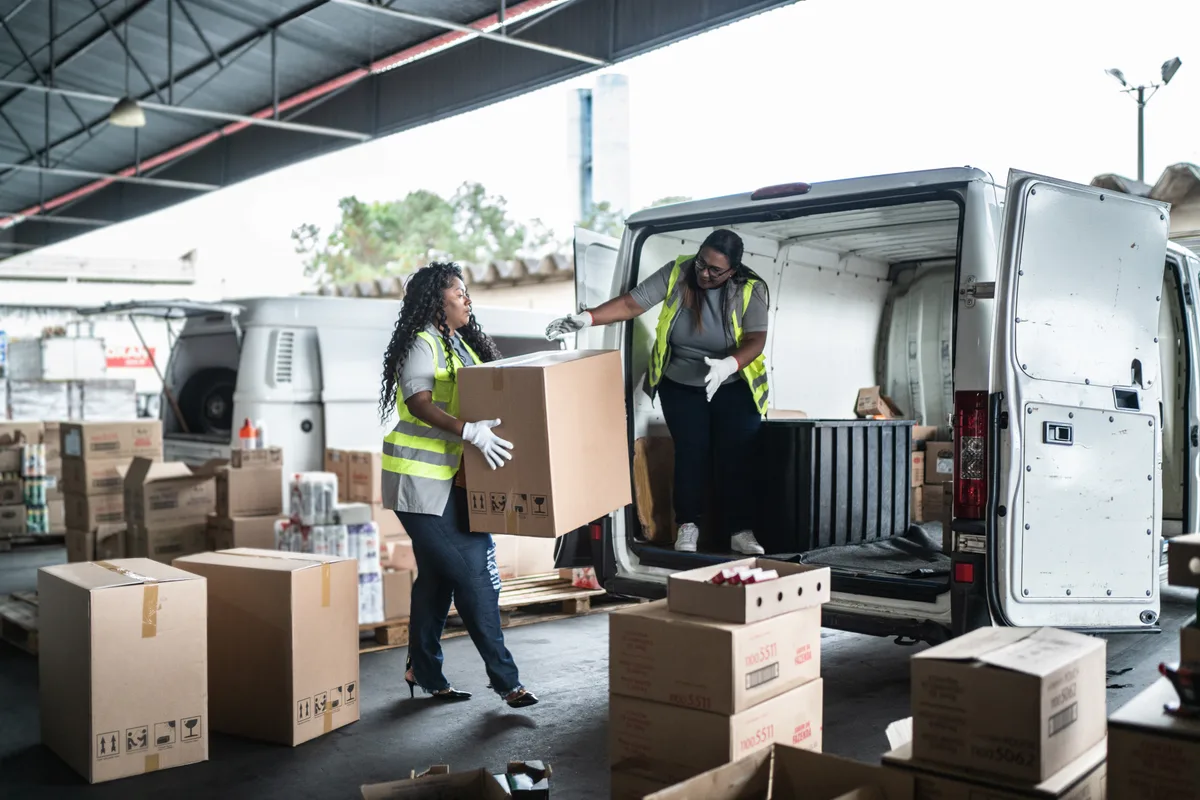
Somewhere between the purchase order and the delivery date, a lot of businesses realize the same thing: a skid is coming, and there’s no dock, no forklift, and no plan. The reassuring truth is that receiving palletized freight at a ground-level building is completely routine — storefronts, clinics, shops and offices across the GTA do it every week. It takes one piece of equipment on the truck, one optional piece of equipment at your door, a patch of decent ground, and about five minutes of attention when the driver arrives. Here’s the whole process, from the moment you know freight is coming to the moment the truck pulls away.
Step 1: make sure the shipment knows about your building
Everything that goes wrong in no-dock receiving traces back to one missing sentence at booking: “There’s no dock or forklift at delivery — tailgate required.”
A tailgate (lift-gate) is a hydraulic platform on the back of the truck that lowers the skid from deck height to the ground. It’s the piece of equipment that makes your delivery possible — and it has to be on the truck that gets dispatched, which means it has to be in the booking. As the receiver, you often don’t control the booking, so push the sentence upstream: tell your supplier, put it on your purchase orders, and if a carrier calls to arrange delivery, say it again. Never assume the shipper described your building.
If freight arrives without it, the skid physically cannot be grounded, and the delivery gets re-run on the right equipment — a lost day for everyone involved.
Step 2: know your equipment — theirs and yours
On the truck: the tailgate does the vertical work, and the driver’s pallet jack does the horizontal work — rolling the skid off the platform and positioning it at your delivery point.
At your door (optional but transformative): your own pallet jack. It’s a simple hand tool — forks, hydraulic pump, steering handle — that lets one person move a heavy skid across smooth floors. Owning one means you can reposition freight after the driver leaves, clear your entrance, and stop breaking down every pallet where it lands. For a business receiving skids even monthly, it’s the single best upgrade to your receiving capability; see what a pallet jack is for how they work and what they can’t do.
What you explicitly do not need is a forklift — that’s the whole point of the tailgate arrangement, at delivery and equally at pickup if you ever ship freight out, as covered in do I need a forklift at pickup.
Step 3: prepare the ground — literally
Pallet jacks are honest tools with one demand: firm, smooth, level ground. Before delivery day, look at where the truck will stop and where the skid needs to go:
- Surface. Concrete and asphalt work. Gravel, grass, mud and snow don’t — small wheels dig in under load.
- Slope. A loaded pallet jack on a grade wants to roll. Aim for level ground at the truck and along the path.
- The path. Walk from the parking spot to the destination. Any step, curb or narrow door stops a skid cold. A standard skid is 40″ wide before the load — measure your door.
- The spot. Decide in advance where the skid will live, so it doesn’t end up blocking your entrance while you figure it out.
- Winter. Clear and de-ice the truck spot and the path. A skid can’t be grounded onto ice, and drivers won’t unsafely try.
If your site fails these tests — soft ground, steps everywhere, no level access — raise it before delivery day so alternatives can be arranged, from a different delivery point on the property to a nearby dock-equipped location.
Step 4: the fifteen minutes when the truck is there
A ground-level delivery runs a predictable sequence, and your part is short but genuinely important:
- The truck positions and the driver grounds the skid — platform down, pallet jack, skid rolled to the accessible delivery point.
- You count the pieces. The delivery paperwork says how many skids or items there are. Confirm the number physically.
- You look at the condition. Walk around the freight once: crushed or torn cartons, punctured wrap, a load leaning off its pallet, moisture. You’re not unpacking — you’re checking what’s visible.
- You note, then sign. Anything short or visibly damaged gets written on the delivery document before your signature. That signature becomes the proof of delivery (POD) — the record of who received the freight, when and in what condition. A clean signature with no notes is treated as clean receipt, which is why the sixty seconds of looking matter; the paperwork’s full role is explained in what proof of delivery is.
Concealed damage found later during unpacking should be documented immediately — photos, wrap kept on — and reported fast; noting visible issues at the truck is what keeps the straightforward cases straightforward. For the prevention side of that coin, see our guide on preventing freight damage on skids.
If more than one person on your team might receive freight, write these four steps down and post them by the door. The process only protects you when whoever happens to be there on delivery day actually runs it.
Know the limits before you rely on them
Tailgate receiving covers the vast majority of no-dock deliveries, but it has edges: platforms are weight-rated, so an extremely dense skid may exceed the tailgate even when the truck carries it easily; oversized footprints may not fit the platform; and no equipment overcomes truly unworkable ground. If you’re expecting something unusually heavy or large, tell the shipper and carrier the specifics early — the workarounds (splitting loads, alternate delivery points, equipment on site) are all booking-stage solutions, not truck-side ones.
And if receiving without a dock is becoming your weekly reality rather than a one-time event, it’s worth graduating from surviving deliveries to running them — our companion piece, the tailgate playbook for GTA businesses, covers standing carrier instructions, site profiles and shipping outbound from a no-dock building.
Sonic Transport grounds skids at no-dock businesses across the GTA every day — tailgates are standard on every 26-foot box truck we run, as part of the skid and pallet service that makes up most of our work. Expecting palletized freight at a building with no dock? Tell us about the shipment and your site, and we’ll make sure the truck that arrives is the one that can actually deliver.
Frequently asked questions
Will the driver bring the skid inside my building?
Standard tailgate delivery grounds the skid and positions it at the nearest safe, accessible point at ground level — typically a door or receiving area. Moving freight deeper inside depends on floors, door widths, steps and what was arranged at booking, so if inside delivery matters to you, raise it when the shipment is set up rather than at the truck.
What if I'm not there when the truck arrives?
Commercial freight needs someone to receive it — to accept the delivery, check the freight and sign the proof of delivery. If the delivery window lands outside your hours, arrange a different window or name an authorized person to sign. An unattended address usually means a re-delivery.
Do I need to unwrap and check everything before signing?
You need to verify the piece count and look for visible damage — crushed corners, torn wrap, leaning loads — and note anything you see on the POD before signing. A full unpack isn't expected at the truck, but a signature with no notations is treated as clean receipt of what's visible, so the sixty-second inspection matters.