
Delivering Packaged Raw Materials: Bags, Boxes and Gaylords
Moving sacked, boxed and gaylord-packed production inputs on skids — pallet integrity for heavy bags, what packaged freight covers, and what bulk needs instead.
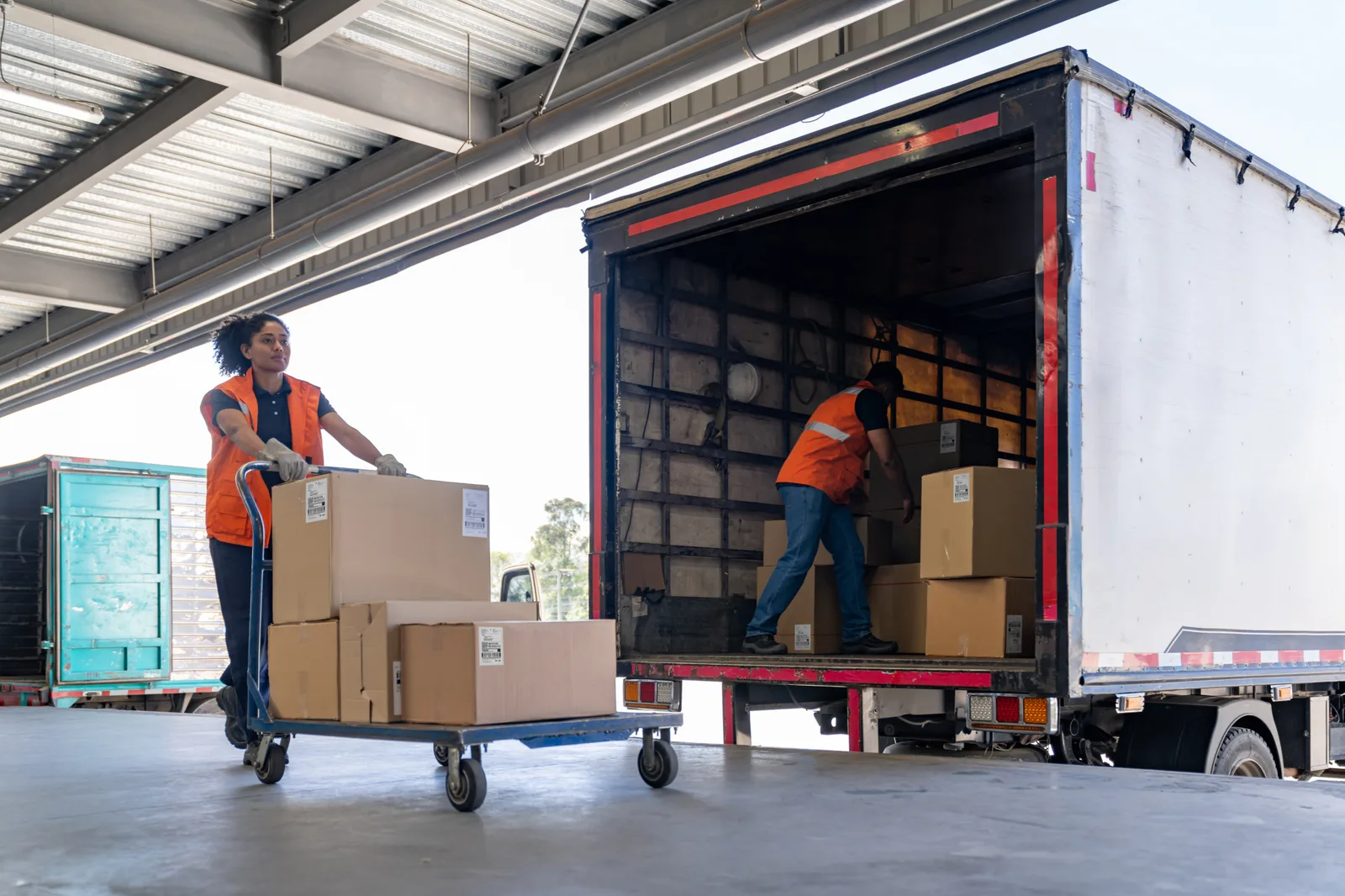
Not every raw material arrives by tanker or hopper car. A huge share of what feeds Ontario production lines shows up the ordinary way: 25 kilogram sacks stacked on a skid, cartons of components shrink-wrapped into a cube, and gaylord boxes of resin or regrind riding pallets. This is packaged raw material freight — bulk commodities broken down into handleable units — and it moves on the same trucks, docks and pallet jacks as any other skidded load. That’s precisely its advantage. Here’s how to move it well, and where the honest line sits between packaged freight and true bulk.
Packaged versus bulk: know which problem you have
Packaged raw material is any production input unitized for normal freight handling — bagged, boxed, drummed or gaylord-packed, on a pallet a forklift can lift. Bulk is the same commodity loose: pneumatically blown resin, tanker liquids, tipped aggregate. The distinction decides everything downstream, because bulk needs purpose-built equipment at both ends and packaged freight needs none of it.
A regional courier and freight operation lives entirely on the packaged side of that line. If your material arrives in sacks, boxes or bulk bins on skids, it’s standard skid and pallet freight and books like any other pallet. If it needs a silo, a pump or a dump body, it’s a different industry — worth saying plainly, because “raw materials delivery” gets used loosely for both.
The formats, and what each one asks of the truck
Sacked material. Powders, granules, pellets and compounds in 20–25 kg bags, layer-stacked on skids. The freight itself is simple; the load is dense, and density is the constraint. Bags also shift if stacked carelessly, so the stack pattern matters as much as the wrap.
Boxed inputs. Components, compounds and packaging materials in cartons, palletized and wrapped. The most forgiving format on this list — the standard rules for a well-built skid apply and little else does.
Gaylords. Pallet-sized bulk boxes carrying loose material — resin pellets headed to a moulder, regrind coming back, granular additives, small parts. A loaded gaylord behaves like a single dense unit: it lifts from the pallet, never by the box, and it wants a level ride because the contents shift with tilt. Plastics processors run on these; our guide to shipping for injection moulding operations covers that lane in more detail.
Drums and pails. Liquids and semi-solids in closed containers, palletized and banded. Fine as freight — with one hard caveat: anything classified as dangerous goods must be declared by the shipper under the TDG framework, with documentation and packaging to match. Undeclared DG is not a shortcut; it’s a liability for everyone touching the load.
Pallet integrity: where heavy bagged loads fail
Most damage to packaged raw materials happens at the pallet level, not in transit shocks. The failure modes are predictable and cheap to prevent:
- Under-rated pallets. A skid of bagged compound can weigh what a small machine weighs. Cracked stringers under that load fail at the worst moment — mid-lift. Use pallets rated for the weight, not whatever is leaning against the wall.
- Loose stacks. Interlock bag layers the way bricklayers offset courses, keep the top level, and stretch-wrap to the pallet so the whole unit moves as one piece.
- Punctures. Bags survive compression and fail on corners and forks. Slip sheets or cardboard between the bottom layer and the deck, and no overhang past the pallet edge, remove most puncture opportunities.
- Wet floors and weather. Hygroscopic materials — many powders and resins are — spoil quietly from moisture. Enclosed transport and dry staging at both ends are part of the packaging, not extras.
A skid built to these rules is boring freight, and boring is exactly what a production input should be.
Feeding production without drama
The receiving end of this freight is a line that consumes material on a schedule, which shapes how deliveries should be planned. Regular consumption suits regular replenishment — standing orders arriving on known days, so receiving can staff for them and materials handling flows dock-to-storage without improvisation. That cadence is a big part of how manufacturers structure their inbound freight generally.
The exception case matters just as much: a count comes up short, a run gets extended, a supplier’s shipment slips, and suddenly the line is hours from starving. That’s when a same-day direct run earns its keep — a skid of material picked up at the supplier and driven straight to the plant, no terminals between. The plants that handle these moments best are the ones whose carrier already knows the dock, the receiving hours and who signs.
Delivery infrastructure deserves one honest check: most plants have docks and forklifts, but smaller operations and startup shops sometimes don’t, and dense freight without a dock means tailgate delivery — within the platform’s weight rating. Confirm that before the truck is loaded, not after.
What this freight costs to move
Packaged raw materials price like any dense skidded freight: weight and dimensions, distance, urgency, and handling requirements at each end are the levers, and the factors behind courier rates apply without modification. The one habit worth building is accuracy on weight — bagged and gaylord loads are routinely heavier than they look, and a quote built on a guessed weight produces the wrong truck, the wrong price, or both.
The last step in your supply chain, handled
Sonic Transport moves packaged raw materials — sacks, cartons, drums and gaylords on skids — for manufacturers and suppliers across the GTA, Golden Horseshoe and Southern Ontario. Skids and pallets are roughly 60% of what we move, our 26-foot box trucks carry up to 10,000 lbs with tailgate standard, and a person who knows your account plans the run with real weights and real receiving details. Tell us what feeds your line, and we’ll keep it fed.
Frequently asked questions
What is a gaylord box?
A gaylord is a large corrugated bulk box, typically sized to a pallet footprint and often built with multiple corrugated walls, used to ship loose or granular material as a single palletized unit. Resin pellets, regrind, small moulded parts and granular additives commonly move this way. Loaded gaylords are handled by forklift or pallet jack from the pallet underneath, never lifted by the box itself.
How much weight can go on one skid of bagged material?
It varies with the pallet, the bag and the stack pattern, but bagged material gets heavy fast — a layer-stacked skid of 25 kg sacks can reach four figures in pounds well before it reaches full height. The practical limits are the pallet's rating, the truck's payload and what the receiving equipment can lift, which is why accurate weights at booking matter more for this freight than most.
Can a courier deliver raw materials that are classified as dangerous goods?
Dangerous goods are a regulated category under Canada's Transportation of Dangerous Goods framework. The shipper is responsible for declaring DG and providing compliant documentation and packaging, and certified handling is a confirmation the carrier itself must make for its own operation. Declare anything classified when you request service — never let it travel undeclared.