
Freight for Furniture Makers: Finished Pieces That Arrive Finished
How furniture manufacturers ship finished pieces without damage: blanket-and-band wrapping, enclosed transport, load position and delivery inspection.
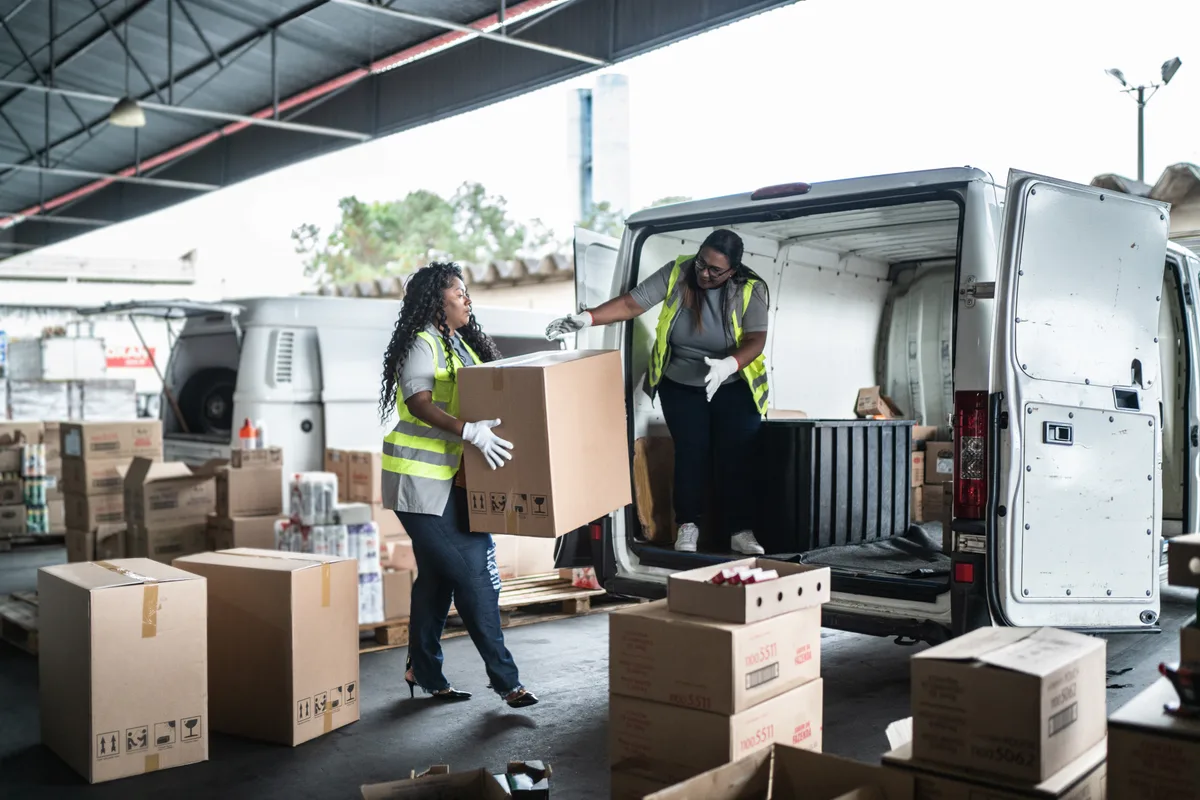
The last stage of furniture manufacturing happens in a truck. A piece can be machined, assembled, sanded and finished perfectly, and one loose strap or bare corner in transit undoes weeks of work — because with finished furniture, the surface is the product. The freight method that respects that is straightforward: blanket-and-band wrapping, enclosed transport, one loading and one unloading on a direct run.
This guide covers how finished pieces should be wrapped, why enclosed vehicles and direct routing matter more for furniture than for almost any other freight, and what to check at the delivery end before anyone signs.
The surface is the product
Most freight tolerates a scuff. A skid of fittings that picks up a scratch in transit is still a skid of fittings. A dining table that picks up a scratch is a rework: back to the shop, back through the finishing room, and a delivery date that just moved. That’s the core difference between shipping furniture and shipping materials — cosmetic damage isn’t cosmetic, it’s a failed delivery.
It also changes where the risk sits. For most palletized freight, the dangerous moments are lifting and stacking. For furniture, the dangerous moments are contact: a piece rubbing against a wall panel for forty minutes of driving, a strap tensioned against a bare edge, another item leaning into a finished side. Good furniture freight is mostly the discipline of making sure nothing hard ever touches the finish.
Blanket-and-band, done properly
Blanket-and-band is the standard method for moving finished furniture: every finished face gets covered with a furniture pad, and the pad is held in place with banding or stretch film that touches only the blanket — never the wood. Done in order, it looks like this:
- Corners and edges first. Corners take the hits. Cardboard corner protectors or folded pad material go on before the main wrap.
- Pad every finished face. Moving blankets or furniture pads, overlapped so no surface is exposed at the seams.
- Band or film over the pad. Tension lands on the blanket. Film applied directly to a finish can imprint or trap moisture against it.
- Box or bag the hardware. Shelf pins, levellers, pulls and keys travel in a labelled box taped to an unfinished surface or handed to the receiver — never loose inside a cabinet where they become projectiles.
- Deal with legs and glass separately. Removable legs come off and travel wrapped; glass shelves and doors ship flat-packed with rigid protection, not inside the piece.
A piece wrapped this way can lean, ride against a load bar and take normal road vibration without marking. A piece wrapped in film alone cannot.
Enclosed transport is non-negotiable
Finished furniture rides enclosed — cargo van, Sprinter or box truck — full stop. An open deck exposes finished surfaces to weather, road grime and UV, and no wrap survives a rainstorm at highway speed. Enclosed transport also means the load can be padded against the vehicle walls and secured to tie points, which is where blanket-wrapped freight wants to be.
Routing matters almost as much as the vehicle. Every extra handling is another chance for contact damage, so furniture favours direct runs: loaded once at the shop, unloaded once at the destination, with nobody restacking the load in between. Hub-and-spoke LTL networks cross-dock freight through terminals, and blanket-wrapped pieces don’t mix well with that — which is why furniture in those networks generally has to be crated. A direct regional carrier lets you skip the crate for most moves because the piece is handled exactly twice.
At Sonic Transport, that’s how furniture moves: high-roof cargo vans and Sprinters for individual pieces and small sets, and 26-foot box trucks when a full suite or a showroom’s worth of product ships at once — enclosed at every size.
Loading: position decides outcomes
Inside the truck, a few rules do most of the protective work:
- Upright, feet down. Pieces ride the way they stand. Laying a case piece on its side loads joints in directions they weren’t built for.
- Heavy casegoods against the front wall, padded, with load bars or straps holding them from working backward under braking.
- Nothing on finished tops. A blanket is not a licence to stack. Tops stay clear, and taller items are strapped so they can’t fall onto lower ones.
- Straps over pads. Any strap crossing the piece gets a blanket under it, tensioned snug rather than cranked.
- Fill the gaps. Pieces shift into empty space. Pads, empty pallets or dunnage between items keep the load riding as one block.
This is also why furniture quotes ask about the piece count and sizes rather than just weight — furniture is a cube load, not a weight load. A truck fills up long before it weighs out, and the space each piece needs includes its padding and its clearance.
When to skid or crate instead
Wrapping isn’t always the whole answer. Boxed production pieces — chairs, occasional furniture, flat-pack lines — often ship better palletized: cartons stacked and stretch-wrapped on a skid, moved by forklift, counted as one unit. That’s standard skid and pallet freight, and it loads faster and rides more predictably than a truck full of individual cartons.
Crating earns its cost in three cases: glass and stone components, pieces travelling onward through partner networks on longer legs where extra handling is certain, and high-value one-offs where the crate is cheap insurance. For everything else moving regionally on a direct run, blanket-and-band does the job without the lumber.
Two adjacent situations get their own treatment: built-in cabinetry and millwork heading to construction sites runs on a different clock — see shipping cabinets and millwork to site — and dealers moving desks, seating and systems furniture into offices have their own patterns, covered in our guide to office furniture and equipment delivery.
Delivery: inspect before the signature
The delivery end deserves the same discipline as the wrap. Showrooms, staging warehouses and design studios often have no dock, so flag that at booking — a tailgate (lift-gate) truck grounds palletized pieces where there’s no forklift, and hand-unload needs to be arranged for pieces that come off by carry.
Before signing, the receiver should check each piece: count, then a look at corners and faces for impact or rub marks through the wrap. Anything questionable gets unwrapped and noted on the proof of delivery at the time — a POD notation made at delivery is what separates a clean freight claim from an argument. A carrier that treats POD as standard practice on every run makes this part uneventful.
Getting furniture freight quoted properly
When you request pricing, give the piece list rather than a guess at weight: what each piece is, its dimensions, whether it’s wrapped, boxed or palletized, and what’s waiting at the delivery end — dock, forklift, or neither. That’s what determines the vehicle and the handling plan.
Sonic Transport moves finished goods for manufacturers across the GTA, Golden Horseshoe and Southern Ontario — direct, enclosed, with a real person coordinating the run and a POD closing it out. If you’ve got finished pieces that need to arrive finished, tell us what’s shipping and we’ll put the right vehicle on it.
Frequently asked questions
Should finished furniture ship blanket-wrapped or boxed?
Boxing suits smaller pieces made in volume, where a fitted carton and corner foam are part of the production process. Blanket-and-band suits larger, heavier or one-off pieces where a custom box would cost more than it protects. Many shops use both — cartons for chairs and occasional pieces, blankets for casegoods and tables.
Can finished furniture travel on a skid?
Yes, when the piece is boxed or crated and the skid footprint fits the piece. Palletizing makes loading faster and lets the piece move by forklift, but a finished piece strapped bare to a skid is asking for pressure marks. Wrap or crate first, then palletize.
Does stretch film damage furniture finishes?
It can. Film applied directly to lacquered, oiled or freshly cured surfaces can imprint a texture or trap moisture against the finish. The safe pattern is film or banding over a furniture pad, so the tension lands on the blanket and never on the wood.