
Office Furniture and Equipment Delivery: From Warehouse to Floor Plan
How office furniture moves from warehouse to floor plan — dealer-to-site freight, dock and elevator bookings, install-day sequencing and tailgate delivery.
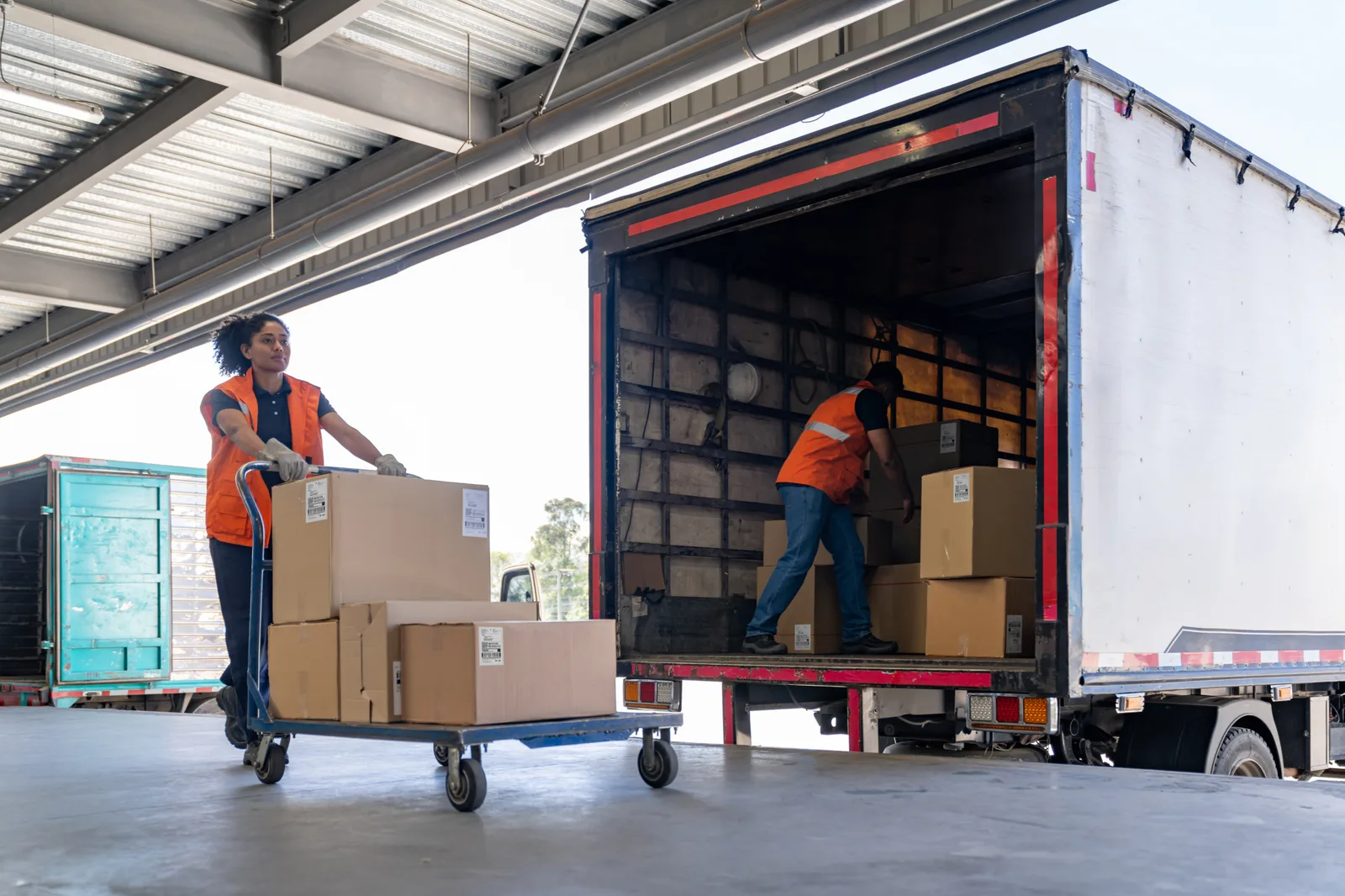
An office furniture project succeeds or fails on a day the client never sees: delivery day, when tonnes of panels, worksurfaces, chairs and storage have to move from a warehouse through a controlled building and onto a floor plan in the order the installers need them. The furniture itself is rarely the problem — it’s engineered to ship. The problem is everything around it: dock bookings, freight elevators, timing windows and the crew standing on the eighth floor waiting for product. That makes office furniture delivery a coordination job first and a trucking job second.
The lane: dealer or manufacturer to site
Office furniture moves B2B along a consistent lane. Manufacturers ship to dealers; dealers stage projects in their warehouses; and when the site is ready, the project ships from warehouse to building — often in multiple waves matched to the installation schedule. New workstations for an expansion, a full floor for a fit-out, or decommissioned product moving out the other direction when an office is dissolved.
The freight itself falls into predictable types: systems furniture knocked down flat and packed dense; case goods and storage boxed or blanket-wrapped; task seating in cartons that are light but consume enormous cube; and tables and worksurfaces that need face protection like any finished flat good. Our answer page on how office furniture freight works covers the freight types in more detail.
Buildings control access, so access is the plan
Office towers and managed buildings don’t receive freight casually. The dock is booked through property management, the freight elevator is reserved in a window, some buildings restrict deliveries to before or after business hours, and many require the carrier’s insurance certificate on file before the truck is allowed in. None of this is difficult — all of it is fatal if discovered on delivery day.
The delivery plan therefore starts with the building, not the truck:
- Book the dock and elevator window through property management, and get it confirmed in writing.
- Pass requirements to the carrier — dock height and location, elevator cab dimensions, protection requirements for corridors, certificate requests.
- Match the truck to the window. A confirmed two-hour elevator window means the vehicle must arrive loaded in sequence and ready to move, not arrive whenever the route allows.
That last point is why furniture projects favour a dedicated truck and driver: the vehicle carries only the project, arrives against the building’s window, and stays through the offload however long the elevator queue takes. Shared-load freight can’t promise its day to one building; a dedicated run is built to.
Sequencing: the floor plan decides the load order
Installers work the floor plan in an order — typically panels and frames first, then worksurfaces, then storage and seating — and the truck should unload in the order the crew builds. That means the load is planned in reverse: last-needed product deepest in the box, first-needed product at the doors. On multi-truck projects, the waves are sequenced the same way across days.
Getting this right converts directly into labour saved. A crew digging through mixed skids for the panel they need is a crew being paid to search; a truck that unloads in install order feeds the floor continuously. It’s the same staging logic used in technology rollouts — covered in our guide to IT hardware deployment logistics — where furniture and hardware often land on the same fit-out calendar.
Sites without docks: the tailgate case
Not every office delivery goes to a tower with a dock. Low-rise professional buildings, converted houses used as offices, clinics and street-level suites frequently have no dock and no forklift — just a front door and stairs or a small elevator. Skidded furniture freight reaches these sites by tailgate delivery: the truck’s lift platform grounds each skid at street level, and product moves inside by pallet jack and hand. Flag the no-dock condition when booking so a tailgate-equipped truck is assigned — it can’t be improvised on site.
Decommissions run the same movie backwards
Office churn generates outbound freight too: furniture from a downsized or dissolved office moving to a dealer’s warehouse, a liquidator, another company location or storage. The same disciplines apply in reverse — building windows booked, elevator reserved, product wrapped and skidded as it comes off the floor, truck staged against the teardown crew’s pace. Related trades ship on adjacent lanes with similar handling stakes; see our guides to furniture manufacturer freight for the production side of the industry.
Putting a truck on your project
Sonic Transport runs office furniture and equipment freight across the GTA, Golden Horseshoe and Southern Ontario — dedicated trucks committed to your project’s windows, 26-foot box trucks with tailgate for no-dock sites, loads sequenced to the install plan, and proof of delivery closing out every wave. Strictly B2B, coordinated by a person who knows the project rather than a call centre. If you have a fit-out, reconfiguration or decommission on the calendar, send us the scope and the schedule and we’ll build the truck plan around it.
Frequently asked questions
Why does office furniture ship in components instead of assembled?
Systems furniture — workstations, panel systems, benching — is engineered to ship knocked down: panels, worksurfaces, legs and hardware packed flat and dense. It protects the finishes, fits far more product per truck, and matches how installers actually work, since they build the stations on the floor plan rather than carrying assembled desks through corridors.
Who books the loading dock and freight elevator for an office delivery?
Usually the furniture dealer or the client's project contact arranges it with the building's property management, since towers control dock and elevator access tightly. The carrier needs the confirmed window, the dock location and any certificate-of-insurance requirements passed along before delivery day — arriving without a booking often means not getting in.
What is the difference between delivery to the dock and delivery to the floor?
Dock delivery ends when the freight is offloaded at the building's dock; from there the install crew moves it up. Floor delivery continues to the suite, which takes more labour, more time in the freight elevator, and coordination with the installers. Agree which one is being quoted before delivery day, because the two are very different jobs.