
Distribution for Franchise Networks: Consistent Freight, Every Location
How franchise networks move non-food freight to every location: standing scheduled routes, launch kits, promo changeovers and consistent proof of delivery.
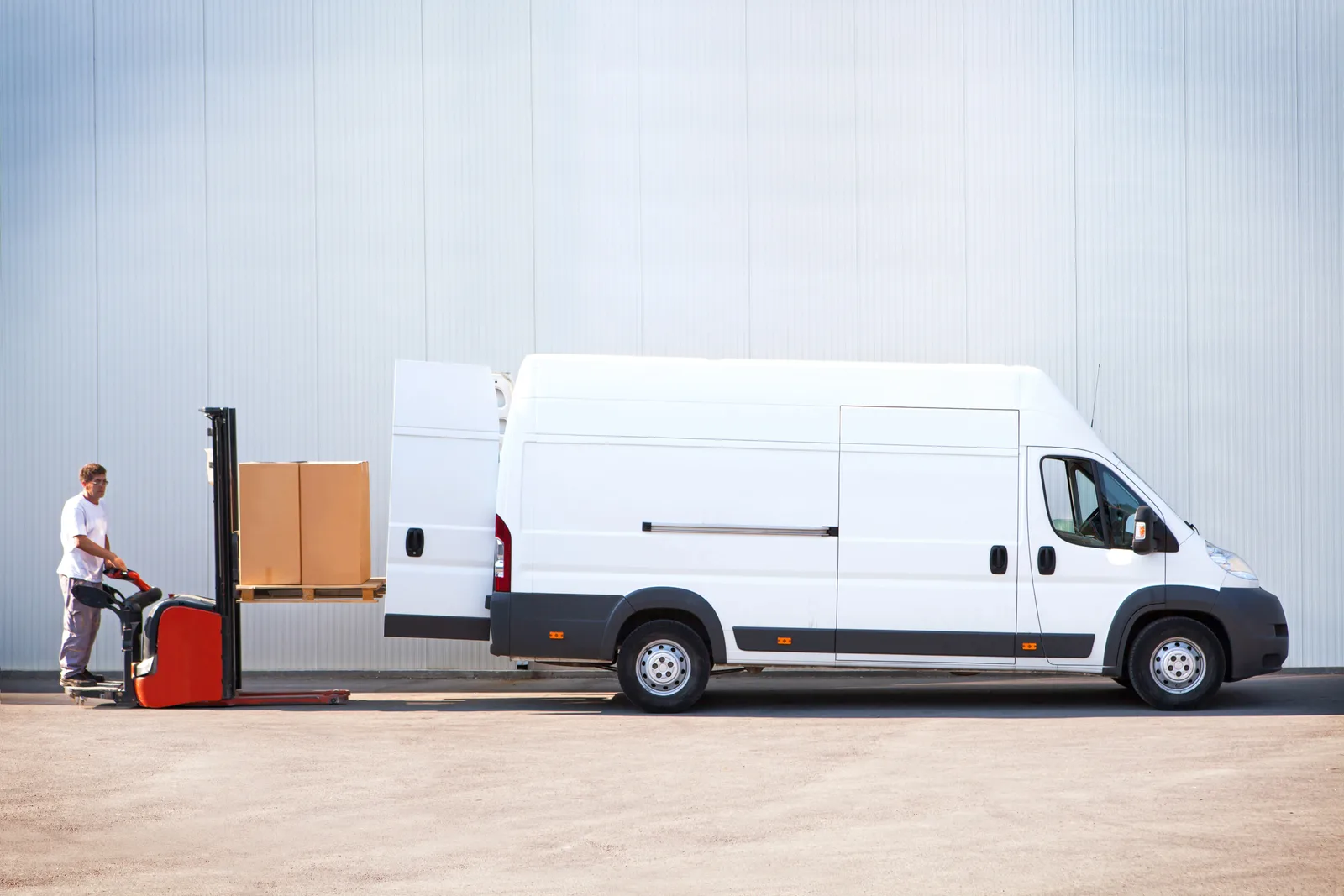
Franchising sells consistency: the same brand experience at every location, whichever one a customer walks into. That consistency runs on freight. The uniforms, packaging, signage, cleaning products, smallwares and promotional kits that make location #14 look and run like location #2 all have to physically arrive — at every site, reliably, without head office burning hours babysitting shipments to each one.
This guide is about the freight layer of a franchise network: what actually moves, why standing scheduled routes beat one-off bookings once a network passes a handful of locations, and how launches and promotion changeovers ride on top of the routine.
One scope note up front, because many franchise networks are food businesses: refrigerated and frozen distribution is temperature-controlled freight — a specialized service that general commercial couriers, Sonic Transport included, don’t offer. Everything in this guide is the dry, non-food side of network distribution, which exists in every franchise system, food-service ones included.
What franchise freight actually is
Strip out the cold chain and a franchise network still generates a steady, varied freight stream:
- Branded packaging and paper goods — bags, boxes, cups, wrap, tissue: high-cube, consumed continuously, reordered forever
- Operating supplies — cleaning and sanitation products, back-of-house consumables, the stream covered in our guide to cleaning and sanitation supply delivery
- Uniforms and apparel — new-hire kits, seasonal refreshes
- Marketing and promo kits — window graphics, shelf talkers, countertop displays, campaign materials
- Smallwares and equipment — tools, fixtures, replacement gear
- Launch kits — everything a new location needs to open looking like the brand
Individually these are cartons and skids. Collectively, across fifteen or forty locations, they’re a distribution operation — and the question becomes who runs it: each franchisee ordering ad hoc, or the network moving freight on a system.
Standing routes beat one-off bookings
Once a network has more than a few locations receiving regularly, scheduled routes are the system. A standing route is a recurring run on set days: the distribution point or head office stages each location’s order, the truck loads once, and works through the stops in a planned sequence. The same pattern repeats every week.
What the network gains over booking each delivery individually:
Predictability at the store level. Every location learns its delivery day. Managers plan storage and staffing around it, and “where’s my order?” calls to head office mostly stop.
One pickup instead of many. The distribution point stages everything for the route and loads it in one appointment — not a different truck at the dock every few hours.
A carrier that knows the network. The same service running the same route learns each location’s quirks: which plaza has the awkward dock, which store receives through the front door before opening, which manager signs. That knowledge is worth real money in avoided failed deliveries.
Flexing volume without rebooking. Heavy week, light week — the route runs either way; only the load changes. Ad-hoc needs between route days ride as separate direct runs, without disturbing the schedule.
Route design itself is mostly geography and rhythm. Locations cluster into territories — a west-GTA loop through Mississauga, Oakville and Burlington; an east loop through Toronto and Markham; a Hamilton–Niagara or Kitchener–Waterloo run where the network extends — and each territory gets a day. Networks dense in one corridor might run a single route twice a week; networks spread across Southern Ontario might run three territories on staggered days. The right shape falls out of the location list, and it should be revisited as the network grows: a route designed for twelve locations rarely fits thirty.
This is the same logic any wholesale operation applies to recurring customers — laid out from the distributor’s side in our wholesale distributor courier guide — pointed at a network that happens to share one brand.
Launch kits: opening day is a freight deadline
A new location opening is the highest-stakes delivery a network makes. The launch kit — signage, packaging, uniforms, smallwares, opening marketing — has to land complete, in a window that fits the fit-out schedule, at a site that’s still half construction zone.
Three practices keep openings calm. Stage and verify the kit centrally before it ships; a shortage found at staging is a restock, a shortage found on opening week is a crisis. Ship to site readiness — coordinate with the opening team so the kit arrives when there’s a lockable space to receive it, not when the warehouse wanted it gone. And treat the launch as a direct, dedicated delivery rather than squeezing it into the weekly route; opening freight is bulky, one-time and deadline-bound, which is exactly what direct runs are for.
Promotions and changeovers: the whole network, one window
Campaign launches invert the routine: instead of different orders to each store on a rolling schedule, it’s the same kit to every store inside one window, so the promotion goes live network-wide together. The mechanics are kitting by location, labelled clearly, delivered by route sequence or parallel vehicles depending on how tight the window is — and old campaign materials often come back on the same stops, because reverse logistics is half of a changeover.
Networks that run their regular freight on standing routes have a head start here: the routes, the receiving contacts and the site knowledge already exist. The campaign rides existing rails instead of building temporary ones.
The same rails carry the network’s odd jobs, too — equipment going out for repair and coming back, transfers between locations when one store is short what another has spare, and returns flowing to the distribution point. A network with an established freight system absorbs these as normal stops; a network without one turns each into a small emergency.
The head-office view: one contact, paper on every stop
What head office actually wants from network distribution is simple: stop thinking about it. That takes two things from a carrier. One point of contact — a person who knows the network, not a ticket queue — so route changes, new locations and one-off needs are a conversation, not a project. And a proof of delivery at every stop, so any location’s delivery can be verified from a desk. When a franchisee says the promo kit never arrived, the answer is a signed POD with a name and a time — not an investigation.
Putting a network on a system
If your network is past the point where ad-hoc shipping feels manageable — locations calling about orders, promo windows getting missed, a different courier every week — the fix is structural: a standing route built around your locations’ rhythm, direct runs for launches and urgencies, and PODs closing every stop.
Sonic Transport runs scheduled routes and direct network deliveries across the GTA, Golden Horseshoe and Southern Ontario, with a person who knows your account coordinating all of it. Tell us about your network — locations, cadence, what moves — and we’ll design the route around it.
Frequently asked questions
Can a courier handle food distribution for restaurant franchises?
Not the refrigerated or frozen side — temperature-controlled freight is a specialized service that general commercial couriers, Sonic Transport included, don't offer. What a courier does handle for food-service networks is everything else: packaging, smallwares, uniforms, cleaning supplies, marketing kits and equipment, which is a substantial freight stream in its own right.
How does a scheduled route work for a franchise network?
A standing route is a recurring run — weekly, twice weekly, whatever the network's rhythm is — that hits a set list of locations in a planned sequence. Head office or the distribution point stages each location's order, the same service picks it up on the set day, and every location learns when its delivery lands. Volume can flex week to week; the route itself stays put.
Who signs for a delivery at a franchise location?
Whoever the location designates — a manager or keyholder is typical. The practical requirement is that each site names its receiver and the carrier collects a signed proof of delivery at every stop, so head office can verify any location's delivery without phoning around the network.