
Delivering Cleaning and Sanitation Supplies to Commercial Customers
How janitorial suppliers deliver mixed orders of paper, chemicals and equipment to offices and facilities: no-dock stops, route days and TDG basics.
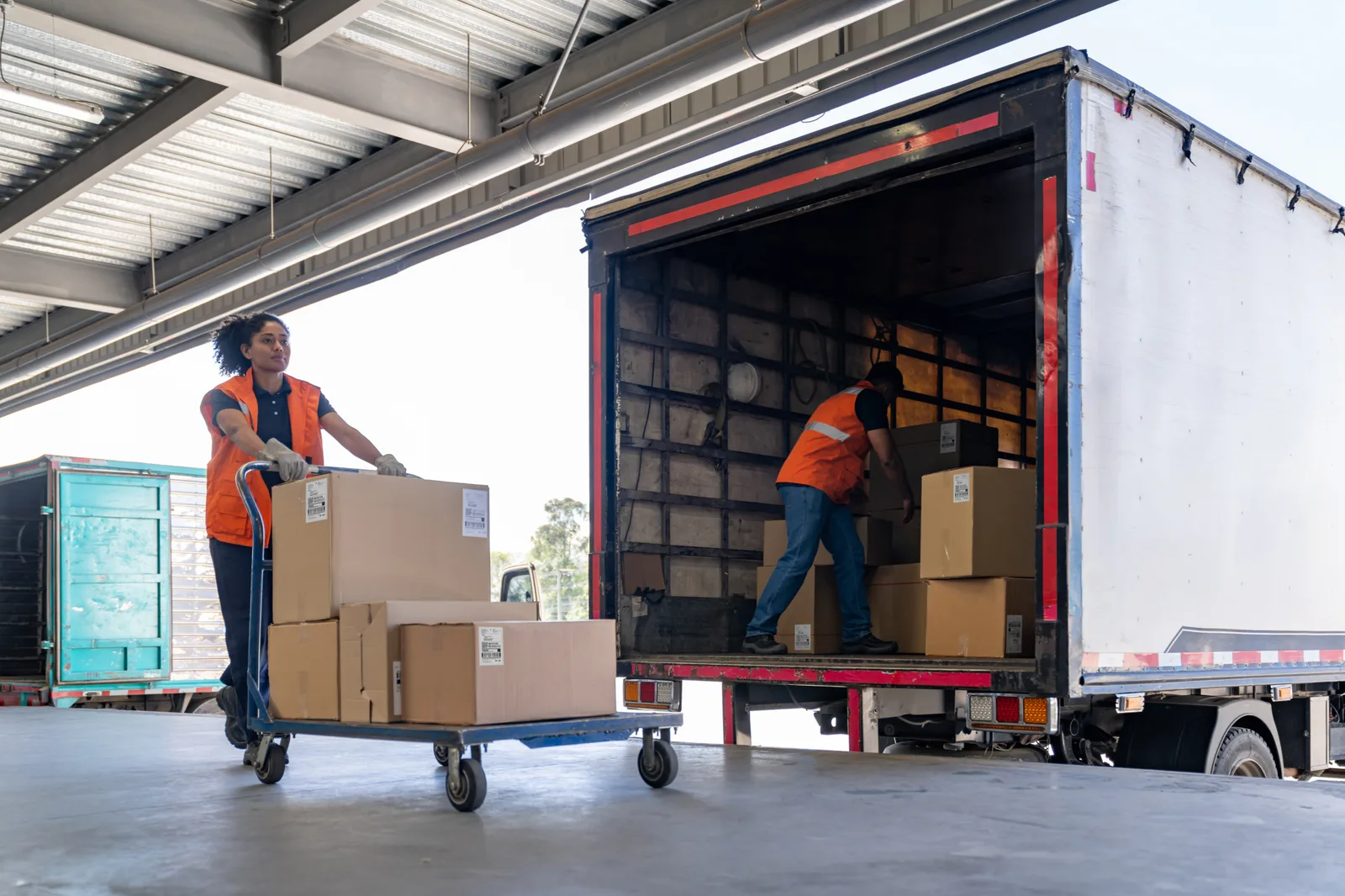
Look inside a janitorial supplier’s outbound orders and you’ll find the most mixed freight in wholesale: cases of paper towel that weigh nothing and fill a skid, four-litre jugs of chemical concentrate that weigh plenty and fill nothing, pails, drums, liners, dispensers, and the occasional floor machine. Then look at the delivery addresses: office towers, property management sites, clinics, schools, restaurants’ back doors — almost none of which have a loading dock.
That combination — mixed freight to mixed destinations, over and over — is the whole logistics problem of the cleaning and sanitation trade. Here’s how suppliers across the GTA solve it.
The order profile: paper, pails and everything between
A typical order mixes three physical classes of product, and each behaves differently in a truck:
- Paper and liners — light, bulky, crushable. They cube out the vehicle and sit on top of everything else.
- Liquids in jugs, pails and drums — dense, leak-averse, bottom of the stack. A skid of concentrate weighs several times a skid of towel.
- Equipment and dispensers — cartoned goods that ride like ordinary freight but often need to arrive unscuffed because they’re customer-facing.
The loading discipline writes itself: liquids low, paper high, equipment protected — and the whole order picked and wrapped as one unit per stop so nothing is hunted for at the door. Vehicles matter too: high-roof vans swallow the cube, and box trucks carry the route days where skids of paper and drums of chemical travel together.
Some of this freight is regulated — know which
Here’s the part of the trade that deserves plain talk. Certain cleaning products — concentrated degreasers, some sanitizers and disinfectants, drain and descaling chemicals — can meet the definition of dangerous goods under Canada’s Transportation of Dangerous Goods (TDG) framework, most often as corrosives. Many others ship as ordinary freight, and many consumer-packaged products qualify for limited-quantity provisions that simplify the rules.
Three principles keep a supplier on the right side of this:
- Classification belongs to the shipper. The product’s safety data sheet and the supplier’s own compliance process determine what’s regulated — not the driver, and not a guess at the dock.
- Declare regulated product to the carrier before booking. Whether and how a carrier handles a given dangerous good is the carrier’s confirmation to make; springing a regulated drum on an unsuspecting driver helps no one.
- Verify current rules with the regulator. Transport Canada publishes the TDG requirements, including limited-quantity provisions — check there rather than relying on habit, because classifications and thresholds change.
None of this makes chemical freight exotic. It makes it paperwork — done once per product, then repeated routinely.
No docks: the defining feature of the customer base
Manufacturers deliver to docks; janitorial suppliers deliver to buildings. The customer’s “receiving department” is a property manager’s storage room, a school custodian’s office, or the back corridor of a restaurant. Working that landscape means:
- Tailgate trucks for palletized orders. A lift-gate grounds the skid at street level, and a pallet jack takes it from there.
- Hand delivery for case-level orders. Many stops receive a dozen cases through a man-door — build the handling time into the route honestly.
- A named receiver at every stop. Supplies left in a lobby go missing; a signature from the custodian or site contact closes the delivery cleanly and gives the supplier proof of delivery to bill against.
Capturing each stop’s quirks once — parking, entrance, elevator, signer — is what separates a route that runs on time from one that’s re-solved weekly. It’s the same ground-level reality PPE suppliers face, as covered in our guide to safety and PPE supplies distribution.
Route days carry the business
Facilities consume cleaning supplies at a steady, forecastable rate, which makes this sector a textbook case for scheduled routes: standing delivery days by territory, the same driver on the same lanes, customers ordering against a known day. The consolidation keeps the per-stop cost low, and the repetition builds the stop-level knowledge that no-dock delivery depends on.
The mechanics of running wholesale distribution on standing routes — order cutoffs, route density, flexing vehicle size with seasonal volume — are covered in depth in our wholesale distributor’s guide to courier and freight, and from the delivery side in the answer on how janitorial suppliers deliver.
What the route can’t absorb is the emergency: a facility out of a critical product, a new customer’s first order promised for tomorrow. Those ride as direct runs alongside the schedule — the route handles the routine, the direct run handles the exception.
One thing this freight is not
Cleaning and sanitation freight is dry freight. It shares customers with food-service distribution, but it doesn’t share the trucks: temperature-controlled transport is a specialized service, and it isn’t something Sonic Transport offers. A janitorial supplier’s paper, chemicals and equipment need clean, enclosed, dry vehicles — which is exactly the fleet this work runs on.
Sonic Transport delivers for suppliers across the GTA, Golden Horseshoe and Southern Ontario — standing route days, tailgate-equipped trucks for no-dock stops, and POD on every delivery, with a person who knows your account handling the schedule. If your customers expect their supplies on a day they can count on, tell us about your routes and we’ll price the pattern, not just the trip.
Frequently asked questions
Are cleaning chemicals considered dangerous goods to ship?
Some are. Concentrated products like certain degreasers, sanitizers and drain treatments can be classified as corrosive or otherwise regulated under Canada's Transportation of Dangerous Goods rules, while many diluted or consumer-packaged products ship as ordinary freight or under limited-quantity provisions. Classification is the shipper's responsibility, and Transport Canada's TDG resources are the authority on current rules.
How do janitorial supplies get delivered to buildings without loading docks?
Most commercial delivery points — offices, clinics, schools, retail plazas — have no dock, so palletized orders ground at street level using a tailgate (lift-gate) truck and move by pallet jack, while smaller mixed orders are hand-delivered by the case. Confirming each stop's receiving setup before delivery day is what keeps the route on schedule.
Why do janitorial suppliers use standing delivery routes?
Because their customers consume supplies on a steady rhythm — a facility uses roughly the same paper, liners and chemicals every month. Standing route days let the supplier consolidate many stops onto one vehicle, give customers a predictable delivery day to order against, and keep the per-delivery cost far below one-off runs.