
Delivery in Milton and Halton Hills: The GTA's Fastest-Growing Freight Belt
Milton and Halton Hills have become a major GTA logistics belt. What's driving the growth along the 401, and how same-day B2B freight serves the new parks.
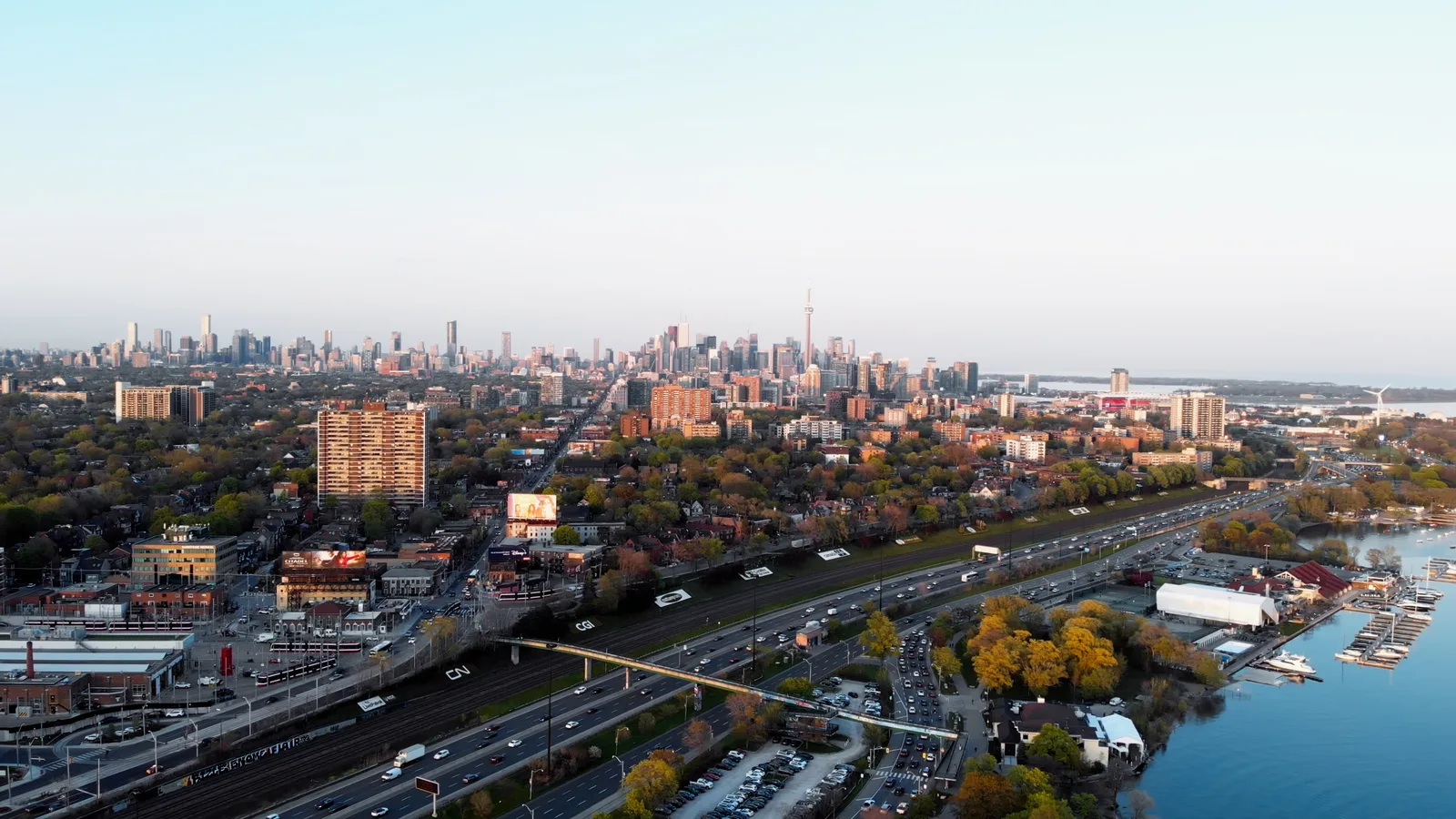
Twenty-five years ago, Milton was a small town at the base of the Niagara Escarpment. Today it is one of Canada’s consistent census champions — repeatedly among the country’s fastest-growing communities — and the west end of the GTA’s most active logistics construction boom. Together with Halton Hills next door, it forms a freight belt that barely existed a generation ago and now handles distribution for much of the province.
For shippers, the belt matters for a simple reason: an increasing share of the GTA’s inbound and outbound freight touches a dock here. This guide covers what built the belt, what operates in it, and how B2B delivery works across it.
Why the growth happened here
Three ingredients came together on this stretch of the 401.
Position. Milton sits where the GTA’s built-up area meets the open corridor to Cambridge, Kitchener–Waterloo and the southwest — the pivot point of the region’s busiest freight axis, which we walk end to end in our guide to the 401 from the GTA to London.
Land. While Mississauga’s industrial districts filled up, Milton and Halton Hills still had large, flat, developable parcels directly on 401 interchanges — the raw material for modern distribution centres with big footprints and deep truck courts. The Escarpment itself shapes the map: it walls the belt on the west, which is why development runs north–south along Highway 25 and Trafalgar Road rather than spreading evenly outward.
Momentum. Once the first major logistics parks opened along James Snow Parkway and Highway 25, the cluster fed itself: carriers, trades, packaging suppliers and staffing followed the warehouses, and residential growth followed the jobs. The pattern mirrors how every GTA industrial corridor formed, just compressed into two decades.
Milton: the logistics parks on the 401
Milton’s freight economy concentrates in the employment lands flanking the 401 — around James Snow Parkway, Highway 25 and the newer parks pushing west. The tenants are the big shapes of modern distribution: regional DCs for national retailers and wholesalers, e-commerce fulfilment, third-party logistics operations, and the manufacturers and converters that supply them.
Delivery work here is correspondingly dock-heavy. Freight is palletized, receiving is appointment-driven at the bigger buildings, and volumes run in both directions all day — inbound stock arriving from across the province, outbound orders heading everywhere from Toronto to London. Skids are the default unit, which suits a carrier whose business is roughly 60% pallets. A typical run is a skid picked up in Milton mid-morning and delivered the same day to a customer in Mississauga, Cambridge or Burlington — the kind of short-haul lane covered in our answer on whether Burlington is in same-day range.
Halton Hills: Georgetown, Acton and the 401 lands
Halton Hills is two freight geographies in one municipality. Along its southern edge, the 401 employment lands continue Milton’s pattern — newer large-format logistics and commercial development at the interchanges. To the north, the towns of Georgetown and Acton carry the older economy: established manufacturers, machine shops and trades businesses reached via Highway 7 and Trafalgar Road rather than the 401.
The split matters for delivery planning. The 401 lands are straightforward dock territory; the Georgetown and Acton pockets include older buildings and smaller units where receiving may mean a tailgate truck grounding a skid at street level rather than a dock transfer. Flagging which kind of address is involved at booking gets the right vehicle assigned the first time.
What shippers in the belt typically move
The belt’s freight profile, seen from a courier’s dispatch board:
- Skids between DCs and regional customers — the bread and butter, on same-day direct runs when the order is promised for today and next-day LTL when it isn’t.
- Inter-facility transfers — stock rebalancing between a Milton DC and sister facilities in Mississauga, Brampton or Cambridge.
- Line-down and shortage freight — a missed pick or a short shipment that now has to be somewhere fast, which is what rush service exists for.
- Recurring lanes — daily or fixed-day movements that settle naturally into a scheduled route instead of repeated one-off bookings.
Weight-wise, most of this rides straight trucks: up to 10,000 pounds on a 26-foot box truck, tailgate standard. Full truckloads and heavier freight move by semi through transportation partners.
Booking into the belt: docks, appointments and windows
The belt’s receiving culture splits by building type. The large distribution centres run structured docks: appointment bookings, carrier check-in, sometimes assigned door numbers — a delivery that arrives unannounced can wait behind scheduled trucks or be turned away entirely. Mid-size warehouses and manufacturers are looser, taking freight through business hours with minimal ceremony. The small flex units and the older Georgetown and Acton buildings are where equipment matters most: a tailgate truck grounds the skid where no dock exists.
For shippers, the booking conversation should therefore cover three things every time: whether the receiving end needs an appointment, what its dock situation is, and what hours it accepts freight. Ten seconds of detail at booking prevents the two classic belt failures — a truck waiting out an appointment queue, and a truck that physically cannot unload. It also keeps quotes accurate: appointment stops and tailgate grounds are rate factors, and naming them up front means the price you get reflects the run as it will actually happen.
Reaching the rest of the map from the belt
The belt’s connectivity is its selling point, and it works in every direction. West on the 401, Cambridge is about 40 kilometres and Kitchener–Waterloo about 55 — close enough that a Milton pickup can deliver there and be back before the afternoon peak, as our answer on Mississauga-to-Cambridge same-day service illustrates for the neighbouring lane. South, Highway 25 and Trafalgar Road drop to the QEW at Oakville and Burlington — the lakeshore markets covered on our Oakville courier page. East, the 401 leads into Mississauga and the airport belt; north, Highway 7 threads through Georgetown toward Brampton and Vaughan; and the 407 picks up a few kilometres east to run the top of the GTA toward Markham and, via Highway 400, Barrie.
In short: nowhere in the GTA, Waterloo Region or the western Golden Horseshoe is far from a Milton dock. That is precisely why the belt grew — and why same-day service radiating from it is routine rather than remarkable.
Sonic Transport serves Milton and Halton Hills daily from its base in neighbouring Mississauga — strictly B2B, minivans through 26-foot box trucks, a person who knows your account, and proof of delivery closing every run. If your freight moves through the GTA’s newest logistics belt, tell us about the lane and we’ll price it and put the right vehicle on it.
Frequently asked questions
Are Milton and Halton Hills part of the GTA?
Yes. Both are municipalities in Halton Region, alongside Oakville and Burlington, and Halton is one of the four regional municipalities that make up the GTA with Toronto. Milton sits on the 401 at the western edge of the built-up area; Halton Hills includes Georgetown and Acton to its north.
Why did so many distribution centres locate in Milton?
Land and highway position. Milton offered large development parcels directly on the 401 at the point where the GTA meets the route to Waterloo Region and Southwestern Ontario, and its logistics parks grew as the region's older industrial districts filled up. Population growth followed the employment.
Do the new logistics parks have good receiving facilities?
Generally yes — buildings in the newer parks are purpose-built with ample dock doors and truck courts. The exceptions are smaller flex units, trades businesses and the older industrial pockets in Georgetown and Acton, where a tailgate truck may be needed to ground a skid.