
Commercial Courier in Burlington: Between Hamilton and the GTA
Burlington sits where the QEW meets the 403 and 407 — a commercial courier's guide to serving its industrial parks and running freight in both directions.
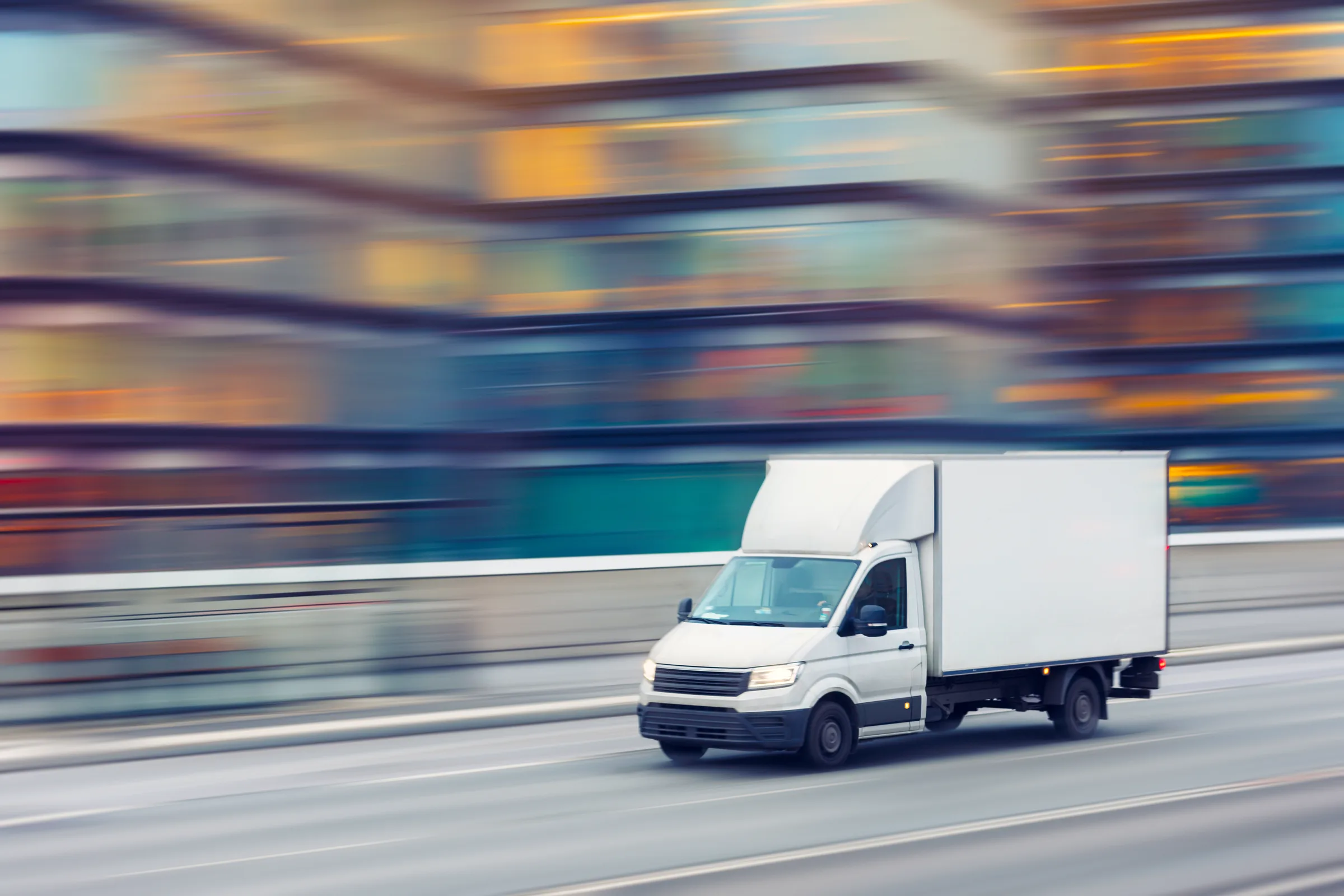
Every region has a hinge city, and in the western Golden Horseshoe it’s Burlington. The QEW, 403 and 407 all converge here — the only place they do — which puts a Burlington dock within a direct highway run of Hamilton in one direction and the entire GTA in the other. For businesses that sell into both markets, there may not be a better-positioned address in Southern Ontario.
That’s the case for Burlington in one paragraph. The rest of this post is the practical version: where the city’s freight actually comes from, how the highway junction works in a courier’s favour, and what same-day direct service looks like from a Burlington loading door.
The junction: QEW, 403 and 407 in one city
Burlington’s freight geography is defined by the Freeman interchange, where the QEW and Highway 403 meet and the 407 begins its arc across the top of the GTA. From that junction: the QEW continues west over the Burlington Skyway toward Niagara, the 403 climbs the escarpment into Hamilton and on toward Brantford, and the 407 runs east as a tolled express route across the GTA’s northern half. The QEW eastbound is the lakeshore lane to Oakville, Mississauga and Toronto.
For freight, this means a Burlington pickup never starts with a compromise. A run to Hamilton’s east end, a delivery into Mississauga, a skid headed for St. Catharines and an urgent piece for Vaughan all launch from the same dock onto the right highway within minutes. Our QEW corridor freight guide traces the full lakeshore route this city anchors.
Industrial Burlington: the band below the QEW
Burlington’s industry runs in a long band roughly parallel to the QEW. The Harvester Road and Mainway corridors hold the densest concentration — manufacturers, machine shops, packaging firms, distributors and industrial services in buildings ranging from 1960s plants to modern flex space. The North Service Road strip adds offices and lighter industrial directly along the highway, and Aldershot, at the west end toward the Hamilton border, contributes another pocket of warehousing and trade businesses.
The freight profile is classic mid-size industrial: skids of product and components moving dock to dock, long items for the trades, and a steady undercurrent of urgent smaller shipments. Receiving setups vary with building age — many addresses have docks and forklifts, some have neither, and the latter are handled with a tailgate (lift-gate) truck that grounds palletized freight at street level. It’s the same pattern as neighbouring Oakville’s Speers corridor, one interchange east.
Two-way freight: into Hamilton, into the GTA
What makes Burlington distinctive isn’t volume — it’s direction. The city’s businesses trade heavily both ways:
Westbound into Hamilton. Burlington suppliers feed Hamilton’s industrial base — parts, materials and equipment for manufacturers, processors and contractors. The 403 and the QEW/Red Hill connection put most of Hamilton within a short direct run, and the question of how long freight takes from Toronto to Hamilton matters less from Burlington, which sits most of the way there.
Eastbound into the GTA. The same businesses sell into Toronto, Mississauga and the rest of the 905, with the QEW carrying the run along the lakeshore. Burlington is unambiguously within same-day range of the GTA — a direct vehicle can pick up at a Burlington dock and deliver across the region within the business day.
A courier serving Burlington properly treats both directions as home territory. A carrier that thinks of Burlington as “the far edge of the GTA” will underserve half the city’s freight; one based in the region and running the corridor constantly won’t.
The two-way pattern shows up inside single companies, too. A typical Burlington manufacturer might receive components from a GTA supplier in the morning and ship finished assemblies to a Hamilton customer in the afternoon — two runs, opposite directions, same dock. Booking both with one carrier keeps the freight with people who already know the building, the dock hours and the paperwork, and it gives dispatch the chance to plan the day’s vehicles sensibly instead of treating each run as a cold start.
Same-day direct from a Burlington dock
Same-day direct service is the model built for this kind of two-way, deadline-driven freight: one vehicle loads your shipment and drives it straight to the receiver, no terminals or transfers in between. What leaves the dock is what arrives, the same business day, closed out with proof of delivery.
Vehicles scale to the freight — minivans for small urgent pieces, pickups for long stock, high-roof cargo vans and Sprinters for cartons and light skids, and 26-foot box trucks carrying up to 10,000 lbs with tailgate service standard. Beyond that weight, or for full truckloads, a semi is arranged through transportation partners with the same single point of contact. Direct range extends up to roughly 350 km one way from the GTA, so a Burlington shipper can book London, Barrie or the Niagara Peninsula as a direct run, not just the neighbours.
Sonic Transport is a Mississauga-based, strictly B2B carrier, and Burlington sits squarely in its everyday service area — close enough that the hinge city’s two-way freight is simply part of the regular map. If your business ships from Harvester, Mainway, Aldershot or anywhere else in Burlington, request a quote and a real person will plan the run in whichever direction your freight is heading.
Frequently asked questions
Is Burlington within same-day courier range of the GTA?
Yes, comfortably. Burlington sits on the QEW between Oakville and Hamilton, well inside the direct-service area that covers the GTA, Golden Horseshoe and Southern Ontario. Freight can move between a Burlington dock and most of the region within the same business day on a direct run.
Where are Burlington's main industrial areas?
Most of Burlington's industry sits in the band between the QEW and the lakeshore rail line, along corridors like Harvester Road, Mainway and the North Service Road, plus the Aldershot area toward the Hamilton border. These strips hold the manufacturers, distributors and industrial suppliers that generate the city's B2B freight.
Does freight from Burlington tend to go toward Toronto or Hamilton?
Both, which is the point of Burlington's position. Suppliers there serve Hamilton's industrial base one day and GTA customers the next, and the QEW carries either run without backtracking. A courier serving Burlington needs to be equally at home heading in both directions.