
Moving Glass, Windows and Doors: Fragile Freight Done Properly
How glass, windows and doors travel safely as B2B freight — A-frames versus crates, who loads at each end, and why direct runs suit fragile loads.
Glass survives road transport when three things are true: it rides vertical, it cannot shift, and it gets handled as few times as possible. Almost every cracked pane and chipped door edge traces back to a violation of one of those three — glass laid flat, a load left loose, or freight bounced through a terminal where nobody knew what was inside the wrap. This guide covers how glass shops, window manufacturers and door suppliers in the GTA actually move product: the racks and crates, who loads at each end, and why this freight belongs on a direct run.
Glass rides vertical, or it doesn’t ride at all
A sheet of glass is strong on its edge and weak across its face. Standing near-vertical, it carries road vibration through its strongest axis; lying flat, it flexes with every expansion joint and pothole until something gives. That is why the A-frame exists: a rigid rack, shaped like the letter A, that holds panes and sealed units leaned a few degrees off vertical, resting on padded rails with separators between pieces.
The same logic applies to finished windows and glazed doors. Even with a frame around the glass, the unit should stand upright in transit, padded and blocked so it cannot rock or slide. Solid-core door slabs without glazing are the exception — they tolerate flat stacking — but anything with a lite in it travels on edge.
A-frames, crates and skids: matching the packaging to the trip
There are three standard ways this freight is packaged, and the right one depends on the product and the route:
- A-frame racks carry sealed units, single panes and glass shower panels between the shop and the job. They are fast to load and unload for crews who work with them daily, and the rack usually stays with the truck or returns to the shipper.
- Wood crates protect glass that will be handled by people who don’t handle glass for a living — mixed freight, longer moves, or shipments where the receiving end has no glazing crew. A proper crate blocks the glass on edge, cushions the perimeter, and marks the upright orientation clearly.
- Upright palletization suits framed windows and prehung doors in manufacturer packaging. Units stand on the skid, foam or cardboard between them, banded and wrapped as one stable piece that a forklift or tailgate can move.
Crating adds material cost and time; racking demands crews at both ends who know the equipment. The choice is worth a conversation before booking, because the packaging determines what vehicle and what handling the shipment needs — a topic covered from the shipper’s side in how glass shops ship windows.
Settle who loads before the truck arrives
Loading is where glass freight differs most from ordinary skids. A wrapped pallet is the driver’s routine work; a loaded A-frame is not. The working arrangement in most of the industry looks like this:
- At the shop, the shipper’s crew loads and blocks the rack. They know the product, they know the rack, and they carry the expertise about what touches what.
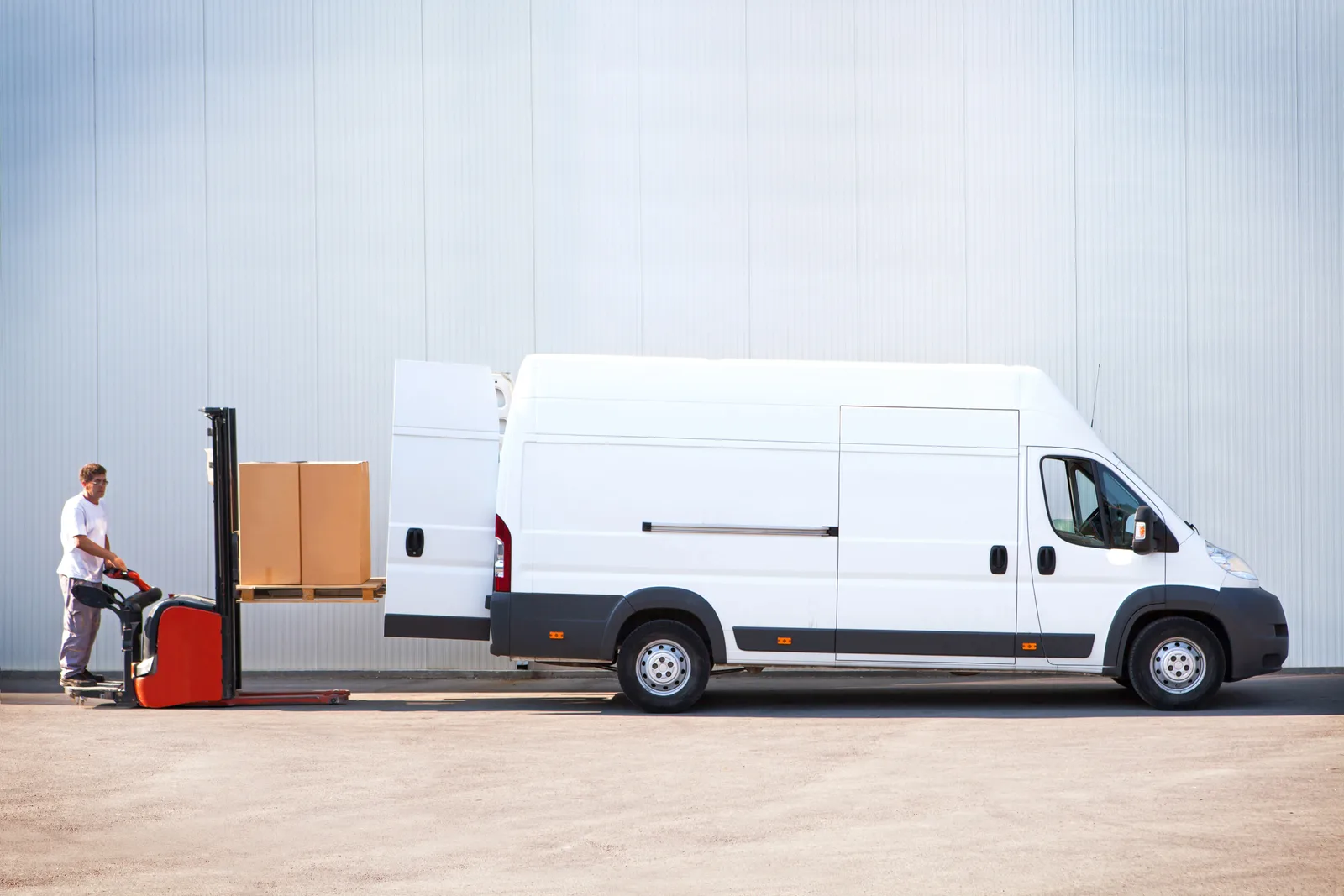
- Crated and palletized glass loads like any other freight — dock or forklift at the origin, tailgate at a destination without one.
- At the delivery end, full racks are typically unloaded piece by piece by the installing crew. If no crew will be on site, say so when you book, because that changes the plan.
None of this is complicated, but it has to be agreed in advance. A truck that arrives at a job site expecting an installer crew, and finds a locked gate instead, cannot simply leave an A-frame at the curb.
Why fragile freight favours a direct run
Every transfer is a new chance for damage, and terminal-based freight networks are built on transfers — dock to truck, truck to dock, cross-dock to linehaul. For most commodities that trade-off is fine. For glass, the arithmetic is bad: the freight is unforgiving, the damage is total rather than cosmetic, and a broken sealed unit can stall an installation that trades and schedules are stacked behind.
A same-day direct run removes the transfers entirely. The glass is loaded once at the shop, rides one vehicle, and is unloaded once at the site — the same hands-off principle that applies to finished cabinetry and millwork, which shares the same enemy: handling by people who don’t know what’s inside the packaging. Direct service also means the delivery lands inside the window the installers are actually on site, instead of whenever the network gets around to it.
Delivering to job sites: the details that matter
Much of this freight ends at a construction site rather than a receiving dock, and site deliveries have their own rules — access, staging space, and someone authorized to receive. Our guide to construction material deliveries in the GTA covers the general playbook; for glass specifically, add these:
- Confirm where the glass will be staged. It needs a flat, protected spot out of the traffic path, with racks or padded walls to lean against.
- Time the arrival to the crew, not the calendar. Glass that arrives a day early sits exposed on a live site — arguably worse than arriving an hour late.
- Photograph the load at handover. Condition at delivery is the line between a transit claim and a site-damage dispute.
Check it before you sign for it
Glass damage is binary and often invisible through packaging, so the receiving step carries real weight. Count the units against the paperwork, inspect edges and corners where wrap allows, and note anything questionable on the proof of delivery before signing. A clean signature says the freight arrived complete and undamaged; if a concealed crack surfaces during installation, that clean POD is what the claim conversation starts from. Thirty seconds of inspection at the tailgate is cheap insurance.
Getting it moved
Sonic Transport runs glass, windows and doors for shops, manufacturers and installers across the GTA, Golden Horseshoe and Southern Ontario — racked, crated or palletized, on direct runs where the freight is loaded once and delivered once. Tailgate service is standard on our 26-foot box trucks for crated and palletized loads, and a real person works out the loading plan with you before anything is booked. Tell us what’s moving and where it needs to be, and we’ll put the right vehicle and the right plan on it.
Frequently asked questions
Can windows travel flat on a skid?
Small framed windows can be palletized, but they should stand upright on the deck with padding between units, not lie flat. Glass laid flat flexes with every bump in the road, and flexing is what cracks it. Large or unframed glass should ride on an A-frame or in a purpose-built crate.
Who supplies the A-frame rack for a glass shipment?
Usually the shipper. Glass shops and window manufacturers typically own their transport racks and load them with their own crew, because they know how the product should be blocked and padded. Confirm rack arrangements when you book, including whether the rack returns to the shipper afterwards.
Do I need a tailgate truck for glass and window deliveries?
Only when the freight is crated or palletized and the delivery end has no dock or forklift — then a tailgate grounds the skid so it can be moved with a pallet jack. Loaded A-frames are a different story: pieces usually come off the rack by hand, so what you need at site is people, not a lift platform.