
Rush Courier in the GTA: How Priority Freight Actually Works
How rush courier service works in the GTA: what priority dispatch means, how a direct run unfolds step by step, which vehicles fit, and what drives the rate.
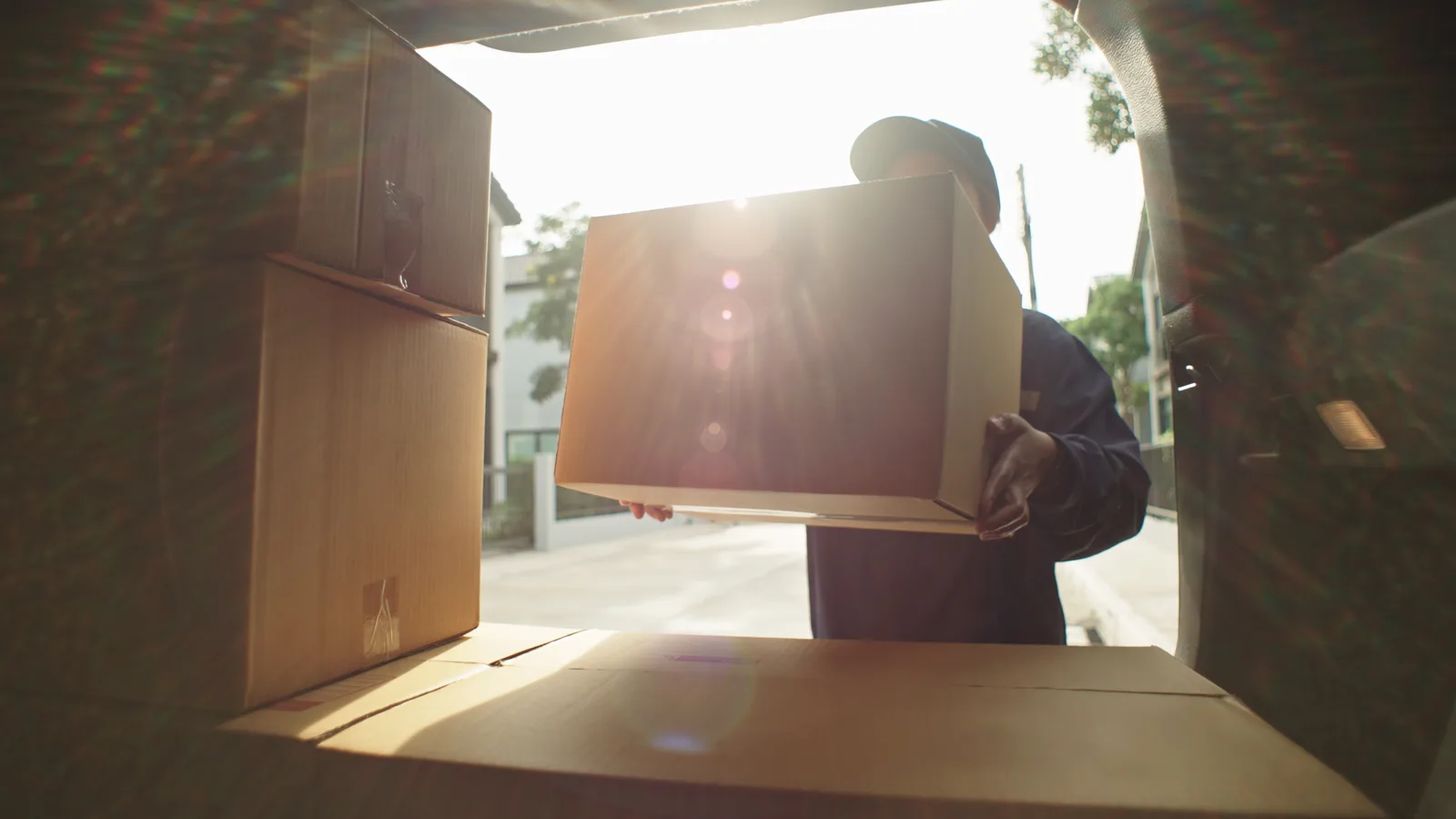
Rush courier service means one thing: your shipment becomes the priority. Instead of being worked into a route or held for a scheduled departure, the job goes to the next suitable vehicle, the driver heads straight to your pickup, and the freight rides directly to its destination with nothing else on board that outranks it. This guide explains how priority dispatch actually works in the GTA — what happens behind the scenes, what kinds of freight it suits, and what you can do to make a rush run go smoothly.
What “priority dispatch” actually means
Priority dispatch is a decision about sequence, not a magic capability. Every courier operation has a flow of work: scheduled routes, same-day jobs being grouped by geography, vehicles finishing deliveries and coming free. A rush booking interrupts that flow. Dispatch looks at which vehicles are available or about to be, picks the one that fits the freight and is best positioned for the pickup, and sends it — the job doesn’t wait to be bundled with anything else.
Two things follow from that. First, a rush run is typically exclusive: your freight is the reason the vehicle is moving, and the route is pickup to delivery, direct. Second, the honest answer to “when will the driver arrive?” is always specific to the moment — it depends on where the fleet is when you call. A carrier who quotes you a real dispatch picture is being straight with you; one who promises a fixed pickup time before checking is guessing.
How a rush run unfolds, step by step
From the first call to the signed proof of delivery, a rush shipment follows a predictable sequence:
- You describe the freight and the deadline. What’s moving, its dimensions and weight, where it’s going, and what time constraint is driving the urgency.
- Dispatch matches a vehicle. The freight determines the class — minivan, cargo van, pickup or box truck — and dispatch assigns the nearest suitable unit.
- The driver goes straight to pickup. No preceding stops. You get confirmation that the vehicle is en route.
- Loading happens on arrival. Having the freight staged, packaged and accessible is the single biggest thing the shipper controls — a rush run can lose more time at a slow dock than it ever does on the highway.
- The freight rides direct. No terminal, no cross-dock, no transfer between vehicles. What was loaded is what arrives.
- Delivery closes with a POD. The receiver signs, and the proof of delivery confirms who took the freight and when — the document that lets everyone downstream stand down.
What rush freight looks like in practice
Rush is bought for consequences, not for convenience. The common threads across GTA rush work:
- Line-down parts — a component that has a production line or a machine stopped until it arrives.
- Hard external cutoffs — freight that must reach a customer’s receiving window, a contractor’s crew, or an event before a door closes.
- Freight holding up people — a crew, a technician or a shift that can’t work until the shipment lands.
- Recovery from an earlier failure — a short-shipped order, a wrong part, a missed delivery that now has to be made right today.
If none of those apply — if the freight simply needs to arrive today, without a specific clock on it — standard same-day service usually does the job at a lower rate. The dividing line is worth understanding before you book; we’ve written a full comparison in same-day versus rush and when priority is worth paying for.
The vehicle still has to fit the freight
Priority dispatch doesn’t suspend physics. A rush booking moves fastest when the first vehicle sent is the right one, which means accurate dimensions and weight matter more on a rush job than on any other:
| Freight | Typical vehicle |
|---|---|
| Documents, small parts, cartons | Minivan |
| Long stock, open-bed loads | Pickup truck |
| Bulk cartons, light skids | High-roof cargo van or Sprinter |
| Skids and pallets, heavy freight up to 10,000 lbs | 26-foot box truck with tailgate |
Send a minivan to a skid and the run restarts from zero. If you’re not sure what class your shipment needs, our guide to choosing the right vehicle size for a shipment walks through it — or just give the carrier honest dimensions and weight and let dispatch make the call.
How far a direct rush run goes
Rush isn’t only a city service. From a GTA base, direct service reaches roughly 350 km one way — which puts the whole Golden Horseshoe and most of Southern Ontario inside a single direct run: Toronto, Mississauga, Brampton, Vaughan, Markham, Oakville, Burlington, Hamilton, Niagara, Guelph, Cambridge, Kitchener–Waterloo, London and Barrie. An urgent part can leave a Mississauga supplier and ride one vehicle, one driver, straight to a plant in London.
Beyond that radius — freight headed across Canada or over the border — the move can still be arranged through transportation partners, with the same single point of contact coordinating it.
What drives a rush rate
Rush costs more than standard service, and the reason is structural: you’re buying exclusive use of a vehicle and a driver, dispatched out of sequence. The rate reflects the same factors as any courier job — distance, vehicle class, weight and dimensions, tailgate requirements, time on site — with the priority layered on top. No reputable carrier publishes a flat rush rate, because no two runs tie up the same equipment for the same time. The full breakdown of what determines courier rates in the GTA applies here, priority included.
How to be a good rush shipper
The carrier controls the dispatch; you control everything else. The rush jobs that land clean share the same habits: exact freight details given up front, the shipment staged and ready before the vehicle arrives, a named receiver who knows it’s coming, and a cell number for both ends. Most of what goes wrong on urgent freight is avoidable, and we’ve catalogued the failure modes in seven rush-freight mistakes that cost you the deadline.
When you need a vehicle moving now
Sonic Transport runs rush service across the GTA, Golden Horseshoe and Southern Ontario — priority dispatch, direct runs, tailgate-equipped box trucks up to 10,000 lbs, and a real person who knows your account on the other end of the line. If something has to move now, tell us what’s shipping and where it’s going and we’ll put the next suitable vehicle on it.
Frequently asked questions
Is rush service the same as same-day delivery?
No. Same-day means the shipment arrives within the same business day, usually worked into a day of other deliveries. Rush means the shipment becomes the priority: the next suitable vehicle is assigned to it and drives straight from pickup to delivery without other stops in between.
Can a skid or pallet go by rush courier?
Yes. Rush is a dispatch priority, not a size class. A single envelope of documents can go rush in a minivan, and a 2,000-lb skid can go rush on a box truck with a tailgate. The freight determines the vehicle; the urgency determines the dispatch.
How far can a rush run go from the GTA?
A regional carrier like Sonic Transport runs direct service up to roughly 350 km one way from the GTA — which covers the Golden Horseshoe and Southern Ontario, including Hamilton, Niagara, Kitchener–Waterloo, London and Barrie. Longer Canadian or cross-border moves can be arranged through transportation partners.