
Next-Day LTL in Southern Ontario: The Complete Guide
How next-day LTL works in Southern Ontario — sharing a truck, regional lanes, pricing factors, prep, accessorials, and when it beats a direct run.
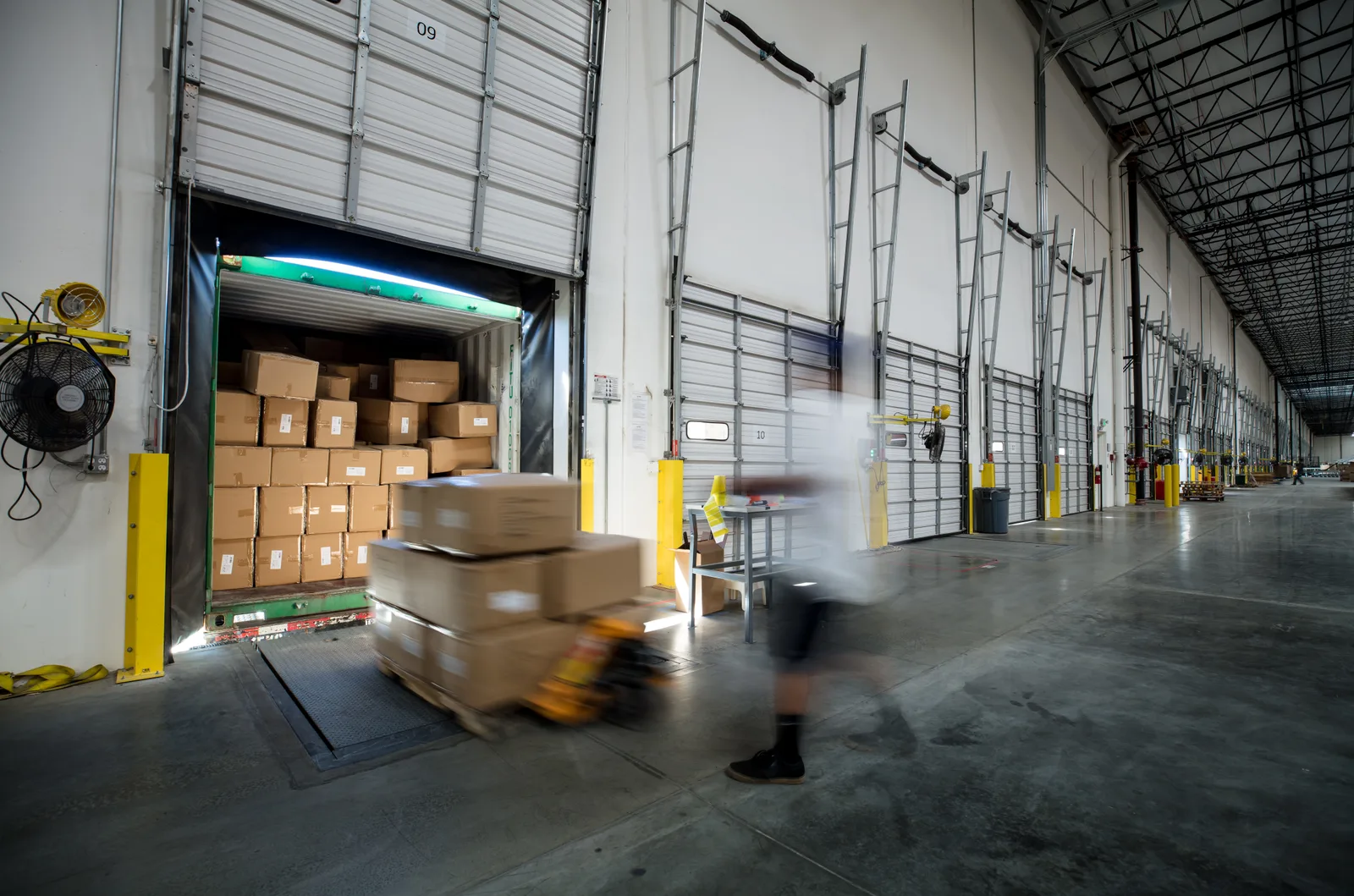
Next-day LTL is the workhorse service for Southern Ontario freight that doesn’t need to arrive today: your skid shares a truck with other businesses’ shipments heading the same way, you pay for the space and weight you use instead of a whole vehicle, and the freight delivers the next business day. For palletized shipments moving between the GTA, the Golden Horseshoe and the rest of Southern Ontario, it’s usually the best balance of cost and speed available.
This guide covers the whole picture — what LTL actually is, how a regional next-day lane works, what shapes the rate, how to get a skid ready, and how to decide when next-day is the right speed in the first place.
What LTL means
LTL stands for less-than-truckload: freight that occupies part of a truck rather than all of it. Instead of paying for a dedicated vehicle, you pay for your share — typically measured by skid positions, weight and dimensions. The carrier fills the rest of the truck with other shippers’ freight travelling in the same direction, which is what makes the economics work for everyone on board.
The service suits palletized freight best. A wrapped skid is easy to load, easy to secure beside other shipments, and easy to count and sign for at delivery. If you’re new to the term, our answer page on what LTL freight is gives the compact version; the rest of this guide assumes freight on a skid.
How a regional next-day lane actually works
The sequence is simple: the carrier picks up your skid during the business day, it’s consolidated with other freight going the same direction, and it delivers the next business day within the carrier’s coverage area.
What makes regional next-day LTL different from the big national systems is what happens — or rather, doesn’t happen — in the middle. A national LTL network moves freight through a chain of terminals: pickup truck to origin terminal, linehaul to a hub, sort, linehaul again, destination terminal, delivery truck. Each stage is another set of hands on your pallet. A regional carrier running Southern Ontario lanes can keep the trip far shorter and flatter, because origin and destination are close enough that freight doesn’t need a hub between them. Fewer touches means less handling risk and less time lost to sorting. We compare the two models in detail in regional LTL versus national networks.
Where next-day LTL runs
A regional next-day service lives or dies by its coverage map. Sonic Transport’s next-day LTL service covers the GTA, the Golden Horseshoe and Southern Ontario — direct service up to roughly 350 km one way from the GTA. In practice that means lanes connecting Toronto, Mississauga, Brampton, Vaughan, Markham, Oakville, Burlington, Hamilton, Niagara, Guelph, Cambridge, Kitchener–Waterloo, London and Barrie.
Freight going further — the rest of Canada, or across the border — can still start with the same booking. Longer shipments are arranged through transportation partners, with the same point of contact coordinating the move end to end.
What shapes the rate
There’s no flat rate for LTL, because the price reflects how much of the shared truck your freight consumes and what handling it needs. The main variables:
- Dimensions and weight. Space on a shared truck is the product being sold. A tall, heavy or oversized skid takes more of it.
- Distance and lane. A Mississauga-to-Hamilton skid and a Mississauga-to-London skid ride different lanes for different lengths of time.
- Skid count. Two skids cost more than one, but rarely twice as much — the pickup, paperwork and stop are shared.
- Accessorials. Extra services beyond dock-to-dock — tailgate delivery, wait time, appointment requirements — are priced into the shipment. Our breakdown of LTL accessorials explains each one.
- Freight readiness. A properly wrapped, labelled, accurately described skid moves through the system without exceptions. Surprises at the dock cost time, and time shows up in freight pricing.
Because the variables interact, reputable carriers quote per shipment rather than publishing a rate card. Have your dimensions, weight, addresses and loading details ready and the quote will match the invoice.
Is next-day the right speed?
Next-day LTL fits freight where tomorrow is genuinely acceptable — restocking orders, scheduled B2B deliveries, transfers that aren’t holding up a job. If a business is waiting on the shipment today, or a line is down until a part arrives, a same-day direct run is the right tool and the extra cost buys something real. The decision logic — urgency first, freight profile second — is laid out in when next-day LTL beats a same-day courier run.
One honest note that matters more than any marketing line: next-business-day describes a delivery window, not a clock time. A shared truck serves several stops, and where yours falls in the route depends on the day’s freight. Plan receiving around the business day, not a specific hour — and if a specific hour matters, say so, because that’s a different service.
Getting a skid ready to share a truck
Shared-truck freight rides beside other shipments, which raises the bar on packaging slightly compared with a dedicated run:
- Build the load on a sound pallet with nothing hanging over the footprint.
- Stretch-wrap the load to the pallet so it moves as one unit.
- Label every piece with the destination business, full address and contact.
- Protect the top and corners if the freight can’t bear weight or contact.
- Confirm the paperwork — an accurate piece count and description on the bill of lading keeps pickup and delivery clean.
The full version, with the reasoning behind each step, is in our LTL prep checklist.
Loading at both ends
LTL assumes commercial pickup and delivery, but not every business has a dock. If either end lacks both a dock and a forklift, book tailgate service: a hydraulic platform on the truck lowers the skid to ground level, where the driver moves it by pallet jack. On Sonic Transport’s 26-foot box trucks, the tailgate is standard equipment — but the carrier still needs to know it’s required, because the delivery has to be planned around ground-level handling. Flag it when you book, not when the truck arrives.
What closes out the shipment
Every delivery should end with proof of delivery: the receiver checks piece count and visible condition, signs, and that signature becomes the documented record of who received the freight and when. If anything is short or damaged, it gets noted on the POD at the time of delivery — that notation is what makes a claim straightforward instead of contested. A carrier that closes every run with a POD and a shipment update is telling you something about how the rest of its operation runs.
Booking a next-day skid
When you request a quote, the carrier needs the same handful of facts every time: dimensions, weight, piece count, pickup and delivery addresses, loading capability at both ends, and any accessorials — tailgate, appointment, special instructions. With those in hand, a regional carrier can slot the freight into the next day’s lanes and give you a number that holds.
Roughly 60% of what Sonic Transport moves involves skids and pallets, and next-day LTL is how a large share of it travels. If you’ve got palletized freight moving anywhere in the GTA, Golden Horseshoe or Southern Ontario and tomorrow works, tell us what’s shipping — a real person who knows your account will price the lane and book the skid.
Frequently asked questions
Is next-day LTL guaranteed to arrive the next day?
Next-business-day is a service description, not a clock-time guarantee. Because the truck carries freight for several businesses, delivery lands within a window on the next business day rather than at a promised hour. Freight that must arrive by a specific time belongs on a direct run instead.
Do I need a loading dock to use next-day LTL?
No. If either end of the shipment has no dock and no forklift, ask for tailgate (lift-gate) service when you book. The truck's hydraulic platform lowers the skid to ground level, where it moves by pallet jack.
How big can a shipment get before LTL stops making sense?
When your freight starts filling most of a trailer on its own, you're no longer sharing meaningfully and a full truckload usually prices better. Below that point — one to a handful of skids — LTL is typically the economical option.