
Consolidating Shipments: Fewer Runs, Fuller Trucks, Lower Spend
How consolidating shipments cuts freight spend — batching orders into fewer, fuller runs, where the savings actually come from, and when splitting still wins.
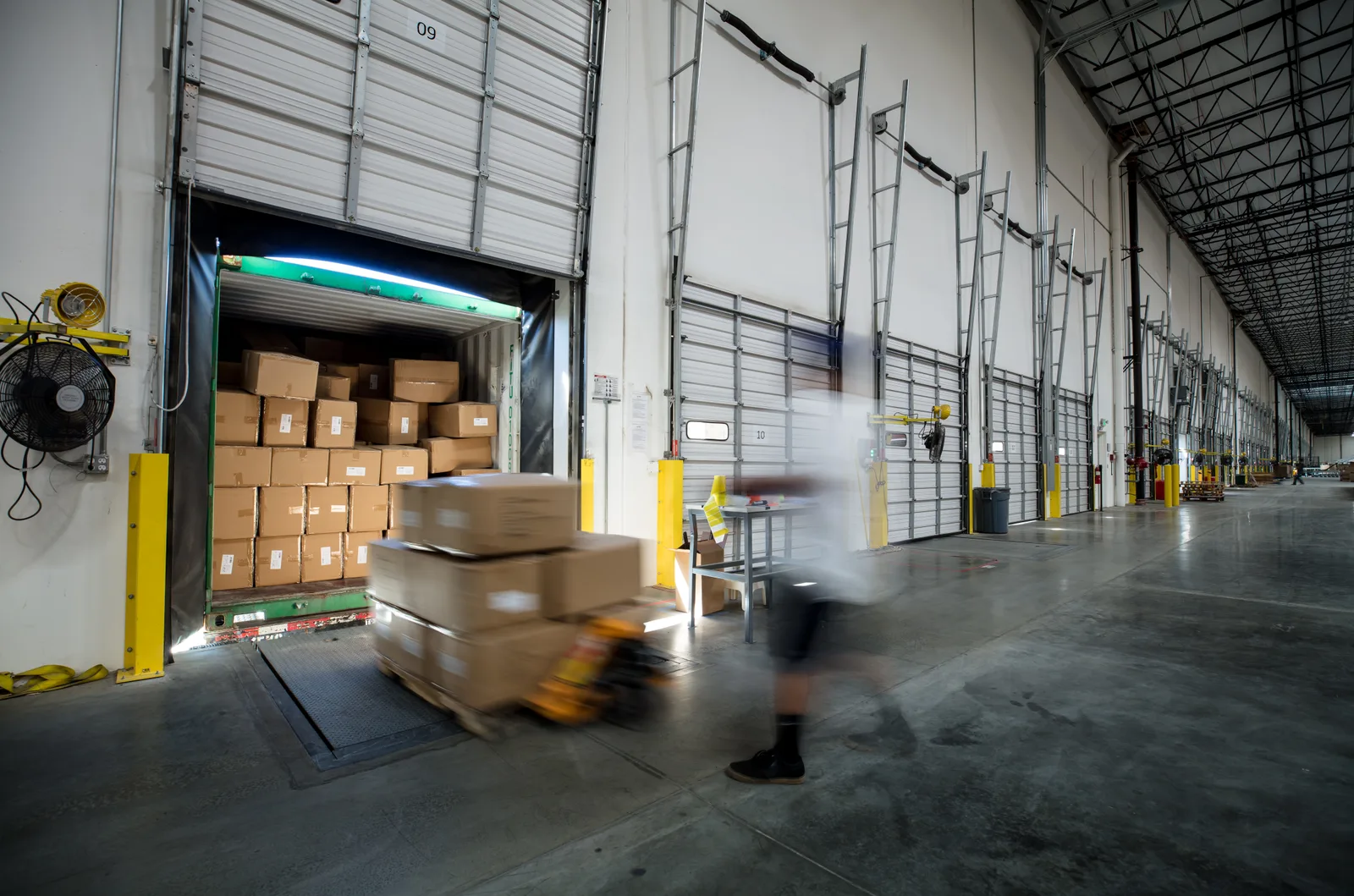
Every freight run you book carries a chunk of cost that has nothing to do with how much is on the truck: a vehicle and driver have to travel to your dock, load, travel, and unload whether they’re carrying one carton or six skids. Consolidation attacks exactly that. By batching orders into fewer, fuller shipments, you spread those fixed per-run costs across more freight — which is why two half-empty runs to the same city almost always cost more than one combined run carrying the same goods.
The savings here are structural, not a discount trick, and you don’t need a logistics department to capture them. You need a shipping pattern worth looking at and a few habits for batching without hurting service.
What consolidation means in practice
Consolidation is the deliberate combining of orders that would otherwise ship separately into a single, fuller shipment. In a B2B setting it usually takes one of three shapes:
- Same-destination batching. Three orders for the same customer this week become one multi-skid delivery instead of three single-skid runs.
- Same-area batching. Orders for several customers in one region — say, three deliveries in the Kitchener–Waterloo and Cambridge area — travel together on one vehicle making sequential stops.
- Calendar batching. Instead of shipping the moment each order is ready, you ship on set days, and everything ready by that day travels together.
The formal definition and its variations are covered in our answer on what consolidation means in freight. The rest of this article is about why it saves money and how to actually do it.
Where the savings actually come from
No dollar figures here — rates vary by lane, freight and service level — but the mechanics are consistent, and they compound:
Fewer base charges. Every run has a floor: the cost of getting a vehicle and driver to your dock at all. Ten shipments means paying that floor ten times. Five consolidated shipments means paying it five times for the same freight.
Fuller vehicles, better-matched vehicles. A cargo van making three quarter-full trips is bought capacity going to waste. Consolidated freight lets the run use one appropriately sized vehicle — and picking that vehicle well is its own lever, which our guide to choosing the right vehicle size for a shipment breaks down.
Less accessorial repetition. If a delivery needs a tailgate, one consolidated delivery incurs that requirement once instead of three times across three runs.
Less admin and fewer receiving events. Every shipment generates a booking, paperwork, tracking attention and a receiving event at the far end. Receivers notice this too — one delivery to check in and sign for beats three interruptions to their dock schedule.
Distance, weight, vehicle and urgency still drive the underlying price of any run — consolidation doesn’t change the pricing factors, it changes how many times you pay them. For the full picture of what goes into a rate, see what drives courier pricing in the GTA.
How to batch orders without hurting service
Consolidation fails when it’s imposed carelessly and orders start arriving late. Done well, it’s invisible to your customers:
- Find your repeat lanes. Pull a month of shipping records and look for the same destinations or clusters appearing multiple times a week. Those repeats are your consolidation candidates; one-off destinations mostly aren’t.
- Set shipping days and let orders accumulate toward them. Even moving from “ship when ready” to two or three set days a week meaningfully consolidates volume — and it makes your freight spend predictable instead of reactive.
- Hold to a batching cutoff. Orders ready by the cutoff ship that day; orders after it ship next time. Without a cutoff, batches leak into one-off runs and the savings evaporate.
- Tell receivers what’s coming. A combined delivery of several orders should arrive with a clear piece count and paperwork that matches, so receiving stays simple and your proof of delivery is clean.
- Keep an urgent lane open. Consolidation is for freight that can wait for the batch. The line-down part still goes direct, today — batching it would be a false economy.
When not to consolidate
Honesty about the limits keeps the strategy working. Don’t batch freight that’s genuinely time-critical — the cost of a late part or a stalled job dwarfs the cost of a second run. Don’t combine freight that shouldn’t physically travel together, like something fragile pinned beside dense metal on the same skid. And don’t hold a customer’s complete order for days to fill a truck; a batching delay should be a day or two of deliberate scheduling, not a service problem you’ve created to save on freight. The judgement call between waiting-for-cheaper and paying-for-now is the same one covered in when next-day LTL beats a same-day courier run.
How to tell it’s working
Consolidation doesn’t need a dashboard to prove itself, but it does need a before-and-after look. Three signals, all readable from your own records:
- Runs per week are down while volume isn’t. The same freight is moving on fewer bookings — that’s the whole mechanism, visible directly.
- Invoices are fewer and fuller. Freight spend concentrated into fewer, larger line items is easier to review, easier to question, and easier to compare month over month than a drizzle of small charges.
- Receiving complaints haven’t gone up. The check that keeps consolidation honest. If customers or your own receiving teams start flagging late or confusing deliveries, the batching has drifted from deliberate to sloppy — tighten the cutoffs or shrink the batch window.
Give any change a month before judging it. One week’s shipping is weather; a month is climate.
When the pattern becomes a route
If the same batching decision keeps repeating — every week, same areas, similar volume — you’ve outgrown ad-hoc consolidation and grown into a standing arrangement. That’s what scheduled routes are: your recurring deliveries planned as a fixed rhythm rather than booked run by run. Consolidation is the habit; a scheduled route is the habit made permanent.
Start with one week of shipping data
You don’t need modelling software to find the opportunity. Look at last week’s runs, circle every pair that went to the same place or the same area within a day or two of each other, and you’re looking at your consolidation savings. For freight that fits a next-business-day window, our next-day LTL service across the GTA, Golden Horseshoe and Southern Ontario is a natural home for batched skids — and because a person who knows your account handles the planning, the batching logic doesn’t rest entirely on you.
If you’re ready to turn scattered runs into fewer, fuller ones, tell us what you ship and how often — we’ll help you find the pattern and price the consolidated version.
Frequently asked questions
How many shipments do I need before consolidation is worth it?
There's no magic number — the signal is pattern, not volume. If you're sending multiple part-full shipments to the same destination or the same area within a few days of each other, you're paying multiple base charges for freight that could have travelled together. Even combining two runs into one is consolidation.
Does consolidating shipments slow down delivery?
It can add a short planned delay, because you're holding earlier orders to ship with later ones. The practical approach is to consolidate freight that fits a next-business-day or scheduled window and keep genuinely urgent shipments on direct runs. The delay is a choice you make order by order, not a built-in penalty.
What's the difference between consolidation and LTL?
Consolidation is something you do — combining your own orders into fewer shipments. LTL is something the carrier does — combining freight from multiple shippers on one truck. They stack: a consolidated multi-skid shipment moving on an LTL lane benefits from both kinds of sharing at once.