
Booked in the Morning, Delivered the Same Day: How It Works
The full operational flow of a same-day courier booking in the GTA — quoting, dispatch, pickup, the drive and proof of delivery, explained step by step.
A same-day booking is a simple promise with a lot of coordinated work behind it: you describe a shipment in the morning, and by the time your customer locks up that evening, the freight is there, signed for, with a record to prove it. Understanding what happens between those two points — quote, dispatch, pickup, drive, delivery — makes you a better shipper, because most of what goes wrong in same-day freight goes wrong at the handoffs. Here’s the whole flow, in order.
Step 1: The request — where accuracy buys speed
Every run starts with a description of the freight: what it is, its dimensions and weight, where it’s picked up, where it’s going, and when it needs to land. Those details aren’t paperwork for its own sake — each one feeds a real decision. Dimensions and weight select the vehicle. The addresses set the route and the distance. The loading situation at each end determines whether a dock-height truck works or the run needs a tailgate.
The single most useful thing a shipper controls at this stage is honesty about the details. A skid described as “a couple of boxes” gets a minivan that can’t take it, and the day is lost to a re-dispatch. Described accurately, the same skid gets a truck that loads it in minutes.
Timing matters here too. A request placed in the morning leaves the whole working day for the run; the same request placed mid-afternoon is racing the clock, especially over distance. There’s no universal cutoff — what a realistic window looks like depends on the specific run — but early booking always widens the options.
Step 2: Dispatch — matching the freight to a vehicle
Once the shipment is confirmed, dispatch does the matching: which vehicle type suits the freight, which unit and driver are positioned to take it, and how the run fits the day’s other work. Small urgent shipments go city-fast in a minivan; bulk cartons and light skids suit a high-roof cargo van or Sprinter; palletized freight rides a 26-foot box truck with a tailgate standard.
From the shipper’s side this stage is invisible, which is exactly how it should be. What you see is a confirmation: the run is booked, the vehicle is assigned, pickup is coming. What you’ve actually received is a slice of a fleet’s day reserved for your freight — which is why same-day works best when the booking details were right the first time. A vehicle dispatched on bad information is the hardest error to recover from mid-day.
Step 3: Pickup — the handoff that sets the tone
The driver arrives, and the freight changes hands. The pickups that go smoothly share three traits:
- The shipment is ready — packed, palletized if needed, stretch-wrapped, and staged somewhere the driver can access it.
- It’s labelled with the destination company, address and a contact, even when paperwork rides with the driver.
- Someone on site knows the pickup is happening and can load, or point to what’s going.
That last one is underrated. A driver who arrives to a front desk that’s never heard of the shipment loses time finding the freight — and on a same-day run, time lost at pickup comes straight out of the delivery window. If the pickup end has no dock or forklift for heavy pieces, that’s a booking detail, not a surprise for the driver to solve on arrival.
Step 4: The drive — direct means direct
On a direct run there is no intermediate stop to describe, and that’s the point. The vehicle that loaded your freight drives to the destination. Nothing is cross-docked, re-sorted or transferred; the shipment doesn’t wait for a network schedule. The route runs through the same GTA and Southern Ontario traffic everyone drives, which is one honest reason delivery windows are expressed as parts of the day rather than minutes on a clock.
Along the way, updates keep the shipper in the loop — pickup confirmed, anything unusual flagged as it happens. If your customer is watching for the delivery, that’s the difference between telling them “it’s on the vehicle now” and telling them you’ll check. This is also where a direct service shows its character: when you call about the run, the person answering can reach the driver who has your freight, not a tracking database.
Step 5: Delivery and proof — closing the loop
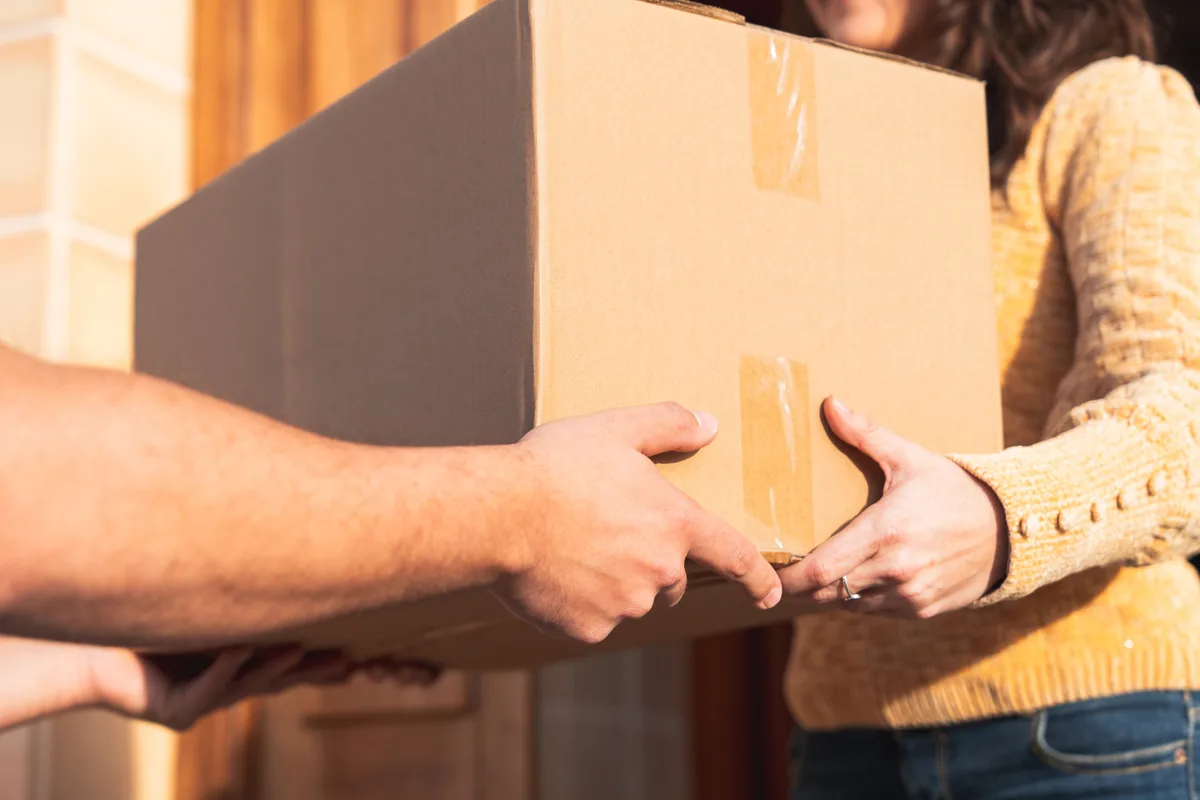
At the destination, the driver delivers to the dock or grounds the freight by tailgate, and the receiver checks the shipment — piece count and visible condition — before signing. That signature becomes the proof of delivery: documented confirmation of who received the freight, where and when.
For B2B shipments, the POD is the artifact that matters after the truck leaves. It closes the order, backs the invoice, and settles any later question about whether and when the delivery happened. A run without a POD isn’t finished; it’s just over.
What the shipper controls, in one list
The carrier owns the vehicle, the driver and the route. You own the inputs — and they’re decisive:
- Book early. Morning bookings get the most from the day.
- Describe the freight accurately. Dimensions, weight, and the loading situation at both ends.
- Stage the shipment before the vehicle arrives. Packed, labelled, accessible.
- Name a contact at each end. Someone who knows the freight is coming and can receive it.
- Flag anything unusual up front. No dock, tight receiving hours, oversized pieces — all solvable at booking time, all expensive to discover mid-run.
Get those five right and same-day delivery stops feeling like a scramble and starts feeling like a routine — which, for businesses that ship several times a week, is exactly what it becomes. If sales has been promising same-day and operations is improvising to keep up, our playbook for delivering on a same-day promise covers how to make it repeatable.
Sonic Transport runs same-day direct delivery across the GTA, Golden Horseshoe and Southern Ontario, strictly B2B — one vehicle per run, a person who knows your account, and POD closing out every delivery. Have something that needs to move today? Tell us what’s shipping and we’ll take it from the top of this list.
Frequently asked questions
What information do I need to book a same-day delivery?
Four things: what's shipping (dimensions, weight, piece count), the pickup address and its loading situation, the delivery address and its receiving situation, and when the freight needs to arrive. With those in hand, a carrier can quote accurately and assign the right vehicle the first time.
Does the driver wait while we finish packing?
Loading time is part of the run, and a reasonable amount is expected — but extended waiting holds a vehicle that dispatch has planned around, and it can affect both the delivery window and the cost. The clean habit is simple: have the freight packed, labelled and accessible before the vehicle arrives.
How do I know the delivery actually happened?
Through proof of delivery — a record of who received the freight, where and when, usually captured as a signature at the destination. A good carrier confirms delivery rather than leaving you to assume it, so you can close out the order and invoice with a record behind you.