
Labelling B2B Freight So It Arrives Where You Meant
What belongs on a B2B freight label, where to place it, and how to label multi-piece shipments so every piece arrives at the right dock door.
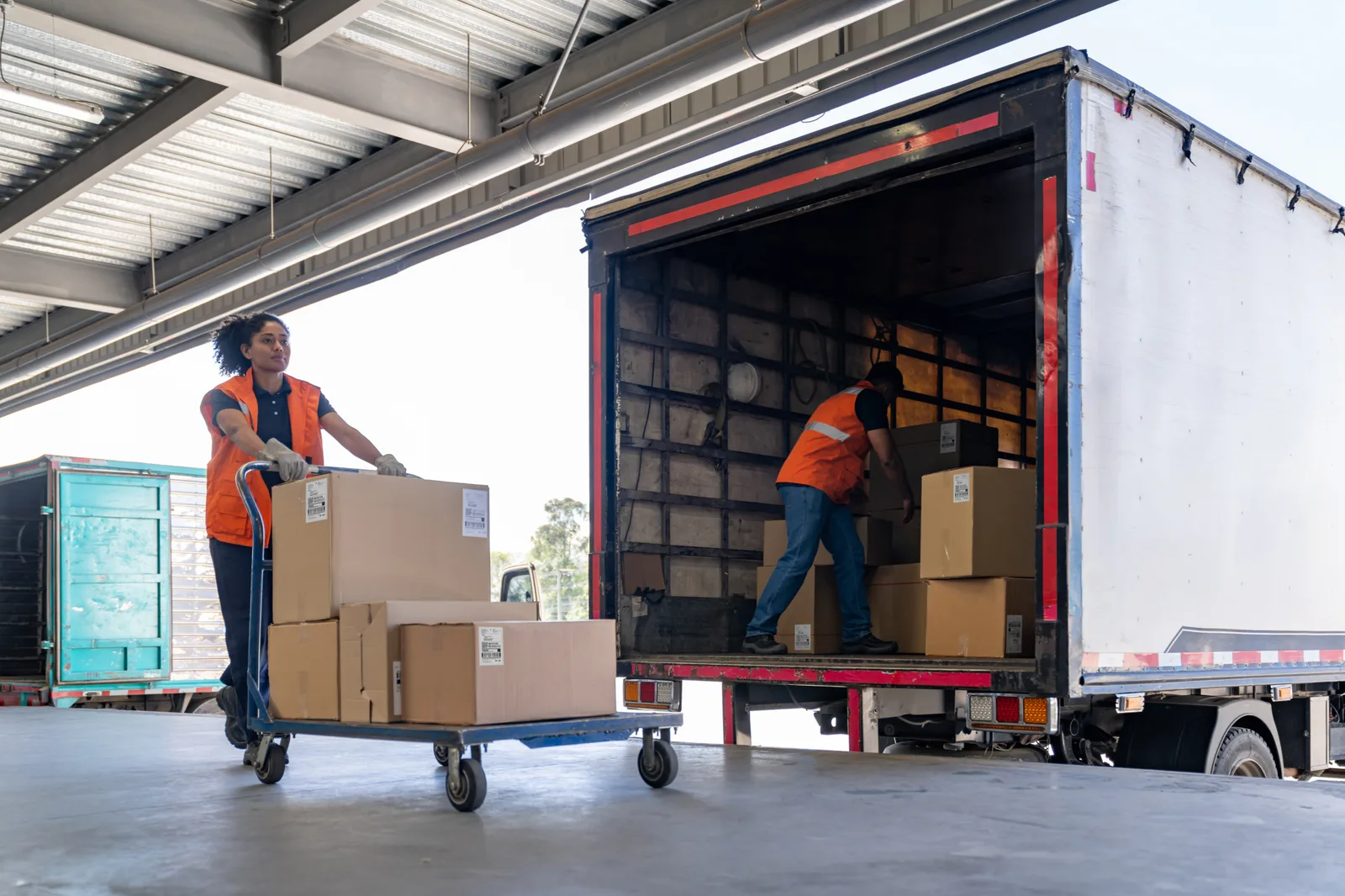
Every misdelivered piece of B2B freight was labelled — just not well enough. The address was there but the unit number wasn’t; piece three of four carried no label at all; a reused carton still wore last week’s destination. Labelling is the cheapest step in the entire shipping process, and it’s the one that determines whether everything downstream — the driver, the receiver, the proof of delivery — goes smoothly or turns into phone calls.
Here’s what belongs on a commercial freight label, where it should go, and the multi-piece discipline that keeps shipments together.
What a B2B freight label must carry
A complete label answers, on its own, the questions anyone handling the piece might have. The core content:
- Destination company name — the business, not just a person, since drivers deliver to companies.
- Full delivery address, including the unit or suite number. Industrial plazas and multi-tenant buildings are where deliveries go wrong; the unit number is not optional.
- Receiving contact name and phone number — the person the driver calls from the parking lot when the dock is occupied or the door is locked.
- Origin/return identification — your company name and address, so an orphaned piece can be traced backward.
- Reference numbers your receiver cares about — the PO number, order number or job number their receiving team will match against. This is often what gets freight accepted quickly instead of set aside for investigation.
- Piece count — “1 of 3,” “2 of 3,” “3 of 3” on the corresponding pieces.
Special-handling marks — THIS SIDE UP, FRAGILE, DO NOT STACK — go on when they’re true and matter. Used honestly, they inform handling; sprayed on everything, they inform no one.
The label complements, never replaces, the shipment paperwork. The waybill or bill of lading describes the shipment as a whole and travels with the driver; labels ride on the freight itself so each piece stays identifiable if it’s ever staged apart from its paperwork. Our overview of what paperwork travels with freight maps out that division of labour.
Placement: where labels actually get read
Content is half the job; position is the other half.
On cartons, place the label on the largest side panel, flat, not folded over an edge — a label wrapped around a corner can’t be read or scanned in one look. Avoid seams and closure tape lines where lifting flaps distort it.
On skids, label the load itself, not just the top carton: a label sheet on two adjacent sides of the wrapped load, at a height where a person standing beside it — or driving a forklift toward it — can read it without gymnastics. Put labels on top of the stretch wrap, or in adhesive pouches on the wrap; a label under the film can’t be updated, and removing wrap at delivery destroys it. For the full skid-specific routine, see how to label skids properly.
On irregular freight — equipment, bundles, crated pieces — use tag labels wired or zip-tied to the piece where adhesive won’t hold, plus a duplicate tucked in a visible protected spot. One label on curved sheet metal is an invitation for it to peel off in transit.
Legibility is a requirement, not a courtesy: printed text over handwriting wherever possible, large type, and ink that survives rain between the truck and the door. If handwriting is the reality, block capitals with a marker, not pen.
Multi-piece shipments: where discipline pays
Multi-piece freight is where labelling either holds a shipment together or lets it quietly split apart. The rules:
- Every piece gets a full label. Not just piece one. Any piece can be separated from its siblings at a busy dock, and an unlabelled piece three is anonymous freight.
- Number the set — “2 of 5” tells a receiver instantly that pieces are missing and tells a driver instantly that the load is complete. It’s the simplest shortage-prevention device that exists.
- Same reference on every piece. The PO or order number repeats across the set so any piece can be matched to the order and to its paperwork independently.
- Count on the paperwork matches count on the freight. If the waybill says four pieces, four labelled pieces must exist. Mismatched counts are how shortages get signed for without anyone noticing — and the piece count the receiver verifies at delivery is exactly what flows into the proof of delivery.
For mixed skids — several orders consolidated on one pallet — label the skid with the destination and mark it as mixed, and make sure each inner order is separately identified so the receiver can break it down accurately.
The five-minute labelling routine
Fold labelling into your dispatch routine rather than treating it as an afterthought at the door:
- Strip or cover all old labels and barcodes on reused packaging.
- Print or write the label while the paperwork is being prepared, from the same source data — retyping is where address errors are born.
- Apply labels before the freight is staged, so nothing waits at the door unlabelled.
- Do a last look at pickup: every piece labelled, counts matching, reference numbers present.
It fits naturally into the broader pre-pickup discipline in our freight-ready checklist — labelling is simply the identification station on that line.
Why this matters most on fast freight
The faster the freight, the less slack exists to absorb a labelling error. On a same-day direct run, the truck loads and drives — there’s no overnight terminal dwell during which a mislabelled piece might be caught and corrected. The label you apply at 10 a.m. is the label the receiver reads at 1 p.m. Clean labelling is what lets direct freight move at direct speed: the driver confirms the pieces, the receiver matches the PO, the signature lands, done.
Sonic Transport runs direct B2B freight across the GTA, Golden Horseshoe and Southern Ontario, and well-labelled shipments are the ones that fly through both ends. Get the labels right, and we’ll get the freight there — request a quote when your next shipment is ready to go.
Frequently asked questions
Does freight still need labels if paperwork travels with the driver?
Yes. Paperwork identifies the shipment; labels identify the pieces. The two get separated constantly — at busy docks, in shared vehicles, whenever freight is staged. A label on every piece means any single piece can be identified on its own, by anyone, without hunting for the waybill.
What is the most important single thing to put on a freight label?
The complete delivery address including the unit number, plus a receiving contact name and phone number. Wrong-door deliveries in industrial plazas are one of the most common freight delays, and a unit number with a phone number resolves what would otherwise be a driver circling a complex.
Should I remove old labels from reused boxes and pallets?
Always. A reused carton carrying yesterday's address is a misdelivery waiting to happen — a scanner or a person in a hurry can act on the wrong label. Strip or completely cover every old label and barcode before applying the new one.