
Delivery Is Part of Your Product: B2B Retention and the Last Mile
Why B2B customers judge suppliers on the delivery, not just the goods — how reliability, proof of delivery and communication protect your accounts.
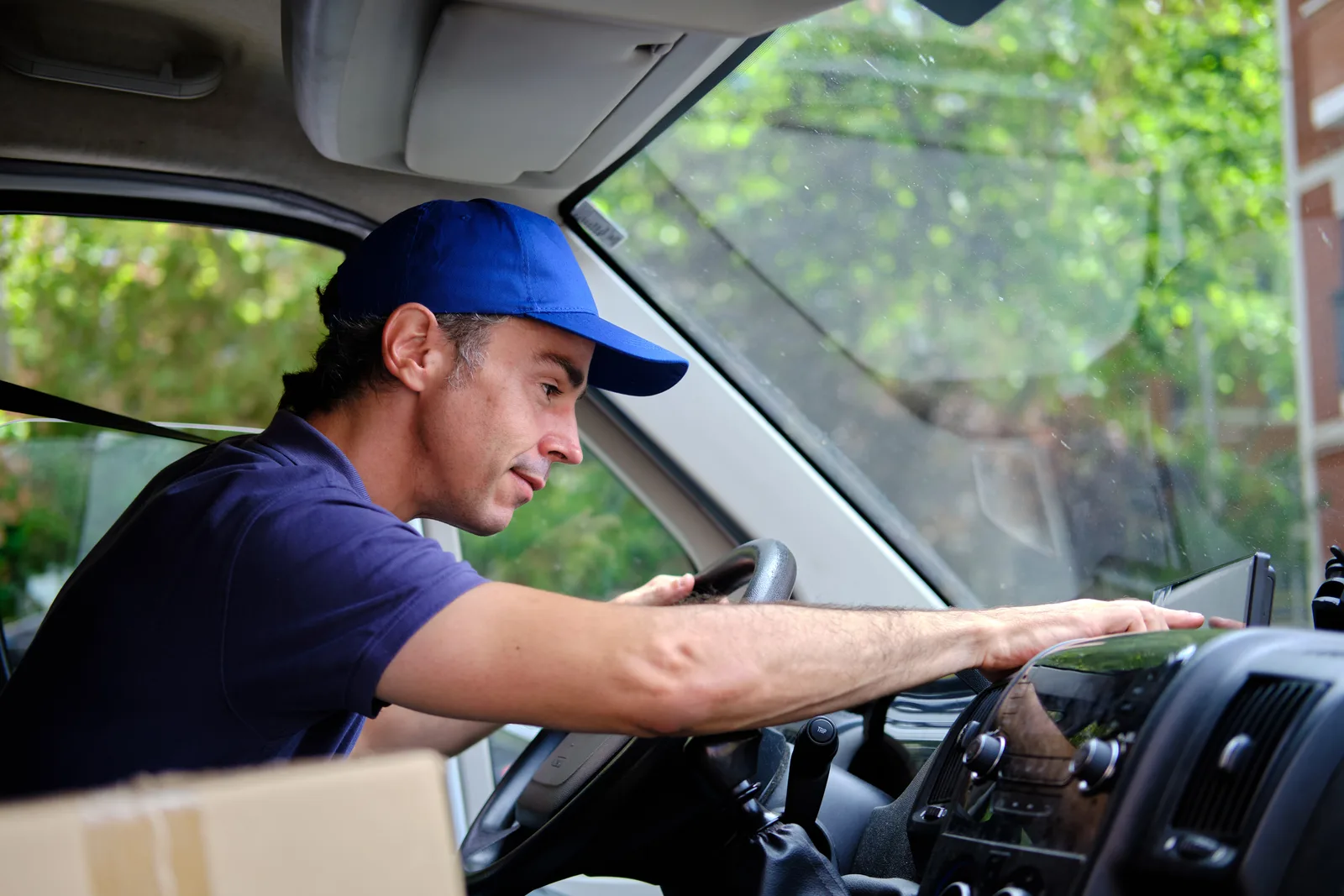
Your customer has never seen your warehouse, your picking process or your quality checks. What they see is a truck arriving at their door — on the day you said, or not; with the freight intact, or not; with a clear record, or a shrug. In B2B, that moment at the receiving door is where your product is actually experienced, and it gets weighed in every renewal, reorder and referral decision your customer makes. This piece is about treating the last mile as part of the product — and about the three levers that decide how it lands: reliability, proof, and communication.
The last mile is where your promises become facts
Everything upstream of delivery is a claim. The order confirmation, the ship date, the salesperson’s “no problem, you’ll have it Thursday” — all promises until a vehicle arrives and makes them true or false. Customers understand this instinctively, which is why delivery performance colours their judgment of everything else you do. A supplier whose freight lands when promised is assumed to be competent everywhere; a supplier whose deliveries wobble gets every other claim discounted too.
What makes B2B unforgiving is that your delivery is scheduled into someone else’s operation. The skid you’re shipping has a crew waiting for it, a machine down without it, or a resale commitment stacked on top of it. When it slips, your customer doesn’t absorb the miss — they pass it downstream to their own customers, with your name attached to the cause. That’s why delivery failures cost accounts out of proportion to the freight involved: you didn’t lose them a shipment, you made them break a promise.
Lever one: reliability — the boring advantage that compounds
Reliability is the least glamorous lever and by far the strongest: freight that arrives when you said, at a rate customers stop thinking about. The goal isn’t heroics; it’s the absence of episodes. Accounts are retained by the supplier nobody has to have a meeting about.
Building it is mostly structural, not motivational:
- Promise from capability, not optimism. A same-day commitment should trace to a booking that can actually be executed — freight ready, details accurate, window realistic. Our playbook for delivering on a same-day promise walks through that discipline.
- Match the transport to the stakes. Freight with a hard deadline deserves a direct run with one accountable vehicle, not a routing through hubs where your shipment is one anonymous barcode in a sort. The structural difference is the subject of why B2B shippers outgrow parcel networks.
- Prefer consistency over occasional brilliance. A supplier who is dependably on time builds more trust than one who alternates spectacular saves with quiet misses — because customers plan around the pattern, not the highlights.
Lever two: proof — end every delivery with evidence
Every delivery should close with proof of delivery: a record of who received the freight, where and when. Operationally it’s a signature; commercially it’s the difference between asserting you delivered and demonstrating it.
The retention value shows up in small moments. A customer’s AP department queries an invoice — you attach the POD and the query dies in one email. A receiver swears nothing arrived Tuesday — the record shows who signed at 2:15, and a dispute that could have soured a quarter becomes a shelving mix-up found in an afternoon. None of these moments are dramatic, and that’s the point: proof keeps ordinary friction from accumulating into doubt about whether you’re a supplier who has things under control.
There’s an internal benefit too. PODs turn your own delivery performance from anecdote into record — you can see what actually happened across a month of shipments, not just remember the loud failures.
Lever three: communication — silence is where trust erodes
Between “your order shipped” and the truck’s arrival, your customer is either informed or guessing. Guessing customers call, and every “let me check and get back to you” spends a little goodwill — not because anything went wrong, but because you looked like a spectator to your own delivery.
The fix is unheroic: a confirmation when the freight is picked up, a heads-up if anything threatens the window, and a close-out when it’s signed for. Three short touches, and the customer never wonders. The hard one is the middle touch — bad news, early. A delay flagged at 11 a.m. is a plan; the same delay discovered by the customer at 4 p.m. is an incident. Suppliers who consistently deliver bad news before the customer feels it earn a strange, durable kind of trust: even their failures demonstrate control.
This is also a criterion for choosing carriers. A carrier is your communication chain’s first link — if they can’t tell you where the freight is, you can’t tell your customer. Ask how you’ll hear about pickup, problems and delivery before you hand them your customer-facing runs; the operational flow in how a morning booking becomes a same-day delivery shows where those updates naturally come from on a direct run.
What the last mile really costs — counted honestly
Delivery is usually managed as a cost line, which invites one specific mistake: comparing carriers and service levels on rate alone. The rate is the visible cost. The invisible ledger is where accounts are won and lost — staff hours spent chasing stalled shipments, replacement freight for damage, concessions offered to smooth over a missed date, and, largest of all, the revenue that quietly walks when a customer starts splitting orders with a second supplier after one wobble too many.
Counted that way, the delivery experience isn’t a cost centre to minimize; it’s retention infrastructure. The cheapest shipment is the one that never generates a call, a claim or an apology — and the freight decisions that produce that outcome are the levers above, purchased deliberately.
For B2B shippers in the GTA, Golden Horseshoe and Southern Ontario, Sonic Transport is built to be the delivery experience you’d want your name on: same-day direct runs with one accountable vehicle, POD closing every delivery, shipment updates along the way, and a person who knows your account when you call. If the last mile is part of your product, tell us what you ship and let’s make it the part your customers stop worrying about.
Frequently asked questions
Why does delivery matter more in B2B than in consumer shipping?
Because a B2B delivery almost always has something scheduled on top of it — a production run, an installation crew, a resale commitment, a customer of the customer. A late consumer parcel disappoints one person; a late B2B shipment idles paid labour and breaks promises further down the chain, and the account holder remembers who caused it.
How does proof of delivery help retain customers?
POD replaces assurance with evidence. When a customer asks whether their order arrived, answering with who signed, where and when — rather than a promise to look into it — builds the kind of quiet confidence accounts are kept on. It also resolves genuine disputes quickly and factually, which protects the relationship instead of straining it.
Do customers really leave suppliers over delivery problems?
Rarely after one incident — and rarely with an announcement. What typically happens is quieter: after repeated misses, the customer starts qualifying a second supplier, shifts a share of orders, and lets the relationship taper. By the time it's visible in your numbers, the decision was made months earlier at a receiving door.