
Moving AV and Staging Gear Between Venues
How AV gear moves between venues without damage or drama — road cases and racks, the truck pack, venue dock and elevator realities, and case-count accountability.
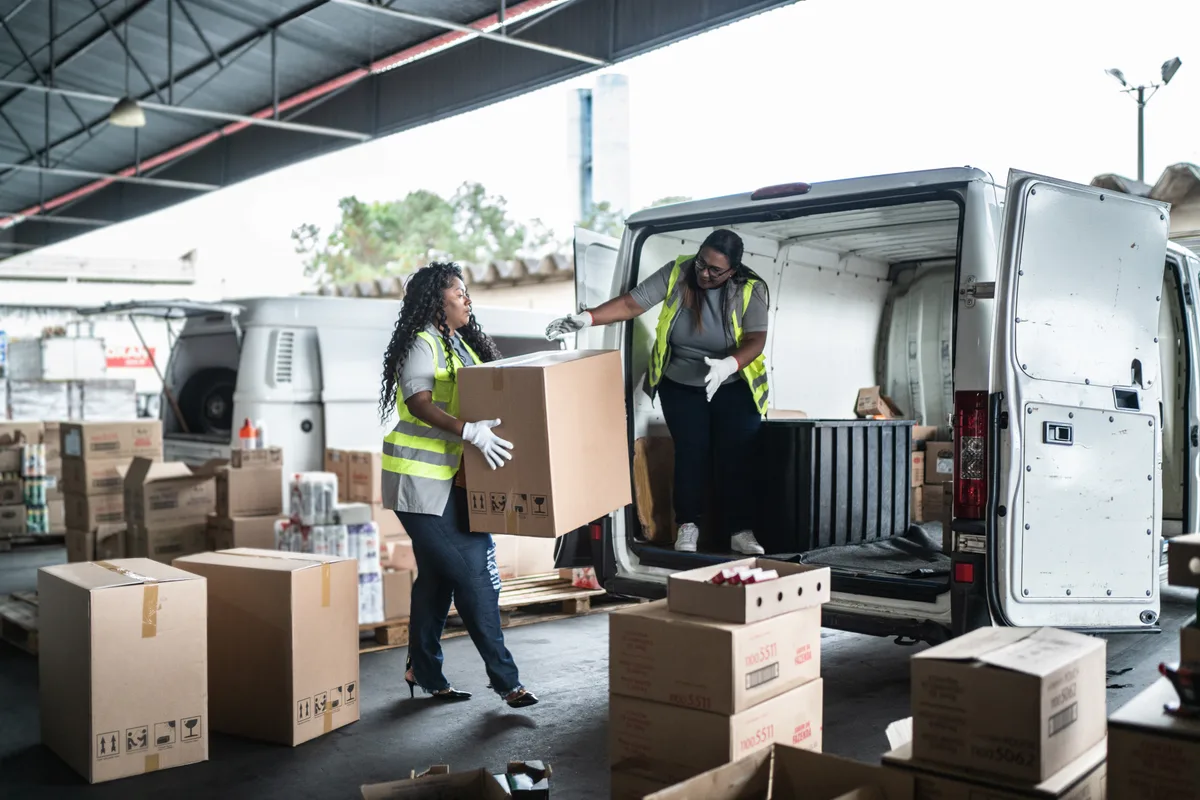
AV gear lives its whole working life in motion — out to a venue, back to the shop, out again days later. Consoles, amplifiers, line arrays, projectors, lighting fixtures: expensive, sensitive equipment that earns nothing sitting in the warehouse and earns nothing broken. The industry solved the protection problem decades ago with the road case; what separates smooth operators from chaotic ones today is everything around the cases — how the truck is packed, how venue timing is handled, and whether anyone can say with certainty how many cases went where.
The case is the shipping unit
AV freight isn’t boxes on skids; it’s a rolling inventory of purpose-built cases, and transport revolves around treating the case as the unit of everything — loading, counting, and accountability.
Road cases carry the general population of gear: plywood and laminate shells, steel corners, recessed latches, foam interiors cut to the equipment. They roll on casters, stack when sized to, and are designed to survive exactly the trip they’re about to take.
Shock-mounted racks carry the electronics that stay wired: amplifiers, processors, playback and drive systems bolted into a rack frame suspended inside its case. The whole point is that the system arrives configured — roll it in, connect, power up. Racks travel upright and strapped; a loaded rack on its back is how rails bend and connectors die.
Cable trunks and hampers carry the heavy connective tissue. They’re deceptively dense — a trunk of copper outweighs almost anything else its size on the truck — and they anchor the bottom of any stack.
The case fleet is also the packing discipline: labelled cases against a manifest turn “did everything make it?” from a feeling into a count.
Packing the truck is a skill, not a chore
A good AV truck pack does three things at once — protects the gear, uses the cube, and unloads in the order the setup needs:
- Heavy and rolling stock loads first and low. Trunks, racks and motor cases against the headboard and walls, casters locked or chocked.
- Straps and load bars turn rows into walls. Cases strapped to the truck’s logistic tracks can’t migrate under braking; an unstrapped pack rearranges itself at the first hard stop.
- Stack by strength, not just size. Structural cases carry weight above; fixture and instrument cases ride high or in dedicated slots.
- Last on, first off. Whatever setup needs first at the venue goes on last. A pack that mirrors the setup sequence turns dock minutes into show-prep minutes.
Crews that pack the same kit repeatedly develop a truck pack the way stage managers develop a running order — documented, repeatable, and taught to new hands deliberately.
Venue timing: the dock is the bottleneck
Between the shop and the stage sits the venue’s loading infrastructure, and it — not distance — is what dictates timing. Hotels and convention facilities book dock slots and freight elevators; theatres may have a single dock shared with every other supplier that day; some rooms are a street-level push through the lobby corridor. Each imposes its own arithmetic on how long the load-in actually takes.
The transport plan has to absorb these realities: arrive inside the booked slot, unload rolling stock by ramp or tailgate, and clear the dock for the next truck. Turnaround runs — gear out of venue A in the evening, into venue B next morning — add a second window to hit and remove all slack for error. It’s the same window-driven discipline that governs trade show freight in Toronto, where marshalling schedules replace dock bookings but the principle is identical: the venue’s clock outranks everyone’s.
This is why AV work suits a dedicated vehicle — a truck carrying only your kit, scheduled to your windows, with the same driver returning for the out. Shared networks consolidate freight on their own timetable, which is precisely the variable an AV operator cannot afford.
Accountability by the case count
Every venue transfer is a place for a case to go astray, and AV inventories are too valuable for “it’ll turn up.” The working system is simple and non-negotiable:
- Gear leaves the warehouse against a manifest — case IDs and count.
- The count is confirmed onto the truck and again off the truck, at every stop.
- The delivery closes with a proof of delivery recording the count, the signature and the time.
When counts happen at every handoff, a discrepancy surfaces at the door where it occurred, while the truck and the memory are still present. When they don’t, it surfaces during setup at the next show — the most expensive possible moment. The same manifest logic underpins IT hardware deployment logistics, another trade that moves configured, serialized equipment and can’t tolerate ambiguity about what arrived.
Handling notes that save equipment
A few practices, consistently applied, prevent most transit damage to AV gear: racks upright, always; fixture cases stacked within their rated loads; nothing riding loose on top of the pack; wet-weather covers for the street-level push; and cases closed and latched even for short hops — an open case is an invitation for whatever it meets. None of this is sophisticated. All of it is the difference between gear that shows up show-ready and gear that shows up as a repair ticket.
A truck that works your schedule
Sonic Transport moves AV and staging gear for production and rental companies across the GTA, Golden Horseshoe and Southern Ontario — dedicated trucks packed to your sequence, venue windows hit, case counts confirmed at every door, and POD closing every run. One point of contact who knows your kit and your venues. When the next gig has gear to move, tell us the venues and the windows and we’ll handle the road part.
Frequently asked questions
Do AV road cases need to be palletized for transport?
Usually not. Road cases are built to travel as rolling freight — they load up a ramp or tailgate on their own casters and get strapped to the truck walls in position. Palletizing makes sense for small cases consolidated into one unit, or when gear rides a shared freight network where individual cases would be handled by strangers.
How is rack-mounted equipment transported between venues?
In shock-mounted rack cases: the equipment stays bolted into the rack, the rack rides inside a case with suspension between the frame and the shell, and the whole unit rolls on casters. Racks travel upright, strapped to the truck wall, and never on their backs — connectors and rails take damage when a loaded rack lies down.
What happens if a case goes missing between venues?
The case count is the safeguard. Gear leaves the warehouse against a manifest, the count is confirmed onto the truck, and confirmed again at delivery on the proof of delivery. When counts happen at every handoff, a missing case is caught at the door where the discrepancy occurred — not discovered during setup at the next show, when it's hardest to fix.