
How Far Can Same-Day Freight Reach? Southern Ontario Within 350 km
What a 350 km direct service radius really covers — the Southern Ontario cities within same-day reach of the GTA, typical distances, and where partners take over.
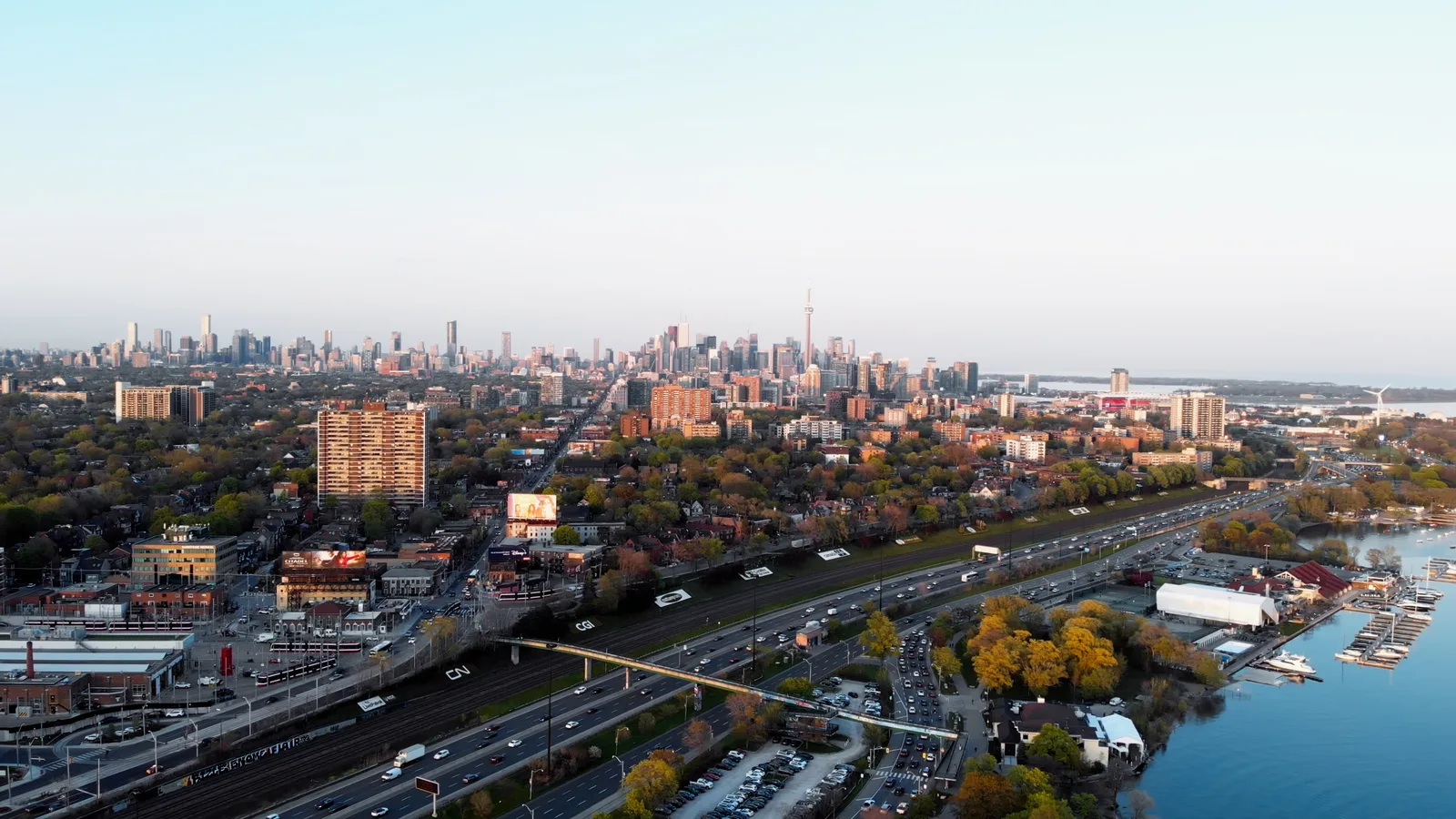
Same-day freight is usually marketed as a city service, but its real reach is a function of arithmetic: hours of daylight in a business day divided by highway speed. Within roughly 350 kilometres one way of the GTA, a vehicle can load in the morning, drive the lane, and deliver before the business day ends. That radius happens to cover nearly every significant market in Southern Ontario — which is why it is the working boundary of Sonic Transport’s direct service area.
This guide puts the radius on the map: which cities sit inside it, what the distances actually are, how a long-range direct run works, and what happens past the edge.
What 350 kilometres looks like on the map
Centre a 350-kilometre arc on the GTA and it sweeps in almost all of Southern Ontario’s population and industry. West, it reaches past London deep into the southwest. South, it takes in the entire Niagara Peninsula to the US border. North, it covers Barrie and Simcoe County with room to spare. The dense heart of the arc is the Golden Horseshoe — the lakeshore band from Niagara through Hamilton to Toronto plus the inland ring of Guelph, Cambridge and Kitchener–Waterloo — which we map fully in our Golden Horseshoe freight guide.
Two well-known cities fall outside the arc, and it is worth being straight about them: Windsor sits past the 350-kilometre mark, and Ottawa is on the order of 450 kilometres away. Lanes like those are real and common — they simply move differently, as covered below.
The cities inside the radius
Approximate road distances from Toronto:
| City | Approx. distance | Notes |
|---|---|---|
| Mississauga, Brampton, Vaughan, Markham | Inside the GTA | Core coverage, dense daily service |
| Oakville / Burlington | 40–55 km | QEW lakeshore |
| Hamilton | 70 km | About an hour’s drive |
| Cambridge / Guelph | 90–95 km | Off the 401 and Hwy 6 |
| Barrie | 100 km | Straight up Highway 400 |
| Kitchener–Waterloo | 105 km | Via 401 and Hwy 8 |
| Niagara (St. Catharines / Niagara Falls) | 110–130 km | QEW to the border |
| London | 190 km | The long lane of the regular network |
The radius is also not just its cities. The space between them — county industrial parks, rural manufacturers, equipment yards on regional roads — belongs to the same service area, reached by the same highways plus a final stretch of two-lane. Our answer on serving rural Southern Ontario covers how those addresses work; the short version is that a commercial address inside the arc is inside the network, whether or not it has a city name attached.
Notice the pattern: even the farthest city on the list, London, sits barely halfway to the 350-kilometre boundary. The radius is not a stretch target — it is a comfortable envelope around the places Southern Ontario businesses actually ship, with margin for the industrial areas around and between them. For city-level detail, see the pages for London and Barrie, the two ends of the network’s long axes.
How a long-range direct run actually works
Distance changes the numbers but not the mechanics. A same-day direct run to a far city works the same way as one across Mississauga: a vehicle is dispatched to your dock, loads your freight and only your freight, and drives to the destination. What the extra distance adds is drive time — roughly an hour per hundred kilometres of highway — and that has three practical consequences:
- Booking time matters more. A 9 AM pickup for London leaves the whole business day to work with; a mid-afternoon request for the same lane is racing the clock. Long lanes reward early booking.
- The GTA exit is the variable. On most long runs the unpredictable segment is the first 30 kilometres of GTA traffic, not the open highway beyond it. Dispatchers plan around the peaks accordingly.
- The vehicle is committed. A direct run at range ties up a vehicle and driver for much of a day, which is a real cost. When the deadline is genuinely next-day, next-day LTL moves the same skid more economically by sharing the vehicle with freight heading the same way.
None of this makes same-day at range exotic — it is routine work — but it explains why the same skid can be quoted differently at 9 AM and 3 PM, and why carriers ask about deadlines before vehicles. The short version lives in our answer on whether same-day works outside the GTA.
Past the edge: how lanes beyond 350 km move
Beyond roughly 350 kilometres, the day-trip math stops working for a single driver and vehicle, so the freight moves differently: through transportation partners. For Sonic Transport that means longer Canadian lanes and cross-border shipments are arranged through partner carriers while you keep one point of contact — the coordination, updates and paperwork are handled the same way as a direct run, even though the wheels under the freight belong to a partner for part of the trip.
The same applies to weight: direct service runs on vehicles up to 26-foot box trucks carrying up to 10,000 pounds, and freight beyond that — or full truckloads — moves by semi through partners. Either way, the practical advice is identical: describe the lane and the load, and let the carrier tell you which side of the line it falls on.
Using the radius when you plan shipments
Three habits get the most out of a 350-kilometre network:
- Stop assuming distance means days. Anywhere in Southern Ontario is a same-business-day possibility when the freight is ready in the morning. Plenty of shippers still quote their own customers next-week timelines for lanes a direct run covers by afternoon.
- Batch the geography. Cities cluster — Guelph, Cambridge and Kitchener–Waterloo form one triangle; Hamilton and Niagara line up along one corridor. Freight for neighbouring cities can often share a run, and recurring lanes suit a scheduled route.
- Flag edge cases early. Rural addresses between the named cities, tight receiving windows at range, or loads near the weight ceiling are all solvable — but they are booking-time details, not delivery-day surprises.
Sonic Transport runs this entire radius from its Mississauga base: strictly B2B, direct service across the GTA, Golden Horseshoe and Southern Ontario up to roughly 350 kilometres out, with partner arrangements beyond. If you have a lane in mind — routine or right at the edge of the map — send us the details and a real person will tell you exactly how it would run.
Frequently asked questions
Is 350 km measured from my dock or from the carrier's base?
Conventions vary by carrier, so ask. For Sonic Transport the working figure is roughly 350 kilometres one way from the GTA, which is why the practical coverage question is where your pickup and delivery sit relative to the Toronto area rather than a line on a map. When a lane is near the edge, a quote settles it quickly.
Can a same-day shipment go 300 kilometres and back in one day?
Yes — a 300-kilometre run is roughly three hours of highway driving each way, which fits inside a business day when the freight is picked up in the morning. The later the booking, the tighter the math gets, which is why long lanes reward early booking.
What happens if my delivery is beyond the direct service area?
The shipment moves through transportation partners rather than on the carrier's own vehicle — for Sonic Transport that means longer Canadian and cross-border lanes are arranged with the same coordination and a single point of contact, so the handoff is the carrier's problem, not yours.