
Outsourcing Delivery vs. Running Your Own Truck: The Real Trade-Offs
The honest trade-offs between running your own delivery truck and outsourcing to a carrier — driver coverage, insurance, downtime and utilization.
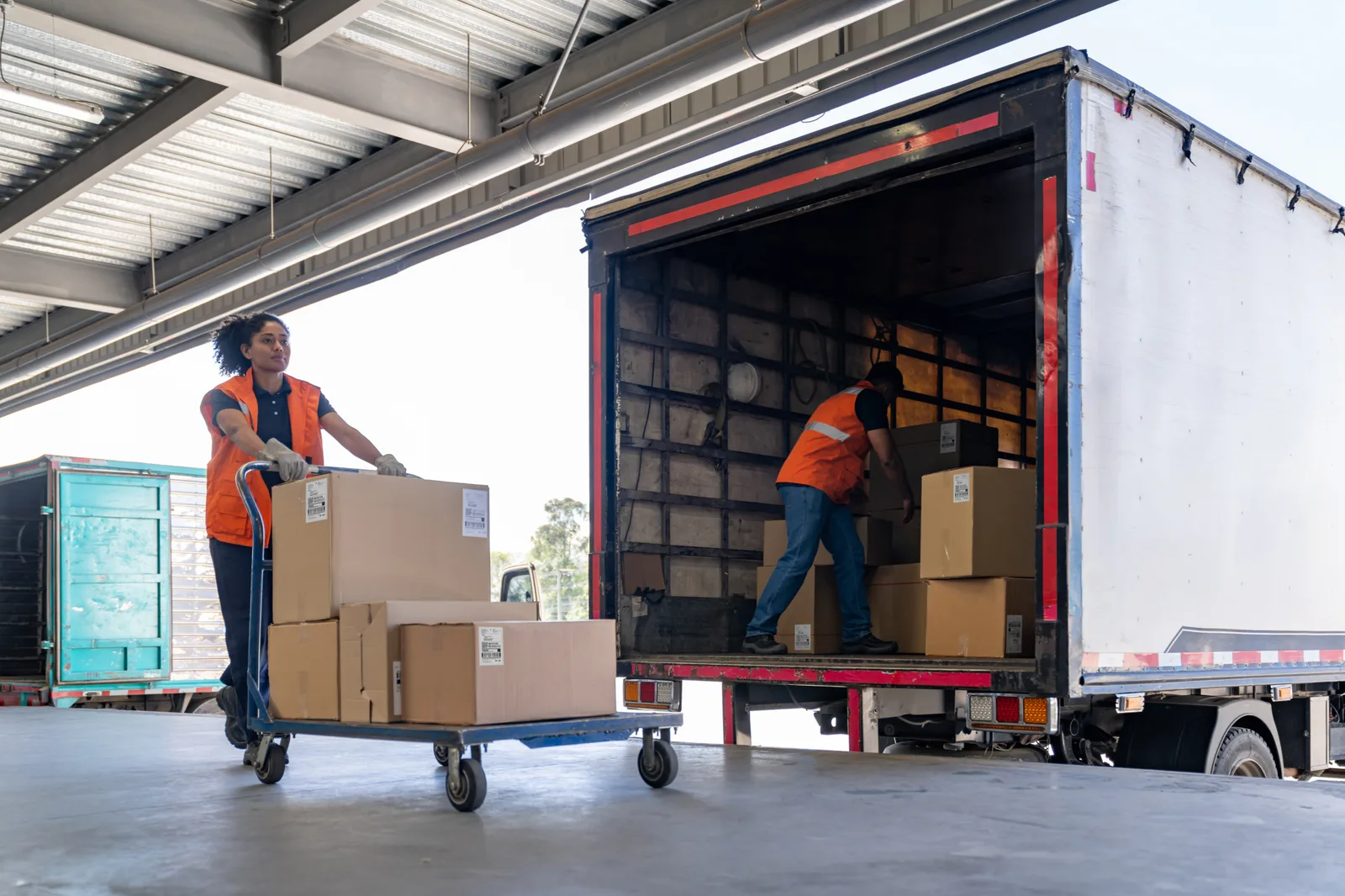
The honest answer up front: running your own truck wins when the truck is genuinely full nearly every working day and delivery is core to how you serve customers. Outsourcing wins when volume is variable, driver coverage is hard, or the truck would spend real time parked. Most businesses that work through the comparison carefully discover the decision hinges less on the price of any single delivery and more on utilization — how much of what you’re paying for actually gets used.
What follows is the full ledger, without dollar figures, because the numbers differ for every business. The categories don’t.
What running your own truck really involves
The truck payment is the visible cost. The rest of the ledger is where ownership decisions actually get won or lost.
The driver
A delivery truck needs a driver every day it runs, and one truck usually means one driver — a single point of failure. Vacation, illness, turnover and hiring gaps all land directly on your delivery schedule, and covering them means either a backup driver you’re otherwise not using or a manager climbing into the cab. Wages and benefits are the recurring line; coverage is the hidden one.
The vehicle
Purchase or lease, depreciation, fuel, tires, scheduled maintenance, and repairs that grow with the odometer. There’s also a sizing trap: a truck bought for your biggest delivery day is oversized for most of the days it runs, which means paying to own and fuel capacity you rarely fill.
Insurance and compliance
Commercial vehicle operation carries its own insurance burden — commercial auto coverage and cargo considerations — and its own regulatory one. In Ontario, operating commercial vehicles brings obligations under the Ministry of Transportation’s framework, including carrier registration requirements such as CVOR, along with vehicle inspection and hours-of-service rules that apply to operators generically. What applies to your specific operation depends on vehicle weight and use — verify current requirements with the MTO before putting a truck on the road.
Downtime
When the truck is in the shop, the deliveries are still due — so downtime means scrambling for a rental or a carrier at the worst possible moment. The reverse problem costs money too: in slow weeks, the truck and driver cost the same as in busy ones. Both directions are utilization risk, and both belong in the comparison.
Management time
Somebody routes the truck, dispatches changes, manages the driver, schedules maintenance and handles what goes wrong. That somebody is usually an operations manager or an owner, and the hours are real even though they never appear on a delivery-cost spreadsheet.
What outsourcing actually changes
Outsourcing converts fixed capacity into a service bought per delivery. That single change moves several problems off your books at once:
- Utilization becomes the carrier’s problem. You pay for deliveries performed, not for a truck to exist. Slow weeks cost less; there’s no asset parked in the yard.
- Coverage disappears as a concern. Driver vacations, sick days and turnover are absorbed inside the carrier’s operation.
- The vehicle matches the freight, shipment by shipment. A van week is a van week and a box-truck week is a box-truck week, instead of one owned truck being wrong in both directions.
- Compliance and maintenance sit with the carrier, whose business is built on managing them.
What you’re buying, fundamentally, is the right to consume delivery capacity in exactly the shape your volume takes — which is why the fit is best for businesses whose volume has a shape: variable, seasonal, or growing unpredictably. It also scales in both directions without a capital decision: a growth spurt doesn’t force a second truck purchase, and a slow year doesn’t leave one depreciating in the yard.
What you give up
An honest comparison names the losses. Your company’s name is no longer on the truck. The driver is not your employee, so a delivery person who doubles as an installer, merchandiser or collector of payments doesn’t translate directly. And there’s a communication layer between you and the road that didn’t exist when the driver sat in your building.
The severity of these depends heavily on how you outsource. A standing route with a consistent driver recovers most of the relationship value — the driver still learns your docks, your customers and your freight. That dynamic is the subject of the case for consistency in recurring freight.
Where your own truck still wins
Ownership remains the right call in specific situations: when the truck is full essentially every day, so the fixed costs are always working; when the driver’s role goes well beyond driving; when the delivery experience itself is the product; or when freight needs handling so specialized that no general carrier fits. If several of those describe you, keep the truck — the comparison is only interesting when they don’t.
The hybrid most businesses land on
The choice isn’t binary, and the most common landing spot is a split: predictable recurring freight moves on a carrier’s standing scheduled route, while anything exceptional — overflow, long regional lanes, coverage during crunch — ships on demand. Some businesses keep one owned truck for the work that genuinely justifies it and outsource the rest; others retire the truck entirely once the route proves itself.
The hybrid also solves the transition problem. Nobody has to sell the truck on day one — run the outsourced route alongside it for a season, watch how the service and the workload compare, and let the truck’s replacement decision make itself when the lease or the next major repair comes due.
How to compare fairly
Compare a full year of ownership against a full year of outsourced service, not a truck payment against a per-delivery rate. On the ownership side, include every category above — driver, vehicle, insurance, downtime, management time. On the carrier side, get quotes reflecting your real pattern, and understand what drives them: distance, vehicle size, frequency and handling all move the number, as we break down in what goes into courier pricing in the GTA and what determines courier rates.
Then weigh the unquantifiables in both columns: coverage risk and management attention against control and brand presence. For most variable-volume B2B shippers, that’s where the decision actually resolves.
If the ledger points to outsourcing
The next step is turning your delivery pattern into a route a carrier can run. Sonic Transport operates scheduled routes across the GTA, Golden Horseshoe and Southern Ontario — fleet from minivans to 26-foot box trucks, proof of delivery on every run, and a person who knows your account. Describe your current delivery pattern and we’ll show you what it looks like as a route.
Frequently asked questions
Is outsourcing delivery always cheaper than running a truck?
No. If a truck is genuinely full nearly every working day, ownership can be the economical choice because the fixed costs spread across constant use. Outsourcing tends to win when volume is variable or the truck would sit idle between runs — you pay for deliveries performed instead of capacity owned.
Can an outsourced route still give customers a consistent driver?
Yes. On a standing scheduled route, the same driver typically runs the same stops week after week, learning the docks, the contacts and the freight. That recovers most of what businesses fear losing when they give up their own truck.
What happens to delivery quality when we stop driving our own truck?
It depends entirely on the carrier. The things to insist on are proof of delivery on every run, shipment updates, and a named contact who knows your account rather than a call centre queue. With those in place, most businesses find quality holds or improves, because delivery becomes a professional's full-time job instead of a side duty.