
First and Last Mile in Regional Freight: Where Shipments Win or Lose
First mile and last mile explained for regional freight — why the ends of a shipment cause most delays, and how direct regional runs compress the risk.
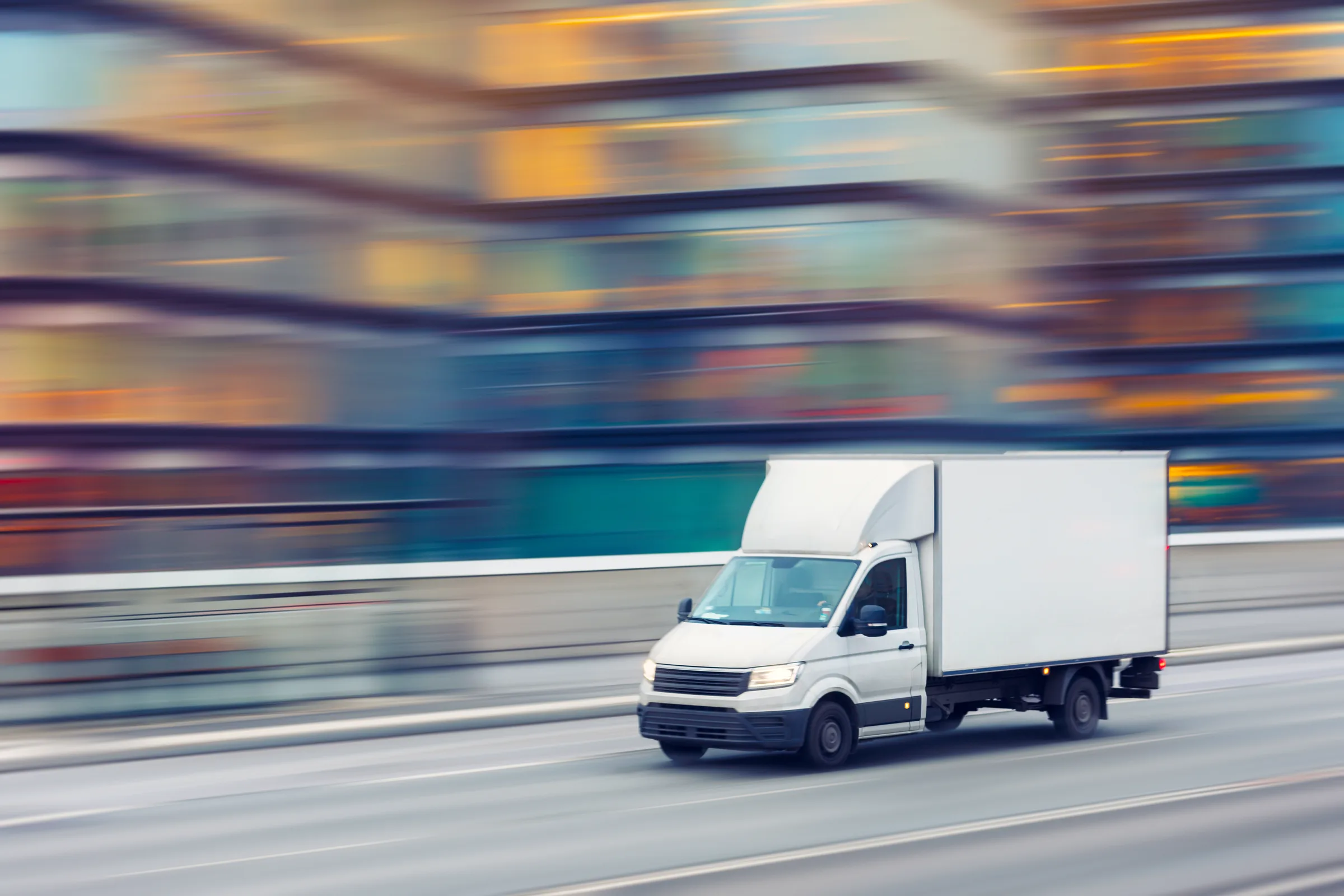
Freight people talk about the “first mile” and the “last mile” for a simple reason: that’s where shipments succeed or fail. The long middle of a journey — highway kilometres between terminals — is the most predictable, most optimized part of logistics. The ends, where a real driver meets a real dock at a real address, are where delays, damage and disputes actually happen. Understand the ends and you understand most of what goes wrong in shipping.
This post unpacks the concept and then applies it where it bites hardest for Ontario shippers: regional freight, where the entire journey can be short enough that the “miles” at each end dominate everything.
What first mile and last mile actually mean
The first mile is the leg from the shipper’s premises into the transportation network — the pickup, the loading, the paperwork that launches the shipment. The last mile is the mirror image: the final leg from the network’s last node to the receiver’s door, ending in unloading and a signed proof of delivery. Between them sits the middle mile (or line-haul): the terminal-to-terminal movement where freight rides in bulk.
The terms come from parcel and network logistics, where a shipment might pass through several hubs between its two ends. But the concept applies to all freight: every shipment has a launch problem and a landing problem, and the transportation in between is comparatively easy.
Why the ends are where shipments win or lose
The middle mile is standardized; the ends never are. Every origin and destination is a unique little puzzle, and the common failure modes cluster there:
- Pickup that can’t happen — freight not ready, not packaged, no one aware the carrier was coming.
- Wrong equipment for the address — a dock-height truck at a no-dock delivery, no tailgate when one was needed.
- Access surprises — gates, height bars, shared plazas, receiving hours that closed ten minutes ago.
- Information gaps — no contact name, a wrong unit number, a job site where “the address” is a hundred metres from the actual drop point.
- Handling damage — freight is touched at the ends, and touching is when damage happens.
Notice that almost none of these are driving problems. They’re information and equipment problems, which is why they’re preventable — the fixes are accurate shipment details, honest declarations about what’s at each address, and a carrier that asks the right questions before dispatching. The same details, not coincidentally, are what drive accurate pricing — see our breakdown of courier pricing factors in the GTA.
Regional freight compresses the problem — in a good way
Here’s the regional twist: on a direct run across the GTA or Southern Ontario, there is no middle mile. One vehicle collects the freight and drives it to the destination — no terminals, no cross-dock, no re-handling. The entire shipment is first and last mile, executed by the same driver on the same run.
That compression changes the risk profile in three ways:
- Fewer touches. Freight handled twice — loaded once, unloaded once — has fewer chances to be damaged or misrouted than freight handled at every node.
- One accountable party. When the same carrier does the pickup and the delivery, there’s no seam between networks where a problem can fall.
- Same-day physics. With no hub waits, a morning pickup in Mississauga is an afternoon delivery in Hamilton or Kitchener. This is precisely what same-day direct service is.
Walk through a concrete run and the compression is obvious. A skid of parts leaves a Mississauga supplier at mid-morning: the driver confirms the piece count at the dock (first mile done properly), drives the QEW, and grounds the skid by tailgate at a Hamilton workshop with no dock (last mile done properly). Two touches, one vehicle, one signature — and every part of the journey that could go wrong was handled by someone whose whole job is exactly those parts.
Network freight still makes sense when distance or volume demands it — that trade-off is the subject of our comparison of regional carriers and national 3PLs. For journeys inside a region, though, direct service simply deletes the part of logistics that was easy and keeps a specialist on the parts that are hard.
Where regional carriers fit in bigger networks
First and last mile is also where regional carriers plug into national and international supply chains. A shipment crossing the country or the border rides line-haul networks for the long middle, but somebody still has to collect it from a Cambridge plant or deliver it to a Barrie receiver — and that somebody is often a regional carrier working with a 3PL or freight forwarder. The mechanics of those relationships are covered in our answer on how couriers work with 3PLs, and longer Canadian or cross-border lanes can be arranged through transportation partners so a shipper still deals with one point of contact.
The pattern to remember: whoever runs your line-haul, the ends of your shipment are local work, done well by people who know the local addresses.
Making your ends easier: a short checklist
Most first- and last-mile failures are prevented by the shipper, before the truck moves:
- Declare the freight accurately — pieces, dimensions, real weight.
- Describe both addresses honestly — dock or no dock, forklift or not, tailgate needed or not.
- Name a human at each end — with a phone number that will be answered.
- State the receiving constraints — hours, gates, appointment requirements.
- Have the freight ready — packaged, labelled and accessible at pickup time.
Do those five things and the hard parts of your shipment get dramatically easier; skip them and no amount of line-haul excellence will save the delivery. Visibility covers the rest — shipment updates and a POD at close-out mean you’re never guessing, as covered in our answer on tracking and delivery updates.
For businesses that ship the same lanes repeatedly, the checklist eventually stops being a checklist: a carrier that keeps your addresses, dock details and receiving quirks on file applies them to every run automatically. That accumulation of end-of-shipment knowledge is most of what an account relationship actually is.
First and last mile is where Sonic Transport lives: direct B2B runs across the GTA, Golden Horseshoe and Southern Ontario, where the ends of the shipment are the whole job and get treated that way. If you’ve got freight whose ends deserve more attention than a network gives them, tell us about the shipment and a real person will plan both miles properly.
Frequently asked questions
What counts as the last mile in B2B freight?
The last mile is the final leg from the last transportation node — a terminal, hub or warehouse — to the receiver's door. In B2B it's rarely a literal mile; it's the portion of the journey where freight leaves the efficient line-haul network and meets the messy reality of a specific address.
Why do last-mile problems cause most freight delays?
Because the ends of a shipment depend on particulars the network can't standardize: dock availability, receiving hours, equipment at the address, accurate contact details. Line-haul between terminals is predictable; a locked gate or a missing tailgate at the destination is not.
Does a direct courier shipment even have a first and last mile?
In effect, the whole shipment is first and last mile with nothing in between. One vehicle picks up at origin and drives to the destination, so the two hardest parts of the journey are handled by the same driver on the same run — which is exactly why direct service exists.