
Commercial Courier in Toronto: Moving B2B Freight in the Core and Beyond
How B2B freight actually moves in Toronto — downtown dock realities, Etobicoke and Scarborough industrial areas, and planning around the DVP and Gardiner.
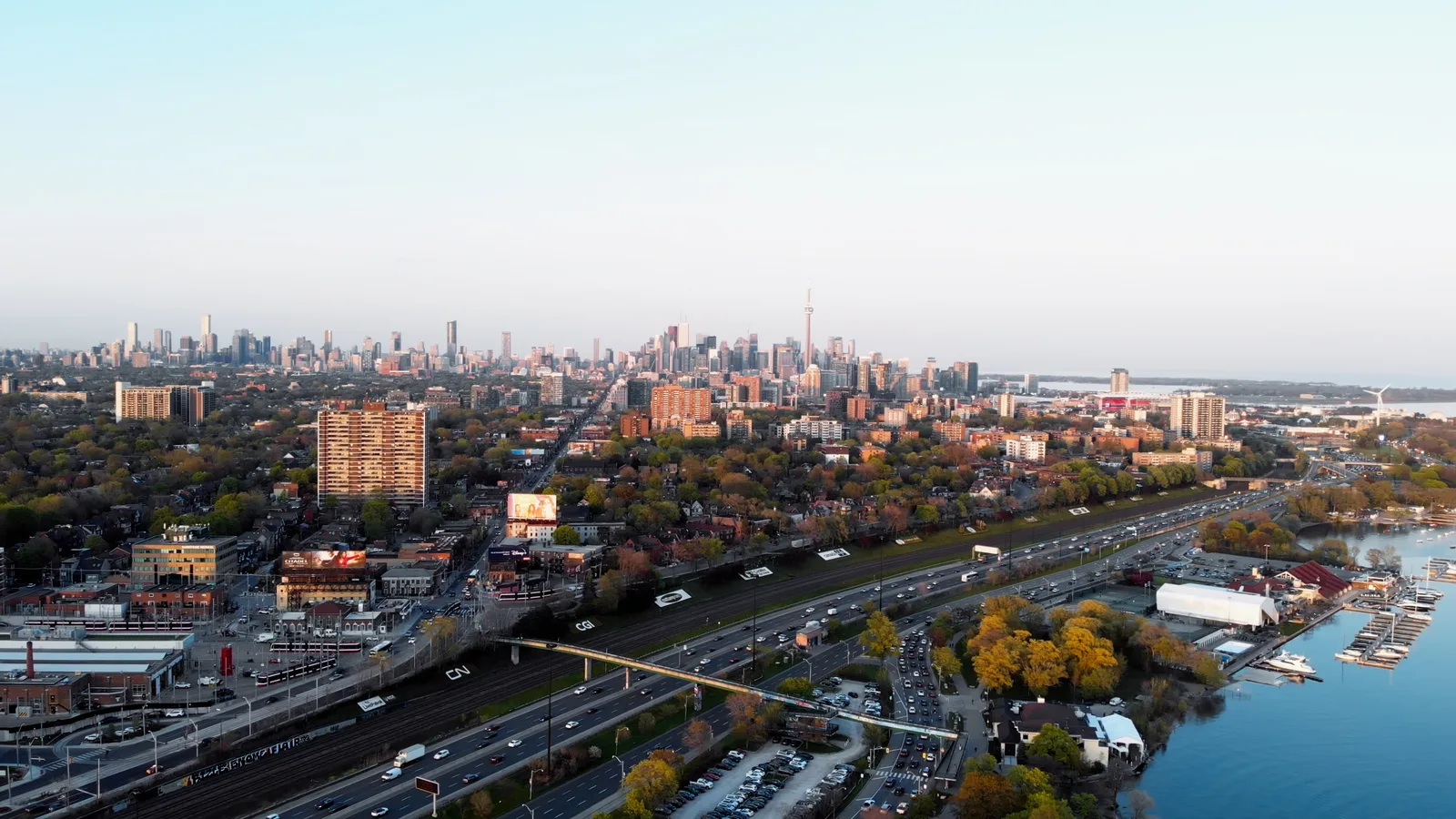
Toronto is really two freight cities. There’s the core — towers, storefronts, institutions, tight docks and timed delivery windows — and there’s the industrial ring through Etobicoke, North York and Scarborough, where freight moves dock to dock the way it does anywhere else in the GTA. A commercial courier serving Toronto has to be good at both, because most B2B shipments touch each world: a skid from a Scarborough plant to a downtown showroom, parts from an Etobicoke wholesaler to a job site on King Street.
The core takeaway: Toronto freight rewards direct service and punishes improvisation. Deliveries succeed when the courier knows the destination’s receiving setup before the truck rolls — and that’s a booking conversation, not a delivery-day surprise.
Downtown deliveries: docks, windows and one-way streets
Delivering into the core is an access problem before it’s a driving problem. Office towers receive freight through loading docks with height limits, security procedures and sometimes bookable time slots. Storefronts on streetcar routes may have no legal place to stop a truck out front, which means deliveries go through a laneway or rear entrance. Construction, event closures and turn restrictions reshape routes week to week.
None of this is a reason to avoid downtown — thousands of commercial deliveries land there every day. It’s a reason to book with detail. The deliveries that go wrong downtown are almost always missing one piece of information: the dock height, the receiving hours, the name of the person signing. The deliveries that go right had all of that attached to the booking, so the driver arrived at the right entrance with the right vehicle.
Etobicoke and Scarborough: where Toronto’s industrial freight lives
Most of Toronto’s manufacturing and distribution happens far from the skyline. Etobicoke’s industrial areas cluster along the 427 and the Queensway–Gardiner corridor, close to Pearson and the Mississauga border — printers, packaging firms, machine shops, wholesalers. Scarborough’s stretch along the 401, including the Golden Mile district around Eglinton, holds manufacturers and distributors that have shipped from the same buildings for decades. North York adds another band of industrial streets along the 401’s midsection.
These areas generate classic dock-to-dock work: palletized freight, regular lanes, receivers with forklifts. They’re also where Toronto freight connects to the rest of the region — a Scarborough shipper is minutes from the 401 east–west spine, and an Etobicoke dock feeds naturally onto the 427, QEW and Gardiner. We cover these districts in more detail in our guide to industrial delivery in Scarborough and Etobicoke.
The DVP and Gardiner: planning around Toronto traffic
Toronto’s expressways are the shortest paths on the map and, at the wrong hour, the slowest. Here’s how the main routes behave for freight:
| Route | What it connects | Freight reality |
|---|---|---|
| Gardiner Expressway | The core to Etobicoke, QEW and the west | Direct line to the downtown south side; slow at peaks, and ramps into the core back up |
| Don Valley Parkway | The core to the 401 and the north-east | The main artery for Scarborough and Markham runs; congestion is heaviest at rush hours |
| Highway 401 | Everything east–west across the top of the city | Enormous capacity but heavily loaded; collectors vs. express lane choice matters |
| City streets | Everything the expressways don’t touch | Slower but predictable; often the honest choice for short cross-core hops |
A courier running Toronto daily learns which combination fits which hour — when the DVP is worth it, when Lake Shore beats the Gardiner, when a midtown crossing on surface streets is faster than either. Booking earlier in the day gives dispatch more options; a late-afternoon pickup request has to take the network as it finds it. There’s more on this in how GTA traffic affects deliveries.
Same-day direct into, out of and across Toronto
For urgent Toronto freight, same-day direct service is the model that fits: one vehicle, one shipment, straight from pickup to delivery. No terminal in the middle means no missed sort, no cross-dock damage and no second truck — which matters double in a city where every extra handling step adds another chance for delay.
Direct runs cover every common Toronto pattern:
- Into the core — product, parts and documents from suburban docks to downtown businesses.
- Out of the core — returns, equipment and inter-office freight heading to the 905.
- Across the city — Etobicoke to Scarborough without a detour through anyone’s sorting facility.
- Beyond the GTA — direct runs reach across the Golden Horseshoe and Southern Ontario, up to roughly 350 km one way.
Every delivery closes with proof of delivery — signature, time, receiver — so the shipment is documented from dock to signature. And because Toronto sits at the centre of the regional highway network, the same direct model that crosses the city also connects it to Mississauga’s industrial corridors, Vaughan, Hamilton and the rest of Southern Ontario. Our summary of which highways serve GTA freight shows how the pieces connect.
What Toronto shippers should have ready
Toronto bookings go fastest when four details are attached from the start: exact pickup and delivery addresses with any unit or dock numbers, the receiving setup at both ends (dock, forklift, or neither — which flags a tailgate truck), the freight’s dimensions and weight, and the real deadline. In a city where the destination’s loading dock can matter more than the distance, those details are what let dispatch assign the right vehicle the first time.
Toronto is core service area for Sonic Transport, a strictly B2B carrier based next door in Mississauga — core deliveries, industrial dock work and everything between. If you’ve got freight moving anywhere in the city, tell us what’s shipping and a real person will sort out the vehicle, the route and the details that make a Toronto delivery land clean.
Frequently asked questions
Do couriers deliver to downtown Toronto office towers?
Yes, but the building sets the terms. Most towers route freight through a loading dock with its own rules — some require booking a dock slot, some restrict delivery hours, and most require deliveries to go through security or a receiving desk. Giving your courier the dock details and any booking requirements up front is what makes a downtown delivery go smoothly.
Is same-day delivery realistic across Toronto traffic?
Yes, when the freight moves on a direct run and the pickup is booked with the day's traffic pattern in mind. A direct run has no terminal stops to compound delays — the vehicle goes straight from pickup to delivery. Congestion still adds time, which is why earlier booking gives dispatch more room to route around the predictable peaks.
Can a courier move a single carton in Toronto, or only skids?
Both. Small urgent shipments move by minivan, which is often the fastest vehicle through the core. Skids and heavier freight go on cargo vans or tailgate-equipped box trucks. The vehicle is matched to the shipment, so a single envelope of contracts and a 1,000-lb skid are both bookable freight.